
Pressure-treated Southern Yellow Pine and Western Red Cedar account for the vast majority of residential wood fences installed across the Mid-Atlantic. Both species perform differently, cost differently, and age differently. Understanding what separates a budget fence from a premium one starts with the lumber itself.



Pressure treatment forces copper-based preservatives (ACQ, CA, or MCA) deep into the wood grain to resist fungal decay and insect damage. The AWPA use-category system tells you how much preservative the wood received: UC4A covers standard residential fence posts in ground contact, while UC4B is specified for severe environments with high moisture and decay potential. Any post going into the ground needs UC4A at minimum. Rails and pickets that stay above ground can use UC3B treatment.
Grading matters just as much. #1 grade lumber has fewer knots, tighter grain, and less warping potential than economy grade. The difference shows up within two years: economy-grade pickets twist and cup, while #1 grade holds its shape through seasonal moisture cycling. Cedar fence posts offer natural rot resistance thanks to the oils in the heartwood, but that resistance fades as the wood ages and the oils leach out. Types of wood for fencing break down further by species, grade, and intended application.
The wood fence lifespan depends heavily on species. Pressure-treated pine can reach 20-30 years with regular maintenance. Cedar fences typically last 15-20 years. Both numbers assume consistent staining and a properly installed post foundation.
Weighing the pros and cons of wood fencing starts with your property. Wood makes the most sense on lots where the ground doesn’t cooperate with factory panels. Slopes, grade changes, and irregular lot lines are where stick-built wood construction pulls ahead. Each picket gets fastened individually, so the fence can rack along contours or step down hillsides. Vinyl and aluminum panels ship in fixed dimensions and cannot be trimmed on-site.
Choose wood if:
Consider a different material if:
A privacy fence built from wood gives full visual screening in board-on-board or solid-panel configurations. Wood fence styles range from dog-eared picket to shadow box to scalloped-top designs, all customizable to heights between 4 and 8 feet.
Anne Arundel County’s climate hits wood fences from two directions. Rainfall averaging over 45 inches per year keeps moisture levels high for months at a stretch. Then winter arrives with what local contractors describe as 10-20 freeze-thaw cycles in a typical season, and the ground heaves.
Post-base rot is the primary failure mode. At the “critical zone” just below grade, moisture, oxygen, and wood-decay fungi converge. Wood-decay fungi activate when moisture content exceeds 20%, and sustained ground contact in clay-heavy soil easily crosses that threshold. The boards above grade may look fine while the post below is already compromised.
Warping and splitting come from repeated expansion and contraction. Each moisture cycle opens micro-fractures in the grain. Over several seasons, pickets cup, twist, or crack along those fractures.
Coastal Plain soils common throughout the region tend toward clay and silt, which hold moisture against buried posts longer than sandy or gravelly soils. In waterfront communities like Riviera Beach and Lake Shore, salt air compounds the problem by accelerating surface degradation on exposed grain.
Wood fence maintenance intervals shift shorter in this climate. Cedar needs staining every 2-3 years here. Pressure-treated pine can stretch to 3-5 years between applications after an initial 6-12 month cure period, but the humid conditions push toward the lower end. Vinyl handles this climate better (no rot, no staining). Untreated softwood handles it worse.
This is where the numbers do the talking. A cedar fence and a pressure-treated wood fence can look identical at installation, but their 20-year cost stories diverge sharply.
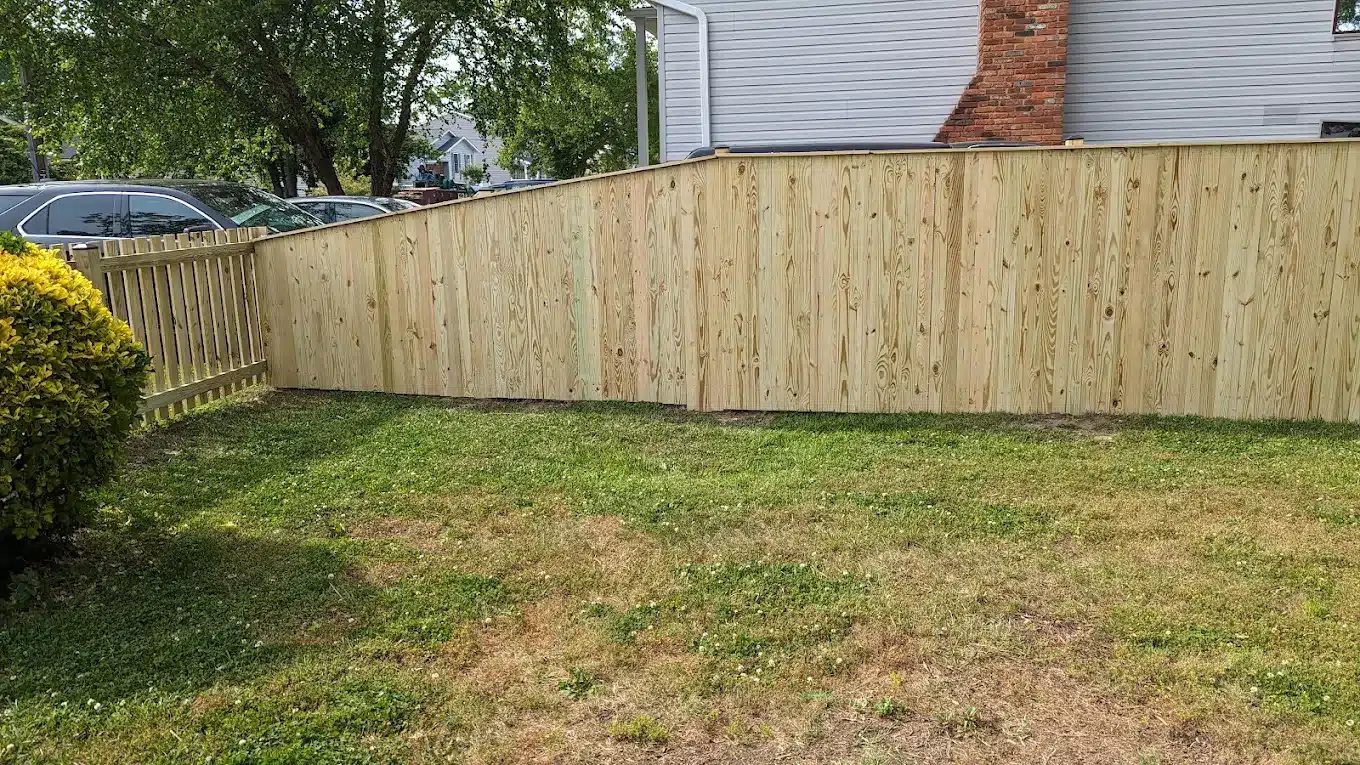
Upfront cost: $
Expected lifespan: 20–30 years (maintained)
Maintenance cycle: Stain/seal every 3–5 yr
20-year total cost: $$
Privacy level: Full (board-on-board, solid)
Finish flexibility: Paint, stain, natural
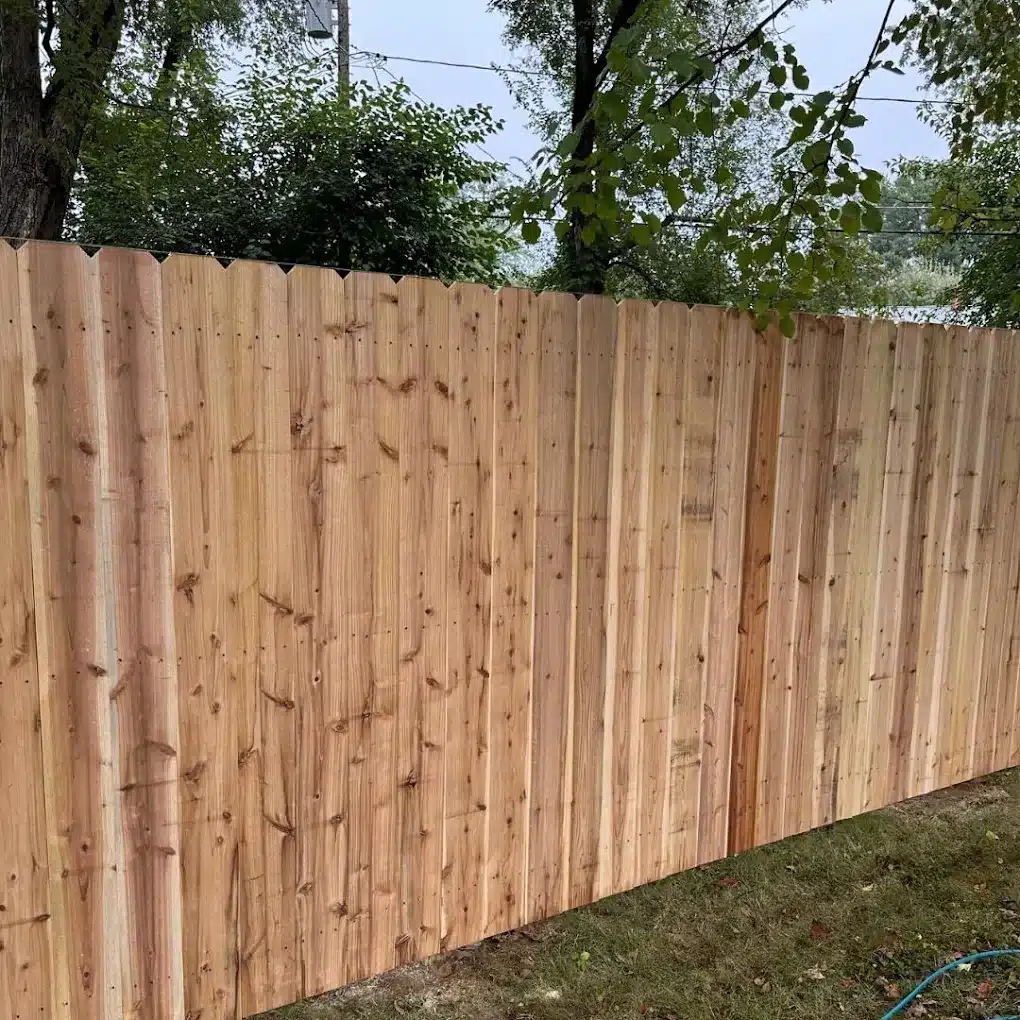
Upfront cost: $$$
Expected lifespan: 15–20 years (maintained)
Maintenance cycle: Stain/seal every 2–3 yr
20-year total cost: $$$
Privacy level: Full (board-on-board, solid)
Finish flexibility: Paint, stain, natural
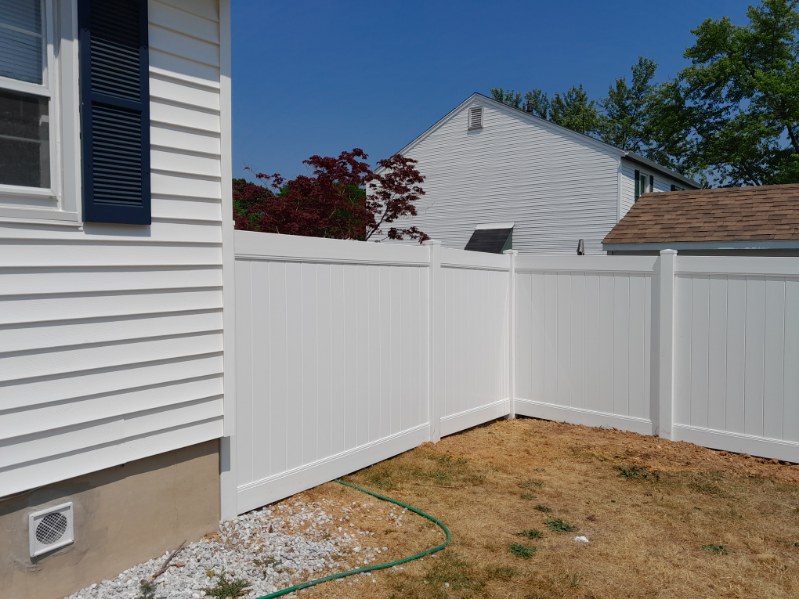
Upfront cost: $$$
Expected lifespan: 25–30 years
Maintenance cycle: Occasional wash
20-year total cost: $
Privacy level: Full (solid panels)
Finish flexibility: Factory color only
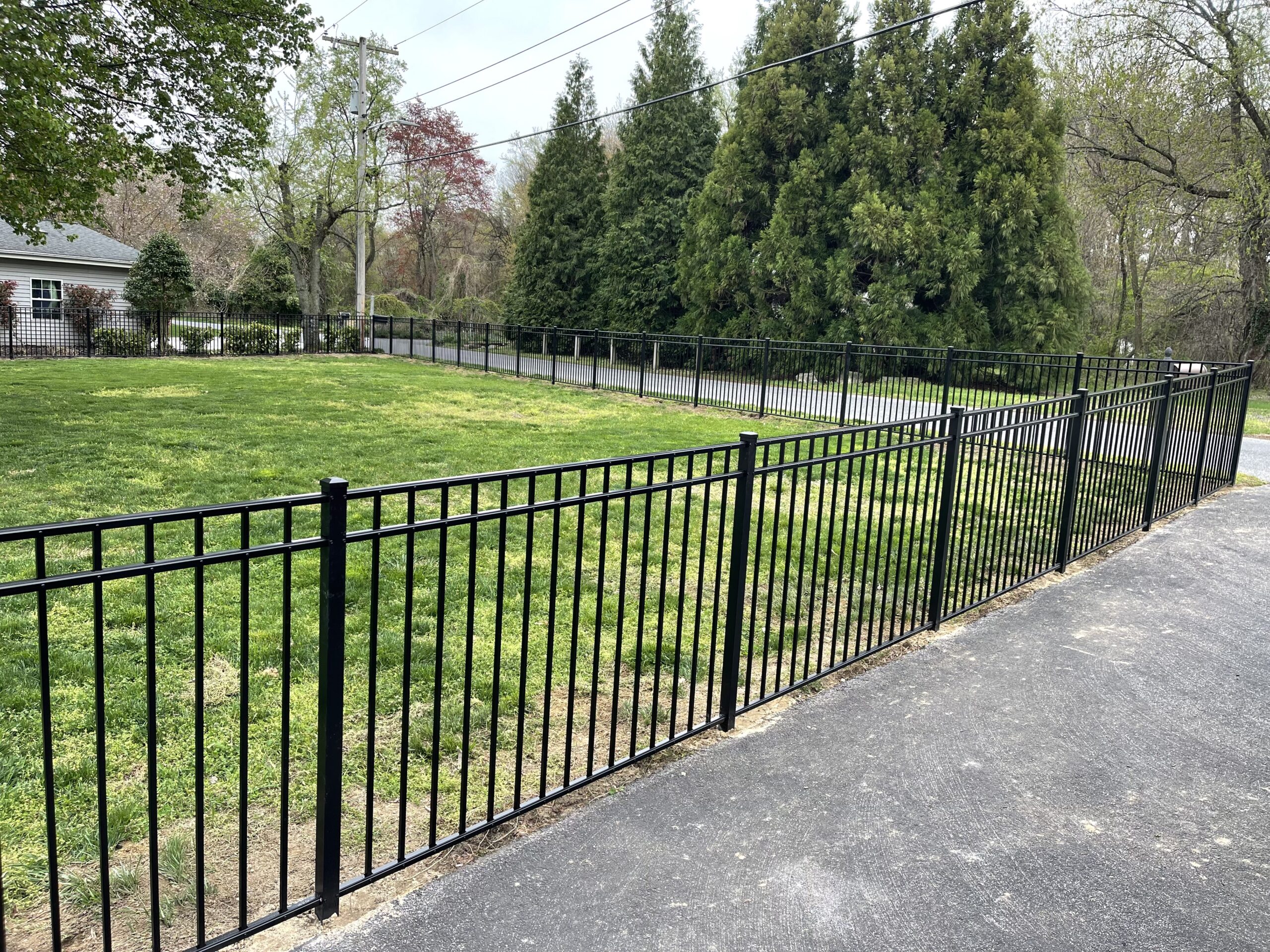
Upfront cost: $$$
Expected lifespan: 30–50 years
Maintenance cycle: Occasional wash
20-year total cost: $$
Privacy level: Partial (picket only)
Finish flexibility: Powder-coat colors
Wood wins on upfront cost per linear foot and finish flexibility. A homeowner who wants to change their fence color in five years can sand and restain a wood fence in a weekend. A vinyl fence locks you into the factory color permanently, and painting over vinyl voids most manufacturer warranties.
But vinyl wins the long game on maintenance. No staining, no sealing, no annual inspections for rot. Over 20 years, the maintenance savings often offset the higher initial price. Vinyl’s total cost of ownership typically comes in lower than wood once you factor in staining, sealing, and occasional board replacements.
Aluminum wins on raw longevity. A powder-coated aluminum fence can last 30-50 years with almost no maintenance beyond occasional cleaning. It cannot provide full privacy (residential aluminum fences are picket-style only), but for decorative borders and pool enclosures, nothing else matches that lifespan. For a deeper breakdown, see wood vs. aluminum fencing.
All cost figures above reflect national industry estimates and will vary by region, site conditions, and lumber species.
Post depth and footing method.
Posts must reach below the local frost line. In Maryland, that means approximately 30 inches deep per IRC residential foundation requirements. Posts set shallower will heave during freeze-thaw cycles and pull the entire fence line out of alignment. Ask any contractor: “How deep are you setting the posts, and what footing method are you using?”
Fastener specification.
Hot-dipped galvanized or stainless steel ring-shank nails rated to ASTM A153 are the standard. Wrong fasteners produce rust streaks down the face of every picket within two years. Ask: “What fastener grade are you using?”
Material sourcing transparency.
A contractor should name the lumber species, the grade, and the treatment level without hesitation. UC4A minimum for any post going into the ground. If the answer is “standard wood” with no specifics, that’s a red flag.
Post spacing and rail configuration.
Standard post spacing is 8 feet on center for 4×4 posts. Taller fences and high-wind areas need 6-foot spacing. Wider spacing puts more stress on the rails and shortens the fence’s working life.
Terrain handling.
Ask whether they rack (contour-follow) or step on your slope. Racking requires custom-cutting pickets at different heights. Stepping uses standard panels with gaps underneath. Both methods work, but the contractor should know which one fits your grade and explain why.
Warranty structure.
Legitimate wood fence warranties separate workmanship (labor) from materials. Common exclusions include natural weathering, ground-contact rot, and wind damage. No legitimate contractor offers a “lifetime warranty” on a wood fence.
Posts set at 18-24 inches instead of below 30 inches will heave upward during freeze-thaw, pulling rails and pickets out of alignment. Resetting a full fence line runs $1,500-$4,000+. Prevention: verify the post depth specification in writing before signing a contract.
PT pine needs 6-12 months to dry before it will accept stain. Apply stain too early and it peels within one season. Stripping and restaining costs $300-$600. Test readiness by sprinkling water on the wood. If it beads up, the wood isn’t ready.
UC3B lumber is rated for above-ground use only. Bury it, and the post decays at the critical zone within a few years. Replacing posts across a full fence line costs $2,000-$5,000+. Prevention: check every post for a UC4A or UC4B stamp before it goes in the hole.
Wet pickets shrink 1/8 to 1/4 inch as they dry, opening gaps that destroy privacy. Filling those gaps later costs $500-$1,500. Either specify kiln-dried lumber or confirm the installer is tightening fence staining and spacing to account for the shrinkage.
Clay holds moisture against the post base and accelerates rot even on treated wood. Without a gravel drainage bed, and with concrete sloped toward the post instead of away from it, individual post replacement runs $150-$300 per post. Insist on gravel at the base and a concrete cap sloped away from the wood.
Pressure-treated pine fences last 20-30 years with regular maintenance; cedar fences last 15-20 years. Climate and maintenance quality affect where your fence lands in that range. In the Chesapeake Bay region’s humid conditions, both species trend toward the lower end.
Wood fence cost per foot varies by species, style, height, and site conditions. Pressure-treated pine is the most affordable option. Cedar and custom designs cost more. Slopes, rocky soil, or limited access add to the price. The best way to get an accurate number is a free on-site estimate from a licensed contractor who can assess your specific property.
Wood costs less upfront and offers more finish options; vinyl costs less to maintain over 20 years and never needs staining. The right choice depends on whether you prioritize customization or low maintenance. For a detailed comparison, see our wood vs. vinyl fencing guide.
Cedar fences need staining every 2-3 years; pressure-treated pine every 3-5 years after an initial 6-12 month cure period. Humid climates may push you toward the shorter end. Skipping a cycle invites UV graying, moisture penetration, and early wood fence rot. For a full breakdown, see how to maintain a wood fence.
Pressure-treated Southern Yellow Pine is the most common choice for its balance of durability and cost; Western Red Cedar offers natural rot resistance and a richer grain. PT pine dominates the Mid-Atlantic market. Cedar costs more upfront but resists decay without chemical treatment for the first several years.
Pressure-treated wood resists termites due to its copper-based preservatives, but untreated or aging wood is vulnerable. Ground-to-wood contact is the highest risk area. Annual inspection along the post base catches problems before they spread to the rest of the fence.
Now that you know what to look for in a wood fence, All Around Fence can help you put that knowledge to work. Every wood fence installation starts with posts set below Maryland’s 30-inch frost line in concrete footings sized for local soil conditions.