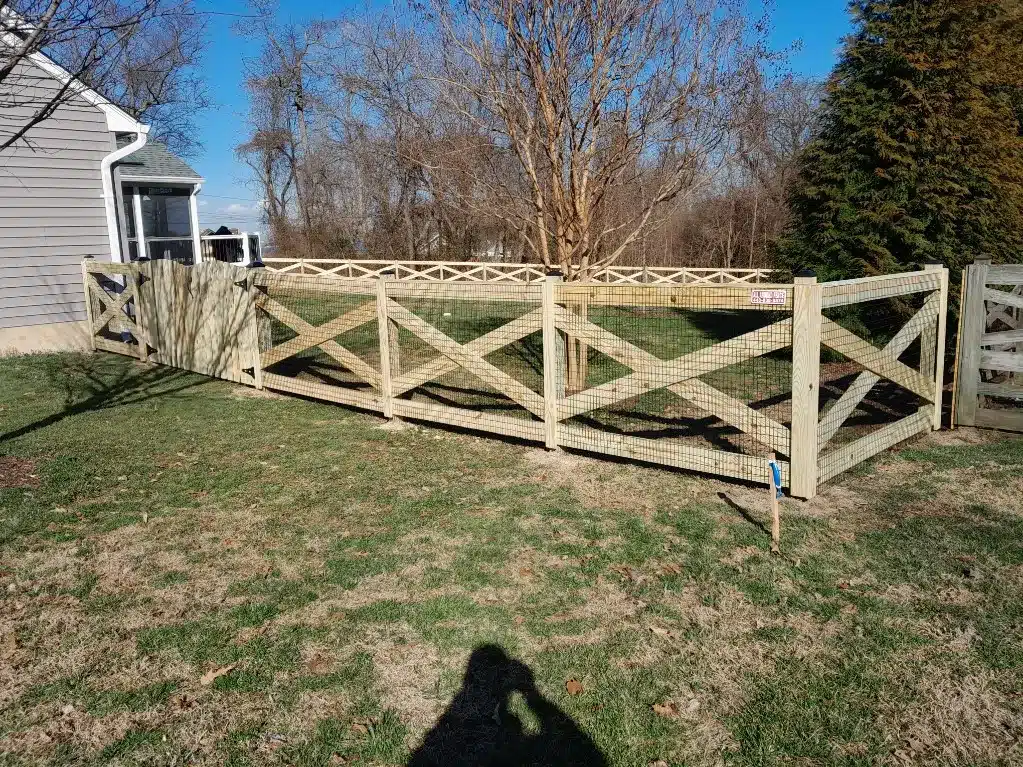
The honest difference between wood and aluminum fencing comes down to one question: do you want to close your yard in, or define it? Wood creates a solid enclosure — it blocks sightlines, softens sound, and gives backyards in Severna Park and Annapolis real separation from neighbors. Aluminum marks a boundary without building a wall, which is why you see it lining front yards in Crofton and framing pool areas across the county. Both materials work well in Maryland. They just work differently. Here’s how each one actually performs on cost, durability in Maryland’s climate, and long-term maintenance.



Wood and aluminum fences define property in very different ways.
Wood fencing is built as a continuous surface. Posts are set in concrete, rails connect each section, and vertical boards create a closed boundary. The result is visual separation. Sound is softened. Sightlines are blocked.
Because wood is slightly flexible, it absorbs some wind stress rather than transferring it directly to the posts. In open yards across central Maryland, that flexibility can help reduce sudden stress from gusts. Individual boards can also be replaced without rebuilding an entire section.
The trade-off is weight and surface area. A solid fence catches the wind. Proper post depth and spacing matter more than fence height increases.
Aluminum fencing is engineered as an open picket system. Posts anchor lightweight panels that allow air and light to pass through. The structure creates definition without enclosure.
Because aluminum is rigid, it does not flex like wood. Instead, strength comes from panel design and secure post anchoring. In waterfront or wind-exposed properties near the Chesapeake Bay, the open design reduces wind resistance compared to a solid privacy fence.
The trade-off is visibility. Aluminum defines a boundary, but it does not create privacy.
If your goal is enclosure, keeping sightlines out, and defining private space. Wood performs differently from aluminum by design.
If your goal is perimeter definition, securing a yard while preserving visibility. Aluminum serves that purpose more effectively.
In Maryland installations, the decision often begins with how much you want to see and how much you want others to see.
The cost between the two materials is less comparable than most people expect, because you’re often not buying the same thing. A six-foot wood privacy fence and a four-foot decorative aluminum fence serve different purposes. Comparing their prices directly isn’t always apples to apples.
Taller panels require more lumber, heavier fasteners, and deeper post footings to handle wind load. In Anne Arundel County, where open rear yards in Arnold and Gambrills can catch significant wind, post depth and spacing matter more as height increases. The material cost climbs quickly past six feet, but most privacy applications stop there anyway.
A three- or four-foot decorative perimeter fence carries less material cost than wood privacy fencing because there’s simply less of it. And the open picket design reduces wind resistance, which keeps the structural requirements lighter. Where aluminum gets expensive is in grade and finish quality. Near the water, whether that’s the Chesapeake Bay, the Magothy River, or the South River, a cheap powder-coat finish won’t last. Paying for a multi-stage coating upfront is cheaper than recoating or replacing panels in five years.
In the long term, wood requires periodic sealing or staining to maintain its appearance. How often depends on exposure. For example, a shaded rear fence in Severna Park ages differently from a sun-exposed front fence in Pasadena. Aluminum requires almost no maintenance once installed, but if a panel is damaged, you typically replace the entire panel rather than a single board. Individual board replacement is one of wood’s underrated advantages.
Wood and aluminum don’t fail the same way, and knowing the difference helps you make a better long-term decision.
the spot where the post meets soil.
In Anne Arundel County, the soil is heavily clay-based, especially in older neighborhoods like Severna Park, Arnold, and along the western shore. Clay retains moisture long after rain, which accelerates decay at the base of posts even when pressure-treated lumber is used. It's not a reason to avoid wood, but it is a reason to insist on proper post treatment, adequate concrete footings, and posts set below frost depth (typically around 30 inches in Maryland). Boards and rails above grade hold up well; the base is where you want to pay attention.
The upside of wood is flexibility. Under wind load, wood has natural give. It absorbs stress rather than transferring it all to the post anchoring. In open yards, that flex can reduce the risk of sudden failure from gusts. It also means individual boards can be replaced without affecting the rest of the fence, keeping repair costs low over time.
Its durability depends almost entirely on two things: the quality of the powder-coat finish and how well the posts are anchored.
In inland areas like Crofton or Odenton, a standard commercial-grade finish holds up well. Near tidal water, salt air will eventually break down a low-grade coating, exposing the metal underneath to oxidation. A multi-stage powder coat applied over a chemically pre-treated surface is worth the upgrade for any waterfront or near-waterfront installation. Finish quality, not metal thickness, is the more important spec to ask about.
For both materials, the installation itself is often the biggest durability factor. Posts set above frost depth will heave. Footings poured too narrow won't hold under wind load. Maryland's freeze-thaw cycle does real damage to shortcuts taken at installation.
Wood and aluminum fences shape a yard in different ways.
A wood fence creates a solid barrier. It blocks sightlines and defines a contained space. In neighborhoods across Severna Park and Annapolis, homeowners often choose wood when privacy is the priority.
It works well between close properties or along roadways where visual separation matters. The result is enclosure. The trade-off is reduced visibility and airflow.
Aluminum fencing defines a boundary without closing the yard in. Open pickets allow light and air to pass through. You can see out. Others can see in.
This makes aluminum common for:
• Front-yard boundaries • Pool enclosures where visibility matters • Decorative property lines • Pet containment with open sightlines
The structure secures space without creating a wall.
If your goal is privacy, wood is built for that function.
If your goal is perimeter definition or architectural detail, aluminum is a better choice.
In central Maryland, the decision often starts with how you use the yard — as a private retreat or as a visible boundary.
In central Maryland, material choice often follows yard function.
Six-foot wood privacy fencing is common along rear property lines in established neighborhoods like Severna Park and Arnold. Homeowners want enclosure and separation.
Aluminum fencing is frequently used for front-yard boundaries in Crofton and Odenton. It defines space without blocking views.
Near the Chesapeake Bay or Magothy River, aluminum is often chosen where sightlines matter. Wood remains common along and at the rear lines where privacy is the goal.
Both materials perform well when posts are set below frost depth and anchored properly in concrete.
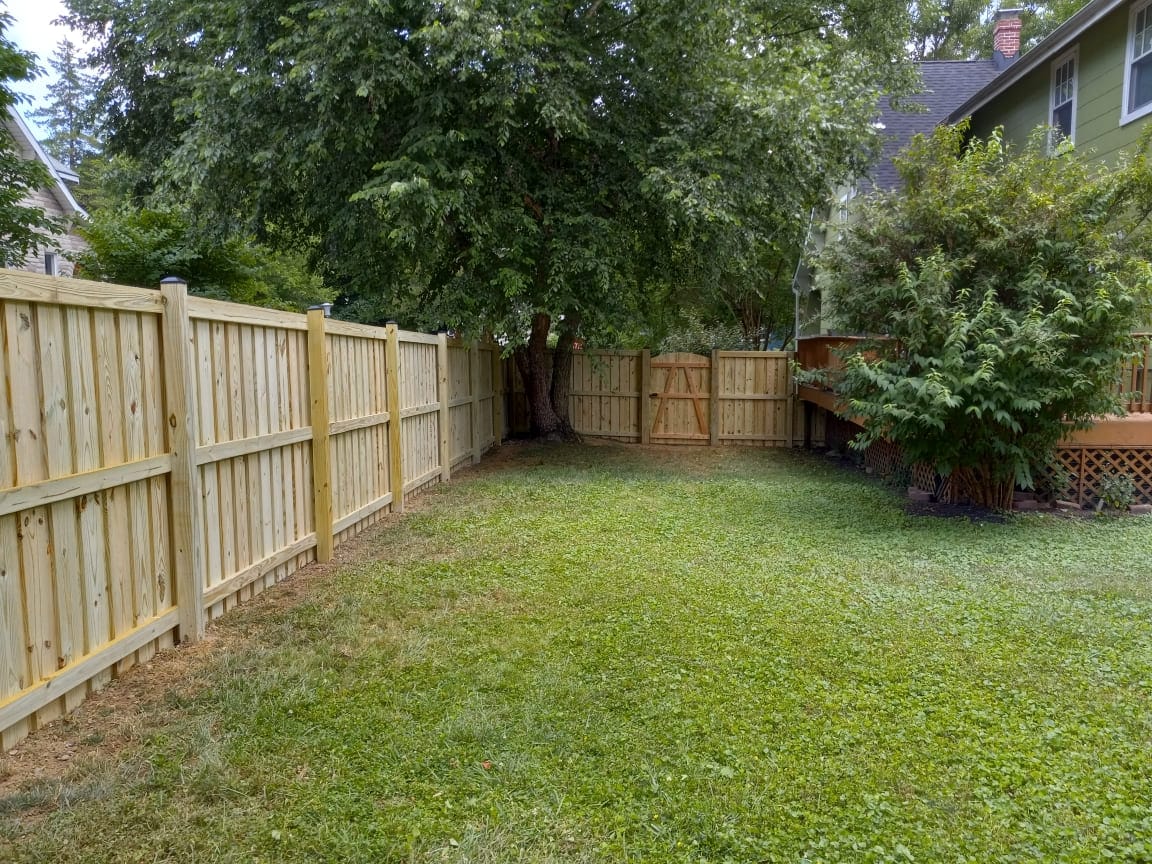
Purpose Add privacy and define property lines on a classic Severna Park neighborhood lot.
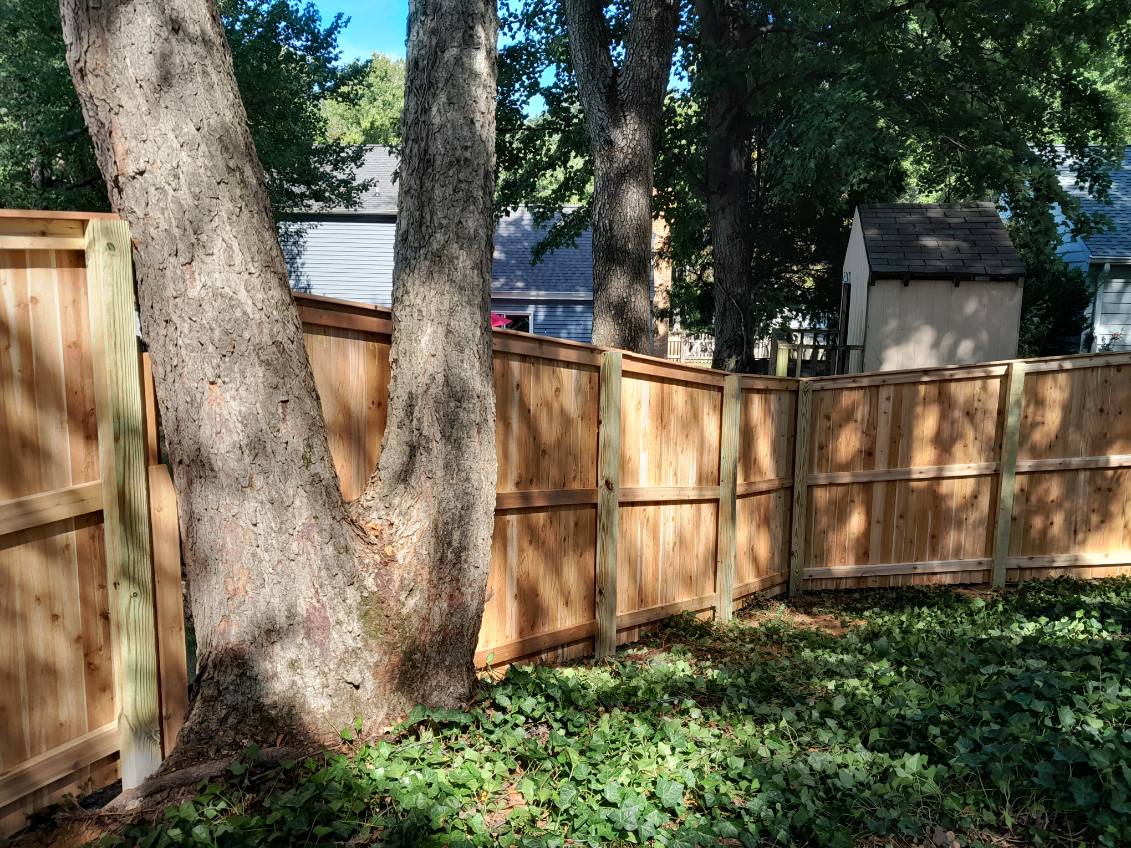
Project Overview The Challenge: Privacy on a Sloped, Tree-Filled Lot This Glen Burnie backyard had two challenges: mature trees and uneven ground. The homeowners wanted
Wood and aluminum serve different purposes. One creates an enclosure. The other defines space without closing it in.
In central Maryland, soil conditions, wind exposure, and neighborhood standards all influence the right choice. A site visit makes the differences clear. Seeing panel samples and reviewing your layout often answers the question quickly.
You can also request a free on-site estimate to compare both options side by side.
Aluminum fencing is structurally strong but functions differently from wood. It creates a defined perimeter while maintaining visibility. Wood provides full visual blockage and physical separation. In Anne Arundel County installations, aluminum is often chosen for boundary definition, while wood is selected when enclosure and limited access are priorities. Security depends more on height and gate reinforcement than material alone.
Aluminum fencing is popular for pool areas because the gaps between the pickets let you see what's going on inside. Wood can work for pool area privacy, but it can block your line of sight. What really matters is meeting local building codes and having the right gate hardware - not so much the type of material you choose. Before you install, check with your county to make sure you're good to go, especially if you live in a neighborhood with an HOA or are near water.
Aluminum isn't prone to rust like steel, but its corrosion resistance relies on the quality of the coating. Near bodies of water like the Chesapeake Bay or Magothy River, salt can eventually damage lower-grade finishes. A multi-stage powder coating helps make it last longer. When it's installed right and the finish is solid, that's more important than how thick the metal is, especially near water.
Curb appeal is all about the neighborhood. In older areas like Severna Park and Annapolis, a wood fence fits right in with the mature landscaping. In newer communities like Crofton and Odenton, aluminum fencing is more in line with what you'd expect to see. This style looks good and meets the local standards. What buyers really care about is how nice the fence looks and how well it's installed – not so much what it's made of.
Wood fencing provides full containment and blocks visibility, which may reduce distraction for some dogs. Aluminum fencing allows sightlines but still defines boundaries. Pet size and behavior matter more than material. The spacing between aluminum pickets should be carefully evaluated for smaller animals.