Three questions decide every commercial fence project in Maryland: which type fits the property, what the code actually allows, and what it costs. Business owners who skip the first question end up with a fence that doesn’t do the job. Skip the second, and you get a removal order from Anne Arundel County. Skip the third, and the quotes come back in a range you weren’t expecting.
This is a straight buyer’s guide for security fencing for Maryland businesses. We install commercial fence lines across Anne Arundel County, and the questions we hear during the estimate are almost always the same. Below, we cover the material options, the code you need to know before you break ground, the cost drivers, and how to decide what fits your property.
By the time you’re ready to talk to someone about security fence installation, you’ll know what to ask.
Types of Security Fencing for Commercial Properties
Four categories cover most commercial security fence options in Maryland. What you pick depends on what you’re protecting and who’s looking at it from the street.
Chain-Link Security Fencing
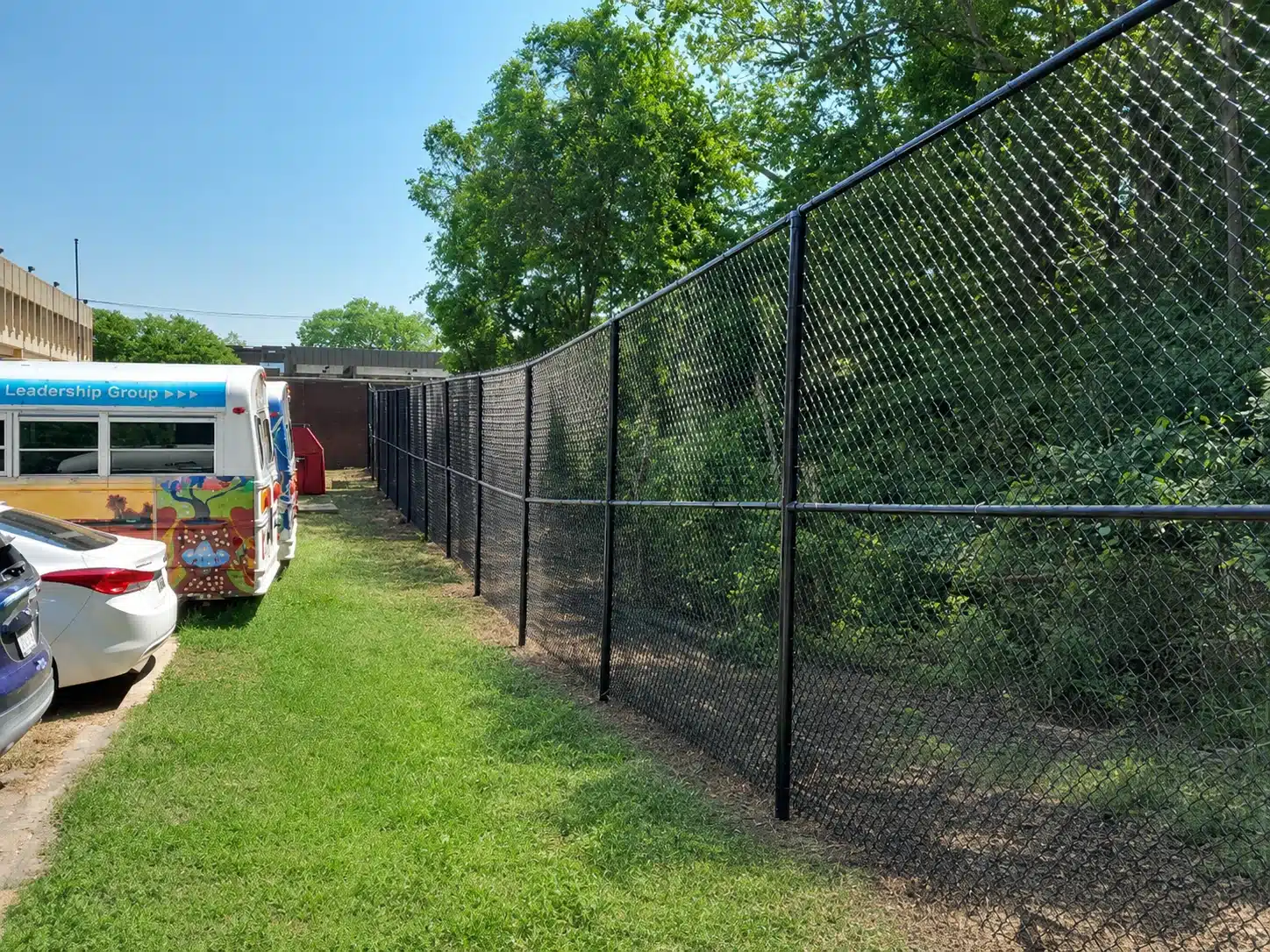
Chain link is the workhorse of commercial perimeter security. It’s the most common material on warehouse lots, contractor yards, storage compounds, and utility sites, and there’s a reason for that. Galvanized or vinyl-coated mesh gives you a clear sightline, withstands Maryland’s freeze-thaw cycles for 15 to 20 years, and comes in at the lowest price per linear foot of any commercial-grade option.
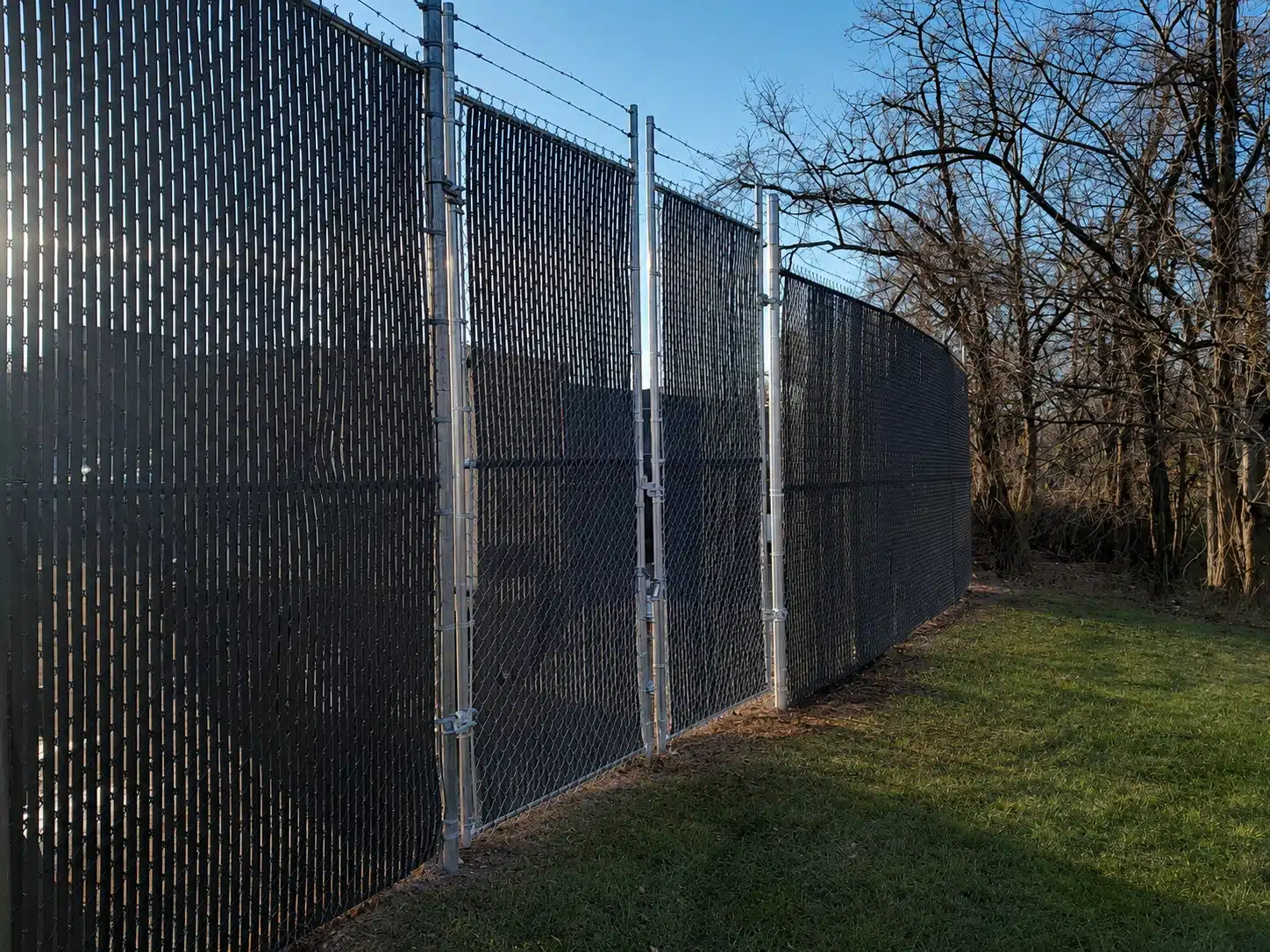
Where a chain-link security fence turns into a real high-security fence is in the specs. Standard 11-gauge residential mesh will not stop a determined intruder. For commercial security, you want 9-gauge or 6-gauge mesh, a tighter aperture, a top rail with tension wire at the base, and welded joints at posts and corners. Add a welded wire panel or mini-mesh insert if you need genuine cut resistance. Where zoning allows, barbed or razor-wire toppers add another layer of cut-and-climb resistance, though they come with setback rules covered in the next section.
Steel and Aluminum Ornamental (High-Security)
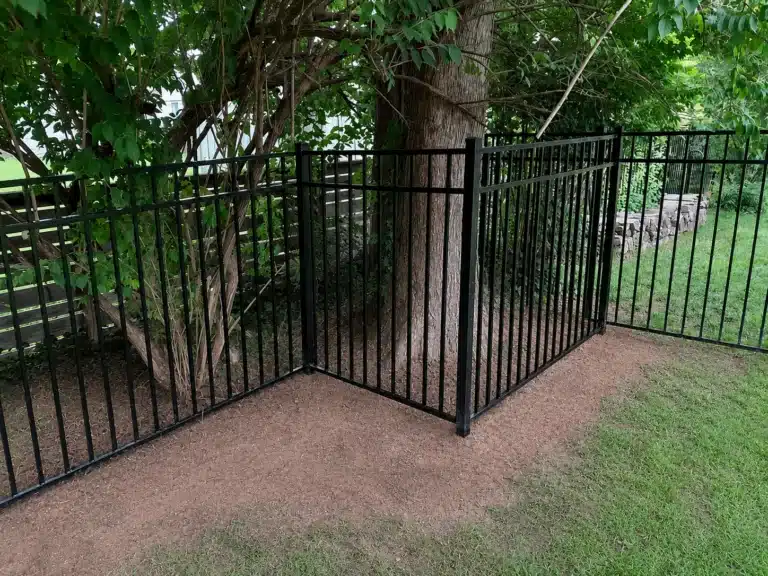
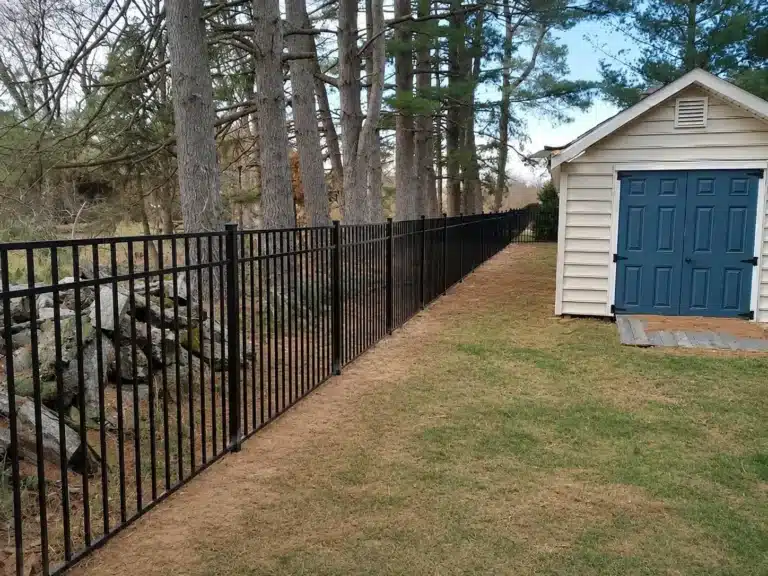
For storefronts, office parks, and municipal facilities where the fence has to look professional from the parking lot, ornamental steel and aluminum win. Spear-top and palisade fence designs give you an anti-climb fence by design. The vertical pickets have no horizontal foothold, and the spear or bent top prevents someone from getting a hand over the top rail. Powder-coated finishes hold up in coastal humidity around the Bay without the rust problems plain steel would have.
Wood and Vinyl Privacy Fencing
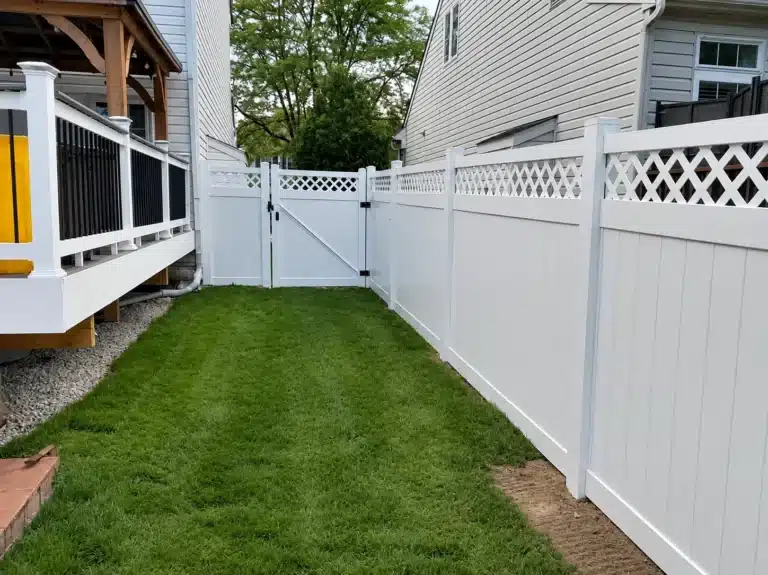
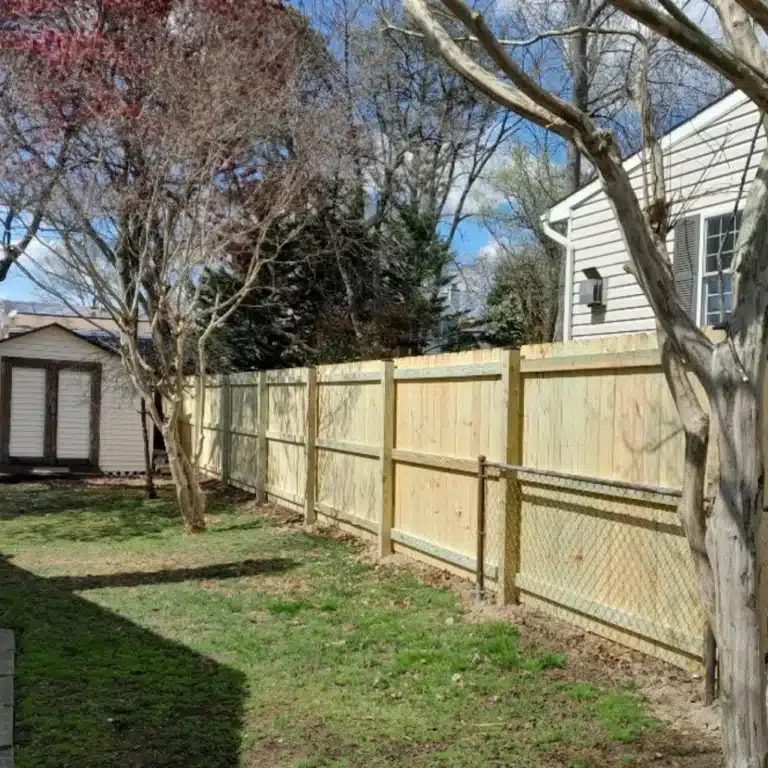
Where security means visual screening, such as hiding a dumpster enclosure, a fleet yard, or a loading area, solid privacy fencing does the job. It’s not a high-security barrier. Someone can go over an 8-foot privacy panel faster than they can go over a 6-foot chain link with a top rail. But if the goal is to keep the area out of view from the road, a vinyl or pressure-treated wood privacy panel is often the right choice, and it holds up better than most people expect for the price.
Access-Controlled Gates as Part of the System
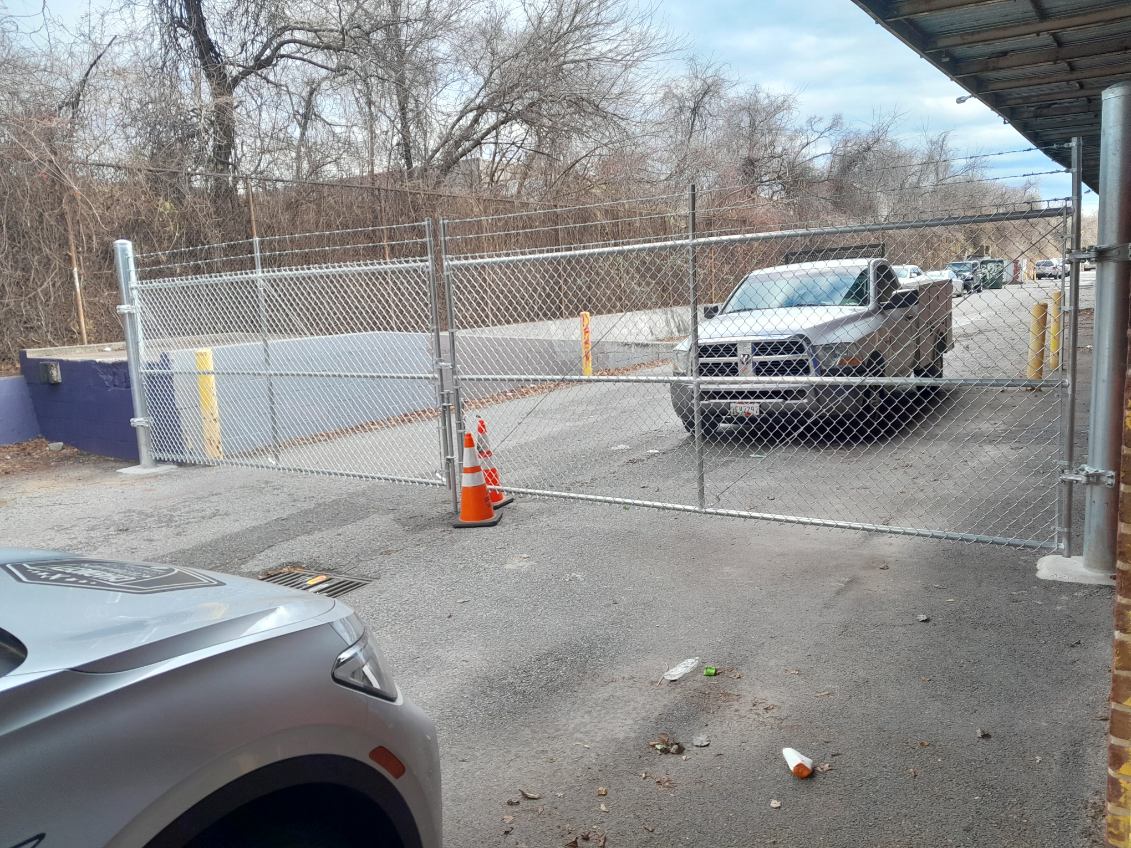
A fence is only as strong as the gate. On any commercial site with vehicle traffic, the gate is the weak point people scope out first. If you’re specifying a security fence, spec the access-controlled gates at the same time. Manual chain-and-padlock gates are fine for low-risk sites. For anything else, a keypad, card reader, or operator-integrated gate is worth the added cost.
What Maryland Business Owners Should Know About Fence Codes and Permits
Most competitor pages skip this part. It’s also the part that will delay your project by six weeks if you get it wrong.
Permit fees in Anne Arundel County. Commercial fence work triggers a building permit. The minimum building permit fee is $86.00, effective October 1, 2024, plus a $43.00 non-refundable application fee, which applies to all building permits. Fees scale up with project value, and the sliding scale is published on the Anne Arundel County permit fee schedule. Whether your specific commercial security fencing triggers a permit based on height or configuration is the first thing to confirm, since commercial and industrial zoning can carry different thresholds than standard residential rules. Start with the county’s Do I need a Permit tool, then call the permit office at (410) 222-7730 before you commit to a spec.
Applications go through the Land Use Navigator system, the county’s online portal at aacounty.org/lun. Permits expire if no work begins within one year of issuance. Miss a scheduled inspection or leave the site inaccessible when the inspector arrives, and you’ll owe a $150 reinspection fee. Processing time varies with the current volume at the permit office, so confirm the latest estimate through the Land Use Navigator help center or at (410) 222-7730 once you know your scope.
Miss Utility is not optional. Maryland law requires contacting Miss Utility at least 3 full business days and no more than 12 business days before excavation. This applies to every post hole on every commercial job, without exception. The Miss Utility of Maryland requirement is a legal one, not a courtesy call, and hitting an unmarked line without a ticket is on you.
Barbed wire and electrified fences have their own rules. Under Anne Arundel County Code § 18-2-205, up to six strands of barbed wire are allowed along the top of a chain-link or other non-barbed-wire fence, provided the fence is at least six feet tall. In a nonresidential zone, that covers securing a warehouse or storage area, or protecting access to a hazard such as a construction site, a utility use, a commercial swimming pool, or a stormwater pond.
A separate 50-foot setback from residential property lines applies only to barbed or razor wire used on a community association’s recreational vehicle or watercraft storage facility, not generally to warehouse or industrial security fencing. Since the applicable rule depends on your zoning and how the fence will be used, it’s worth confirming your specific site with the Zoning Administration Section at (410) 222-7437 before finalizing a spec.
Frost line matters for footings. Anne Arundel County’s frost line is 30 inches. Every post on a commercial security fence needs to be set below that depth in concrete, or the freeze-thaw cycle will push it out of plumb within two winters. Weathering classification for the county is “Severe.” That’s not a marketing word. It’s a code-recognized designation that affects material selection.
How Much Does Commercial Security Fencing Cost?
There is no honest per-foot number for commercial security fencing, because six variables move the total more than the material does. Anyone quoting you a flat rate over the phone is guessing.
What actually drives the price:
- Material and gauge. Chain link is the most economical option per linear foot. Wood and vinyl privacy land in the middle. Ornamental aluminum and steel palisade sit at the top of the range. Within any material, gauge, and specification, the number moves substantially. 6-gauge welded chain link is not comparable to 11-gauge residential mesh.
- Height. A 6-foot fence costs less than an 8-foot fence, and 8-foot commercial-grade security fencing is common on warehouses and equipment yards.
- Linear footage. Longer runs bring the per-foot cost down. Short runs with lots of corners cost more per foot than long straight lines.
- Gates and access control. A manual swing gate is a small line item. An automated slide gate with a keypad and safety loops is a project of its own.
- Site prep. Existing fence demo, tree clearing, grade changes requiring stepped or rackable panels, and rocky soil all add to the number.
- Permit fees. The Anne Arundel County fees above are real dollars that go on the invoice.
For a scoped estimate on your Maryland property, get a free commercial fencing estimate. We’ll walk the site, confirm what the permit office will require, and give you a written number, not a range.
Choosing the Right Security Fence for Your Anne Arundel County Business
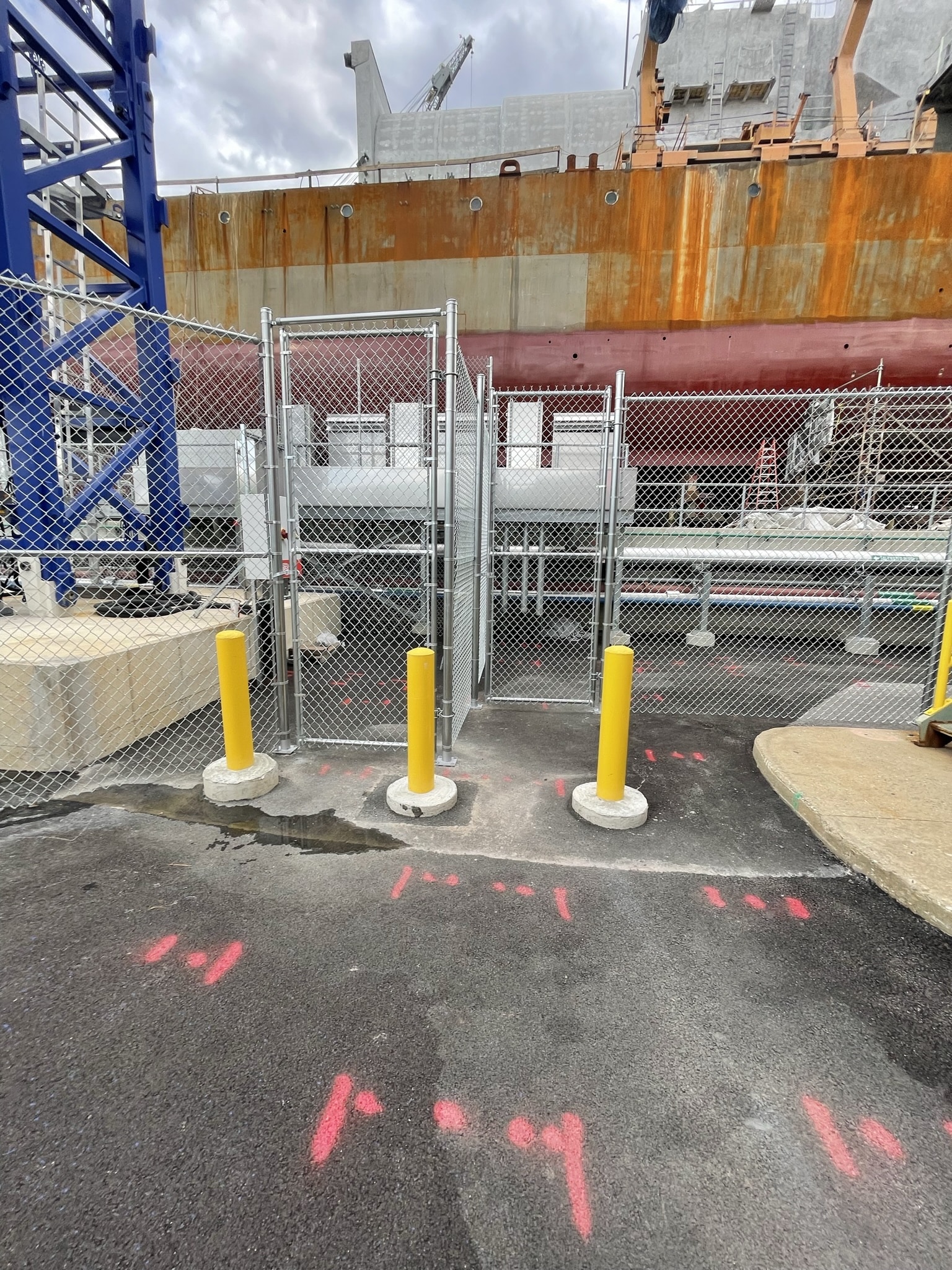
Before you request quotes, work through five questions. The answers tell you what to spec and save you from paying twice for a fence that doesn’t fit the job.
- What are you actually trying to prevent? The answer might be theft of specific inventory, general trespass, wandering entry, liability from someone walking into a jobsite, or visual screening of a working yard. Whatever it is, it changes the material.
- What does your daily traffic look like? Deliveries, staff, customer parking, and after-hours access all shape gate count and access-control needs.
- Do you need to see out, or does no one need to see in? Sightlines drive the choice between chain-link and solid-panel fencing. Security officers and camera systems generally want to see out.
- What’s the fence protecting, and is it near a community association’s RV or watercraft storage area? For a standard warehouse, storage yard, or industrial site, barbed wire along the top of a six-foot chain-link fence is allowed in nonresidential zones without a special setback. The 50-foot residential setback only applies to barbed or razor wire on a community association’s RV or watercraft storage facility, so most commercial sites will not be affected.
- What’s your timeline? Commercial permits, HOA-adjacent review, and Miss Utility all add lead time. Building a realistic schedule matters more than picking the fastest material.
All Around Fence & Decks has been installing commercial fence lines across Anne Arundel County for more than 25 years. One of the owners walks every commercial site personally before quoting, and we handle the permit paperwork and Miss Utility filing as part of the job. We’re licensed under MHIC #97820. If you want to talk through what fits your property, schedule a site consultation or call us at (443) 838-9374.
All Around Fence & Decks · 8130 Ventnor Road, Pasadena, MD 21122 · (443) 838-9374