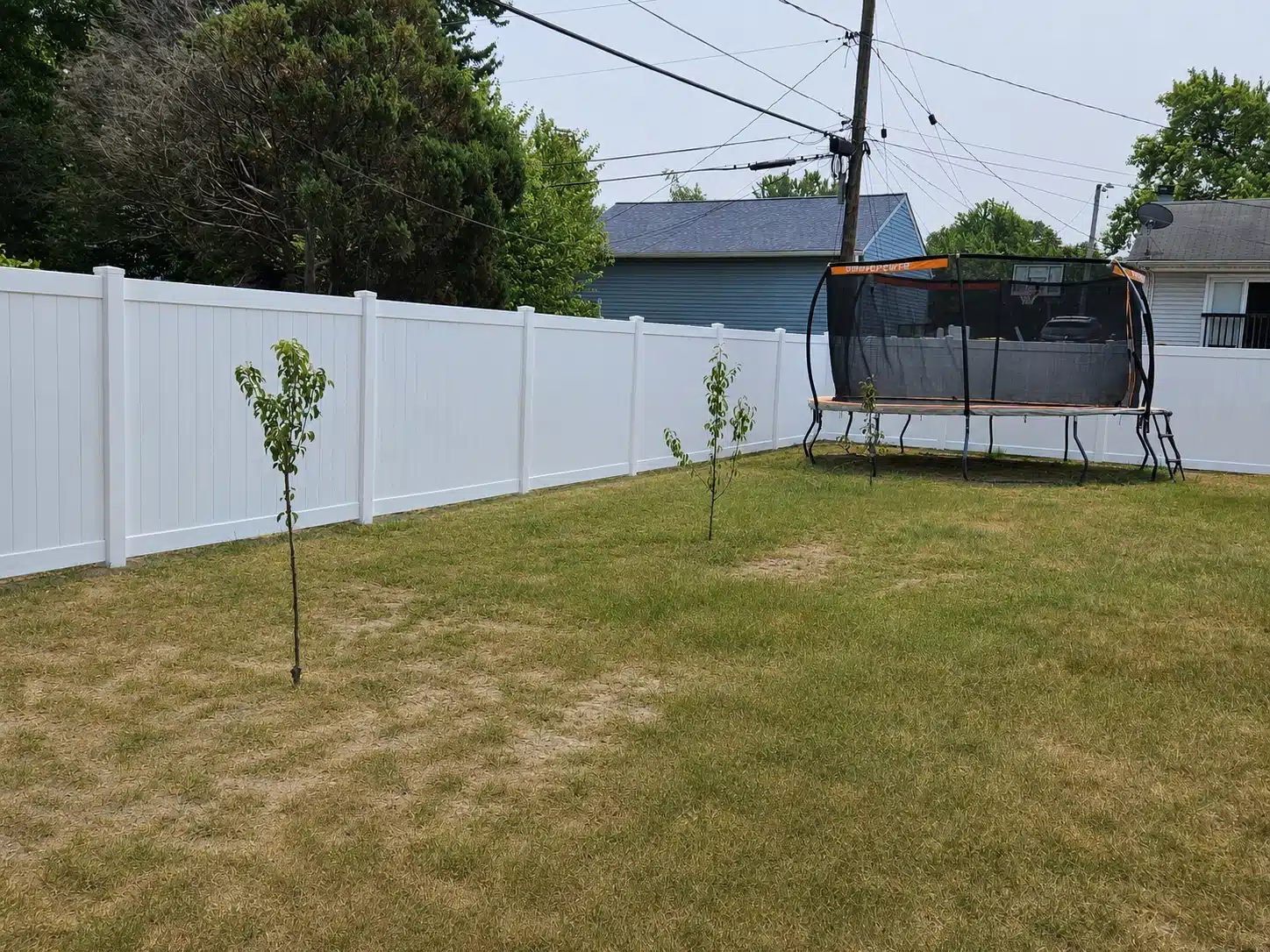
A fence coated in mildew, streaked with algae, or dulled by pollen doesn’t need to stay that way, but the wrong cleaning method can do more harm than the grime ever did. Pressure washing on the wrong setting strips wood fibers, careless bleach dulls vinyl or harms your lawn, and an abrasive scrub wears through a powder-coated aluminum fence.
This guide covers safe, material-specific washing methods for wood, vinyl, aluminum, and chain link, tuned to the conditions Pasadena, Maryland fences deal with every year.
Why Does Fence-Washing Technique Matter So Much in Pasadena, MD?
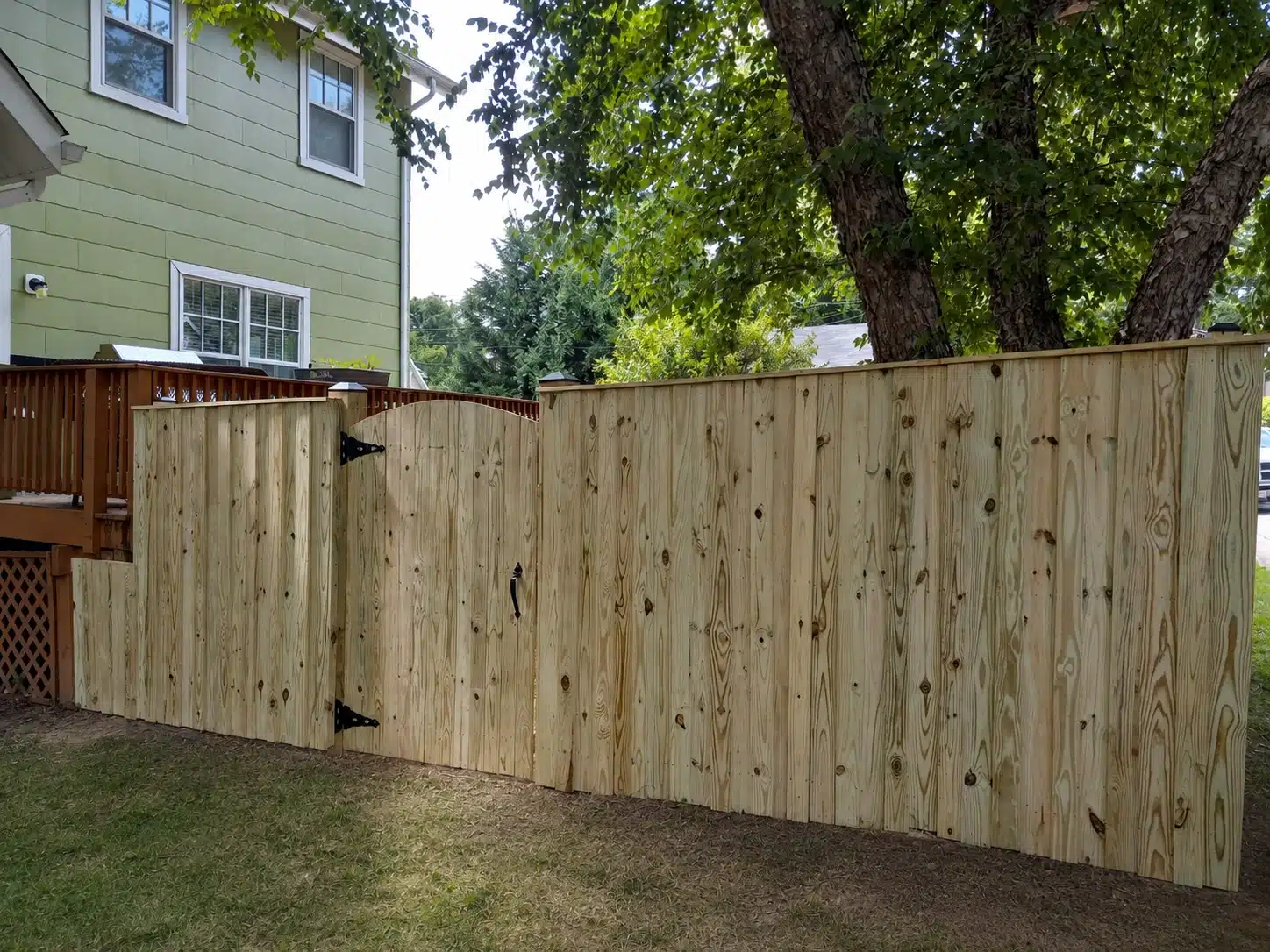
It’s rarely the weather that ruins a fence. It’s technique. A pressure washer set too high or bleach left sitting too long causes more damage in an afternoon than a season of humidity ever will.
Wood, vinyl, aluminum, and chain link each need a different PSI range, nozzle angle, and cleaner, whether the fence sits on a Pasadena waterfront lot or an inland Anne Arundel County property. Get it wrong, and you can strip pressure-treated wood to raw fiber or wear through an aluminum fence’s powder coat.
Chesapeake Bay-area humidity speeds up mildew and algae growth here, part of why Pasadena, MD fences need regular attention. We’ve spent 25-plus years learning this on fences across Anne Arundel County.
How to Wash a Fence Step by Step
What You’ll Need
Gather a garden hose, a soft-bristle brush, a bucket, mild dish soap or a diluted bleach solution, and a garden or pump sprayer for applying cleaner evenly. Wear safety glasses, and if pressure washing, use a unit with an adjustable or fan-tip nozzle, not a straight 0-degree tip.
1. Rinse and Presoak the Fence
Start with a plain water rinse from top to bottom to knock loose dirt, cobwebs, and debris off the fence. This presoak also keeps cleaning solution from drying too fast.
2. Apply Cleaning Solution From the Bottom Up
Apply soap or bleach solution starting at the bottom and working up. Bottom-to-top prevents solution from streaking down onto dry sections and leaving uneven marks.
3. Scrub With the Grain
Let the solution dwell, then scrub with a soft-bristle brush, moving with the wood grain or panel direction. Scrubbing against the grain can gouge wood and scratch vinyl or aluminum.
4. Rinse Top to Bottom
Rinse clean starting at the top and working down, the reverse of how you applied the cleaner, so residue flushes out instead of pushing back into clean sections.
5. Let It Dry 24 to 48 Hours
Give the fence 24 to 48 hours to dry completely before staining or sealing. Humidity slows drying, so on muggier days lean toward the longer end. Working with new pressure-treated wood? See the FAQ for the separate waiting period before staining.
Safe Pressure-Washing Settings by Fence Material
1. Wood Fences
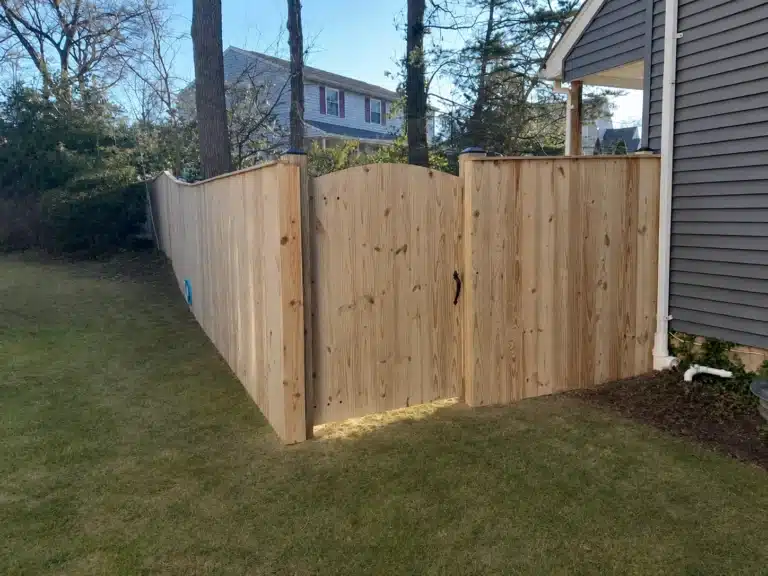
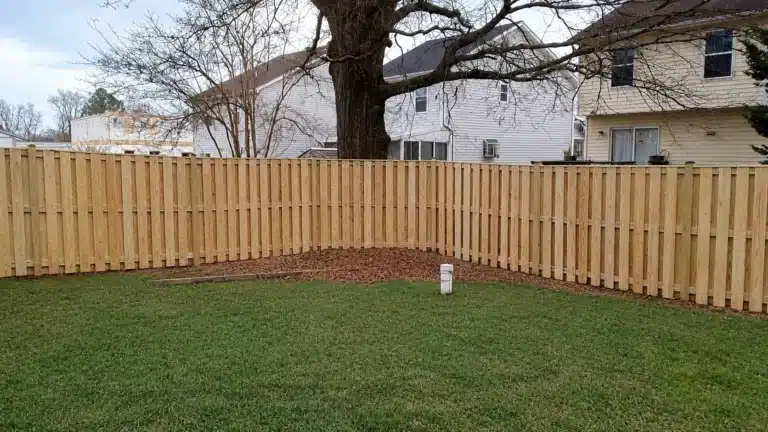
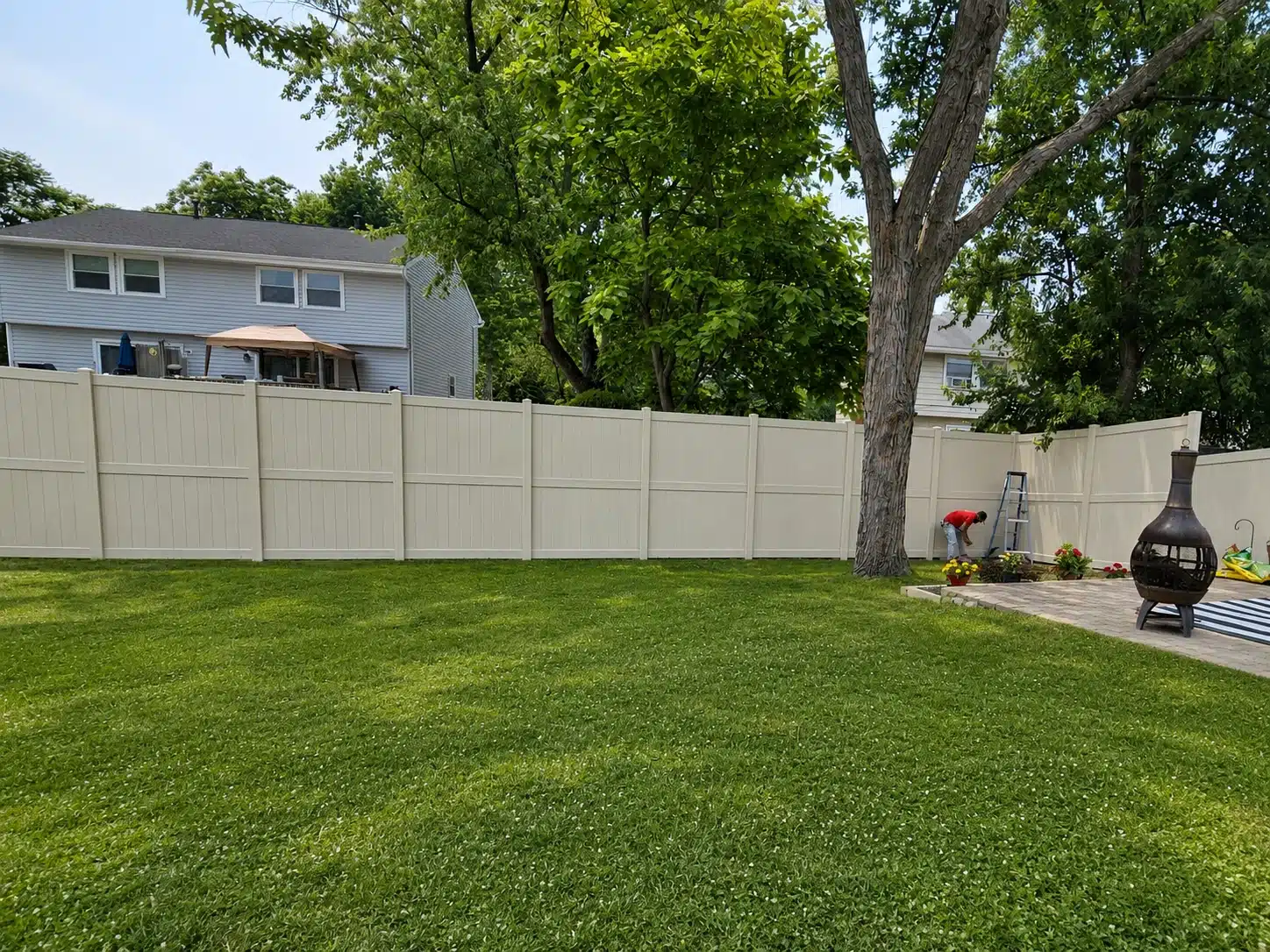
Wood fences, including our signature vertical board with a cap style, handle pressure washing well at the right settings: 500 to 1,200 PSI, a 25- or 40-degree fan-tip nozzle, and at least 18 inches of distance. A 0-degree nozzle gouges and splinters wood even at moderate PSI. See our wood fence installation page, and this fact sheet on how pressure treatment affects wood. Wondering how long to wait before staining? Check the FAQ.
2. Vinyl Fences
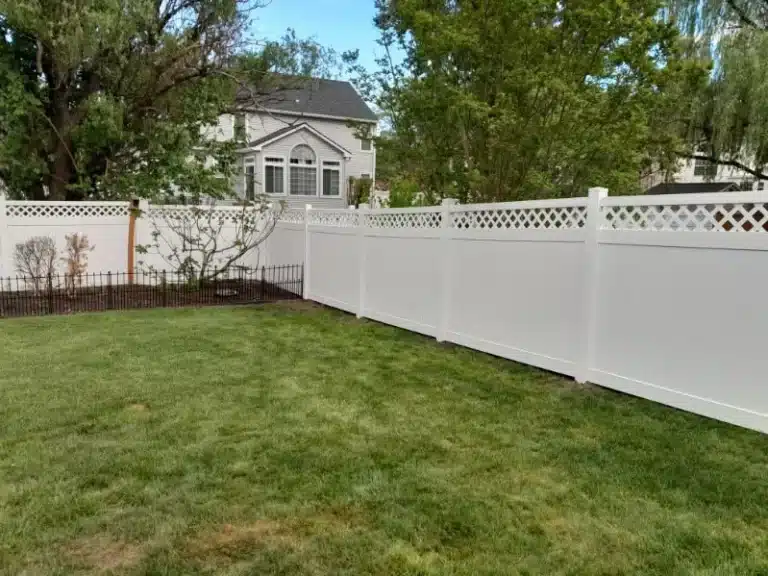
Vinyl holds up to pressure washing but doesn’t need much force. Keep PSI around 1,500 as a conservative cap, use a wide fan-tip nozzle, and hold the wand at a moderate distance rather than pressing in close. Too much pressure up close can still pit or dull the surface finish. See our vinyl fencing page for more.
3. Aluminum (“Wrought Iron”) Fences
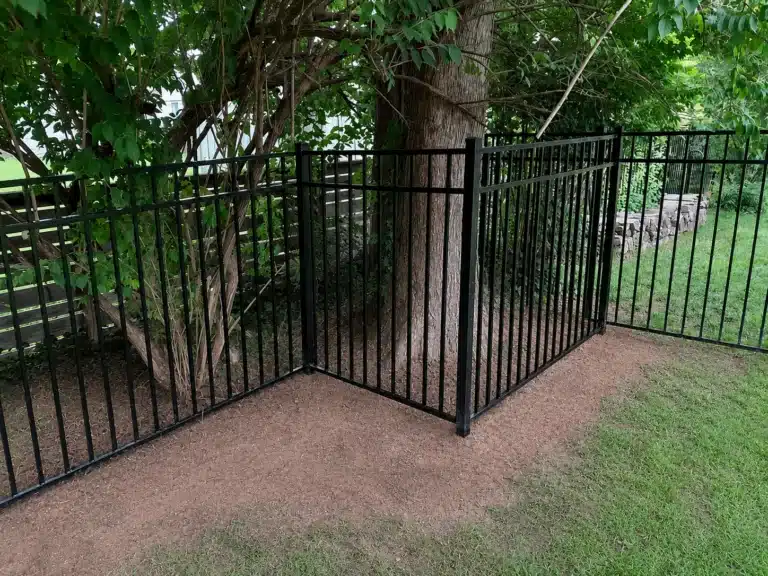
Aluminum fences, sometimes called wrought iron even though most modern residential fencing is aluminum, need a gentle hand. Skip abrasive brushes near scratches or rust spots; hard scrubbing wears through the powder coat and exposes bare metal. Waterfront Anne Arundel County communities like Riviera Beach and Lake Shore should rinse twice a year, spring and fall, to fight salt air. Inland Pasadena properties can stay on an annual rinse. See our aluminum fencing page.
4. Chain Link Fences
Most chain link cleaning just needs mild soap and a hose. Galvanized chain link handles a stiff wire brush; vinyl-coated needs a soft brush so the coating doesn’t scratch through. Rust spots should be wire-brushed to bare metal and touched up with rust-inhibiting paint before they spread. See our chain link fence installation page for options.
Common Pressure-Washing Mistakes to Avoid
The most common mistake is using a 0-degree nozzle, which concentrates enough force to gouge wood, crack vinyl, or strip paint off metal. Standing too close does similar damage, and exceeding the safe PSI range is another frequent error. Pressure washers can also cause serious injury when mishandled, so see these pressure washer safety warnings from CPSC.
Should You Use Bleach to Clean Your Fence?
Bleach isn’t always necessary, but it helps against stubborn mildew and algae soap alone won’t lift.
Oxygen bleach, or sodium percarbonate, is the better default. Mix 4 to 8 ounces per gallon of warm water, apply it, and let it dwell 15 to 20 minutes before scrubbing and rinsing. It’s effective on mildew and gentler on plants than chlorine bleach.
Chlorine bleach can work too, at a commonly recommended dilution of 1 part bleach to 3 parts water, though we wouldn’t treat it as equal to oxygen bleach. Runoff can harm grass and plants near the fence line, so rinse landscaping during and after the wash, especially for Anne Arundel County lawns close to the fence.
How Often Should You Wash Your Fence in Anne Arundel County?
Pasadena’s climate runs through distinct seasons that affect wash frequency. The hot season stretches from May 31 to Sept. 17, with average daily highs above 77 degrees; the cold season runs Dec. 2 to Mar. 7, with highs below 50 degrees. June is the wettest month, averaging 3.5 inches of rainfall, one reason fences here collect mildew if they go too long unwashed.
Humidity matters just as much. June averages about 11.9 muggy-or-worse days, and July is the muggiest month at 19.3 days, according to Pasadena’s average local rainfall data on WeatherSpark. That’s the same twice-a-year rhythm we recommend for aluminum fences along Anne Arundel County’s waterfront: salt air there, humidity here.
When to Call a Pro Instead of Cleaning It Yourself
Not every problem comes out with soap and water.
Rot, soft or spongy wood, leaning or loose posts, warped panels, cracked vinyl, and heavy rust-through on chain link all signal that washing won’t fix the problem. Scrubbing harder just speeds up the damage.
That’s a repair job, not a cleaning one. Our fence repair page covers what we handle. All Around Fence has worked on fences across Pasadena and Anne Arundel County for more than 25 years, holds MHIC #97820, has zero MHIC complaints, and carries an A+ BBB rating.
Get a Free Estimate: Request yours online or call us at (443) 838-9374.
Frequently Asked Questions
How much does it cost to have a fence professionally cleaned?
Cost depends on fence length, material, and condition, so we don’t quote a number without seeing the fence. The most accurate way to find out is to request a free estimate for your property.
How long should I wait to stain a new wood fence after washing it?
New pressure-treated wood needs time to dry out before it accepts stain, usually several weeks to a few months depending on humidity. A water-bead test tells you when it’s ready: sprinkle water on the wood. If it beads up, it’s still too wet. If it soaks in, it’s ready.
Will bleach hurt my grass or plants?
Chlorine bleach runoff can hurt nearby grass and plants, so rinse landscaping before and after washing if you use it. Oxygen bleach is the gentler, safer option for what’s growing near the fence.
What’s the safest PSI for a wood fence?
Stick to 500 to 1,200 PSI with a 25- or 40-degree fan-tip nozzle, held at least 18 inches from the wood. Never use a 0-degree nozzle on wood.
How often should I clean an aluminum fence near the water?
Aluminum fences in waterfront Anne Arundel County communities like Riviera Beach and Lake Shore should be rinsed twice a year, spring and fall, to protect the powder coat from salt air. Inland fences can stay on a once-a-year rinse.
Should I clean my fence myself or hire a pro?
If your fence just needs surface cleaning, mildew removal, or algae treatment, washing it yourself with the right settings works fine. If you’re seeing rot, loose posts, or heavy rust, that’s a job for a professional.
Get a Free Quote: call us at (443) 838-9374.