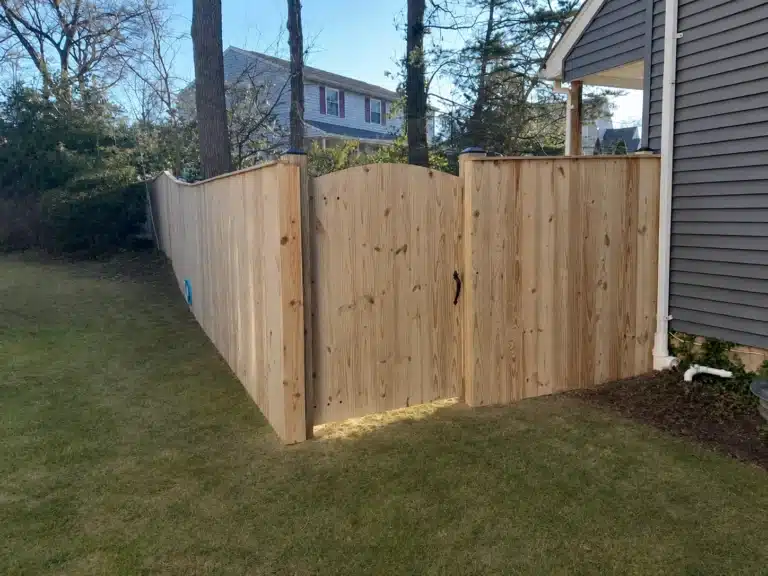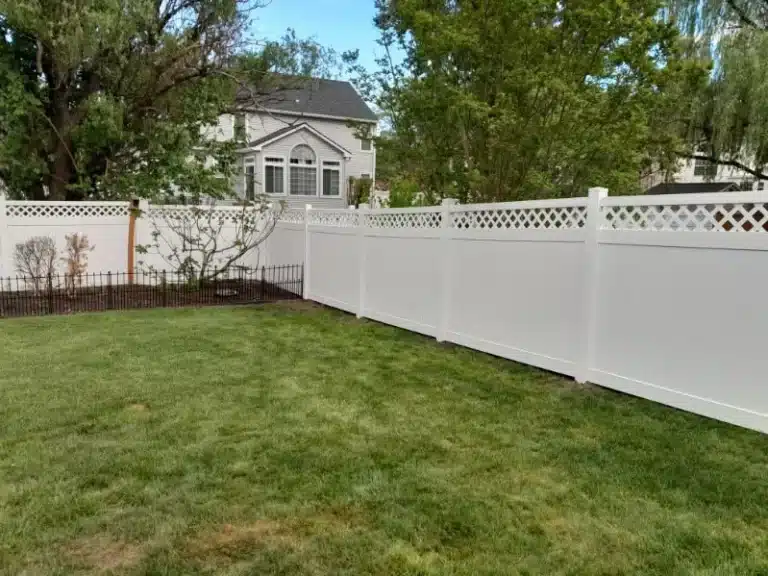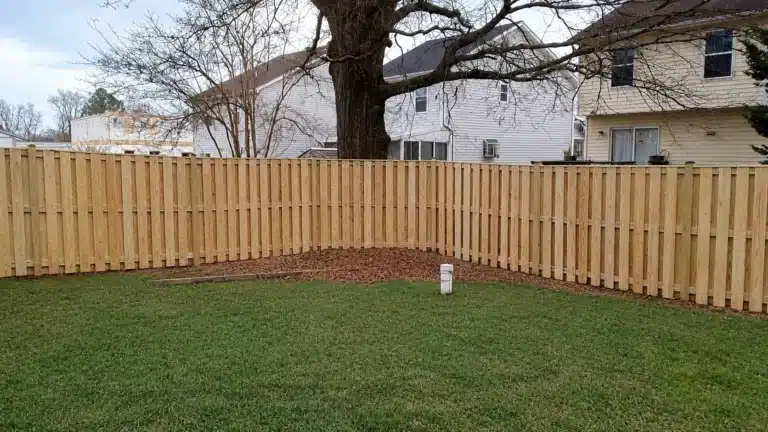
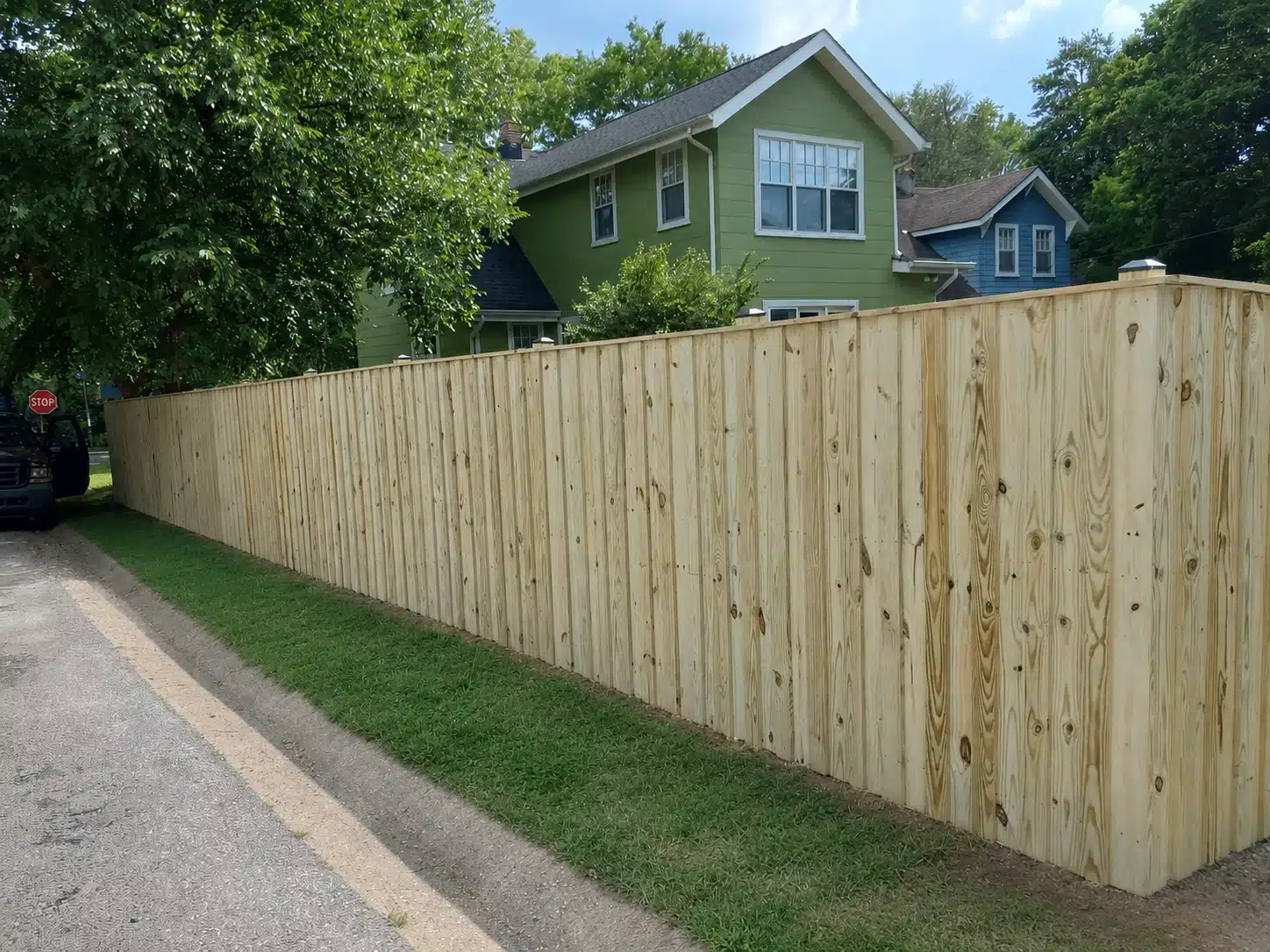
Whether you’re budgeting for a new wood fence installation, assessing storm damage, or just trying to describe a problem to a contractor, it helps to know your fence’s parts by name. This guide breaks down every major wood fence component — posts, rails, pickets, caps, kickboards, and fasteners — along with what each one does, how they commonly fail, and when a repair can fix the problem instead of a full rebuild.
Wood Fence Diagram
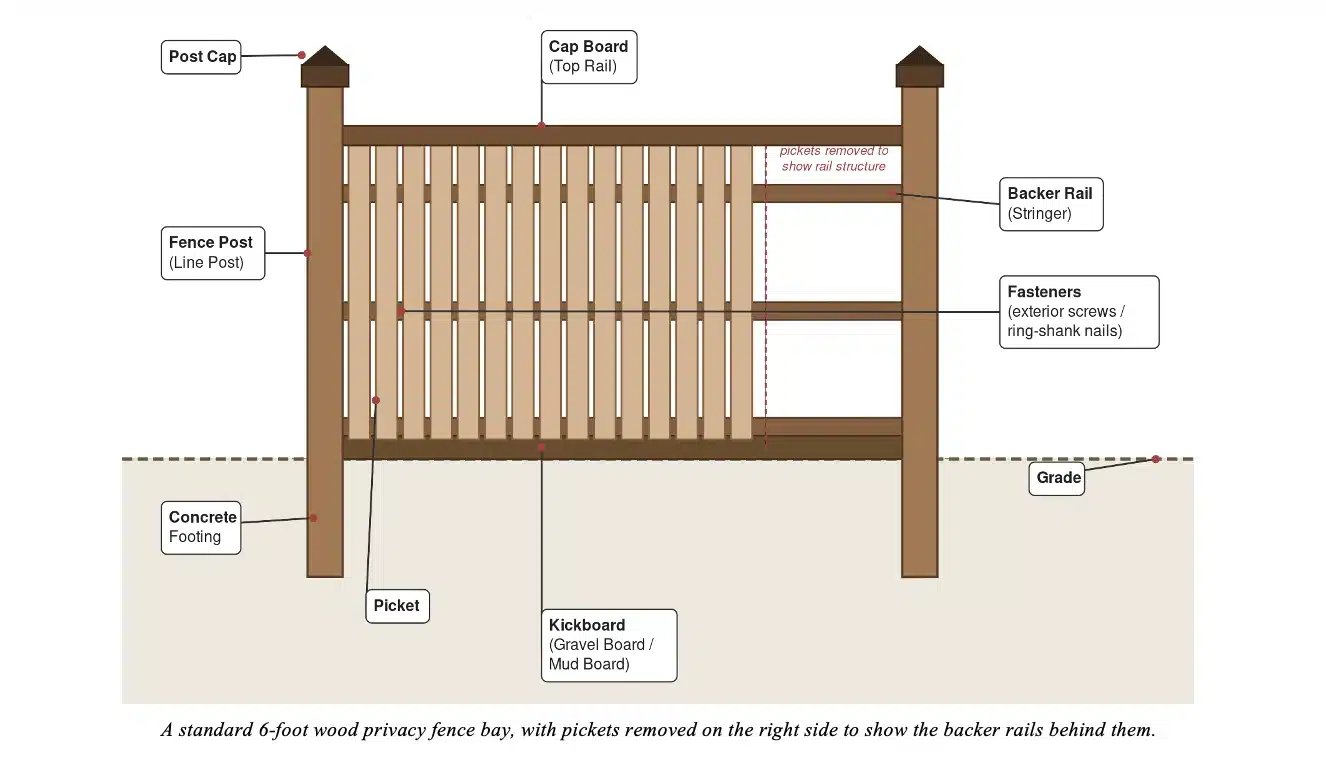
Wood Fence Components, Explained
Fence Posts
Fence posts are the vertical components that anchor a wood fence to the ground. They are typically made from 4×4 wood posts, but they may also be metal poles. The fence posts are secured into the ground using concrete, allowing them to withstand heavy wind and rain. In order for your fence to last, it needs a solid foundation of well-secured posts.
Post Types: Line, Corner, End & Gate Posts
Not every post along a fence line does the same job:
- Line posts run between corners and simply support the fence in a straight run.
- Corner posts sit where the fence changes direction and carry tension from two directions, so they’re typically set deeper.
- End posts mark where a fence line stops, such as against a house or structure.
- Gate posts support the hinges and latch hardware for a gate and are often reinforced since they absorb repeated swinging force.
Knowing which type of post has failed matters for repairs — a leaning corner or gate post usually needs a sturdier fix than a single line post.
Backer Rails (Stringers)
The backer rails are the horizontal boards on a wood fence, also known as stringers. There are typically three rows of backer rails going along the back of a standard 6-foot privacy fence. The backer rails screw into the fence posts to provide a support structure for the pickets. In most cases, the backer rails run along the inside of your fence, leaving the
smooth side out. However, you may opt for the backer rails to face outward if it better suits your security needs. If your neighbors’ fences touch your property, you may also choose to orient your backer rails based on their placement.
Fence Pickets
The fence pickets make up the bulk of your wood fencing. They attach to the backer rails to surround your yard. There are many style variations with fence pickets, including the way the top of the picket is cut and the way the boards lay next to one another. We can go over these design options during your fence installation quote.
Fence Gates
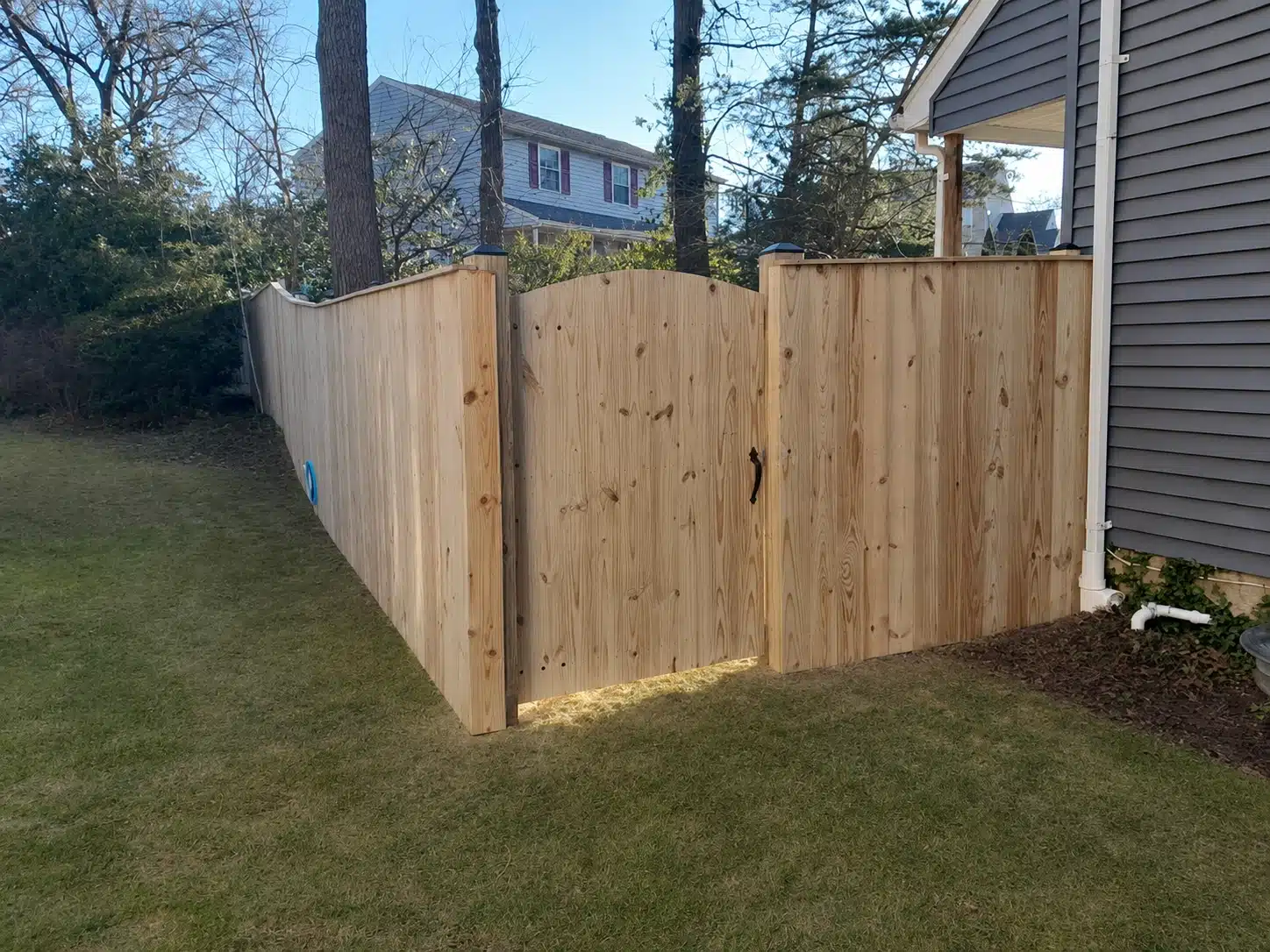
Fence gates provide access in and out of the yard. For most homes, there is a gate on the side of the house and a gate along the back of the fencing. The side gate gives access from the front yard, and the back gate gives access to the alley way or anything else behind the property. You can get a wood fence gate to blend in with your privacy fence or a metal fence gate that’s more decorative. Check out Metal Fence Gates vs. Wood Fence Gates to learn more.
Cap Board (Top Rail)
A cap board, also called a top rail, is a board that goes along the top of the fence to ‘cap’ it off. This makes the fencing look more modernized, and it typically looks better than the top of the fence pickets. Once again, this is an optional feature that is not right for every wood fence design. If you already have a wood fence, you may be able to add a cap later to improve the way it looks.
Post Caps & Toppers
Don’t confuse a cap board with a post cap. A post cap sits on top of an individual post rather than running the length of the fence. Beyond looks, a post cap helps shed water off the end grain of the post, which is the most vulnerable point for rot since it soaks up moisture like a straw. Decorative post toppers — such as ball, pyramid, or solar-light styles — serve the same protective purpose while adding a finished, custom look.
Kick Board, Mud Board & Gravel Board
A kick board or mud board is a horizontal board that goes along the bottom of the wood fence. This protects the bottom of the pickets from water and mud exposure. If you have a dog, a kick board can prevent digging and protect the fencing from scratches. This is an optional feature that is not necessary for all privacy fences.
You may also hear this component called a gravel board — it’s the same part, just a different regional name. All three terms (kickboard, mud board, gravel board) refer to the board that keeps pickets from sitting directly on soil or gravel.
Fasteners
Fasteners hold every other component together, and the wrong type will shorten a fence’s lifespan. Exterior-grade coated screws or hot-dipped galvanized ring-shank nails are standard for attaching pickets to rails and rails to posts. Ring-shank nails grip better than smooth nails, which tend to work loose as wood expands and contracts with the seasons. Uncoated or interior-rated fasteners will rust, streak the wood, and fail well before the fence itself wears out.
Decorative Trim & Lattice Toppers
There are plenty of decorative parts of a wood fence beyond the structural basics — trim boards, post toppers, and lattice toppers among them. These are great opportunities to customize wood fencing. Lattice toppers add extra height and airflow above a standard privacy fence without requiring taller posts and pickets, while trim boards frame the edges of gates or transitions for a more finished look.
Common Wood Fence Repair Issues
by Component
Most fence problems trace back to one component rather than the whole structure. Here’s what tends to go wrong and how it’s typically addressed:
| Component | Common Problem | Typical Fix |
| Posts | Leaning, rotted, or loose at the base | Sister a new post alongside a minor lean; fully replace and re-set in concrete if rot has spread |
| Backer Rails | Sagging or pulling away from posts, often from trapped moisture | Reinforce with a metal post-rail connector or replace the rotted section |
| Pickets | Loose, cracked, or missing boards as fasteners work free | Remove old fasteners and re-attach with exterior-grade screws; swap damaged boards |
| Gates | Sagging, dragging, or won’t latch | Adjust hinges and hardware, or reinforce the gate post if it has shifted |
| Cap Board / Kickboard | Splitting or rot from sun and ground moisture exposure | Replace the affected board; these are usually simple, low-cost swaps |
| Fasteners | Rust streaks, popped nails, loose boards | Replace with coated screws or galvanized ring-shank nails |
Not sure whether your fence needs a repair or a full replacement? Our fence and gate repair team evaluates the whole structure first and recommends the option that makes sense — not just the one that costs more. If a storm is behind the damage, here’s how to assess what needs replacing.
Wood Fence Maintenance Tips
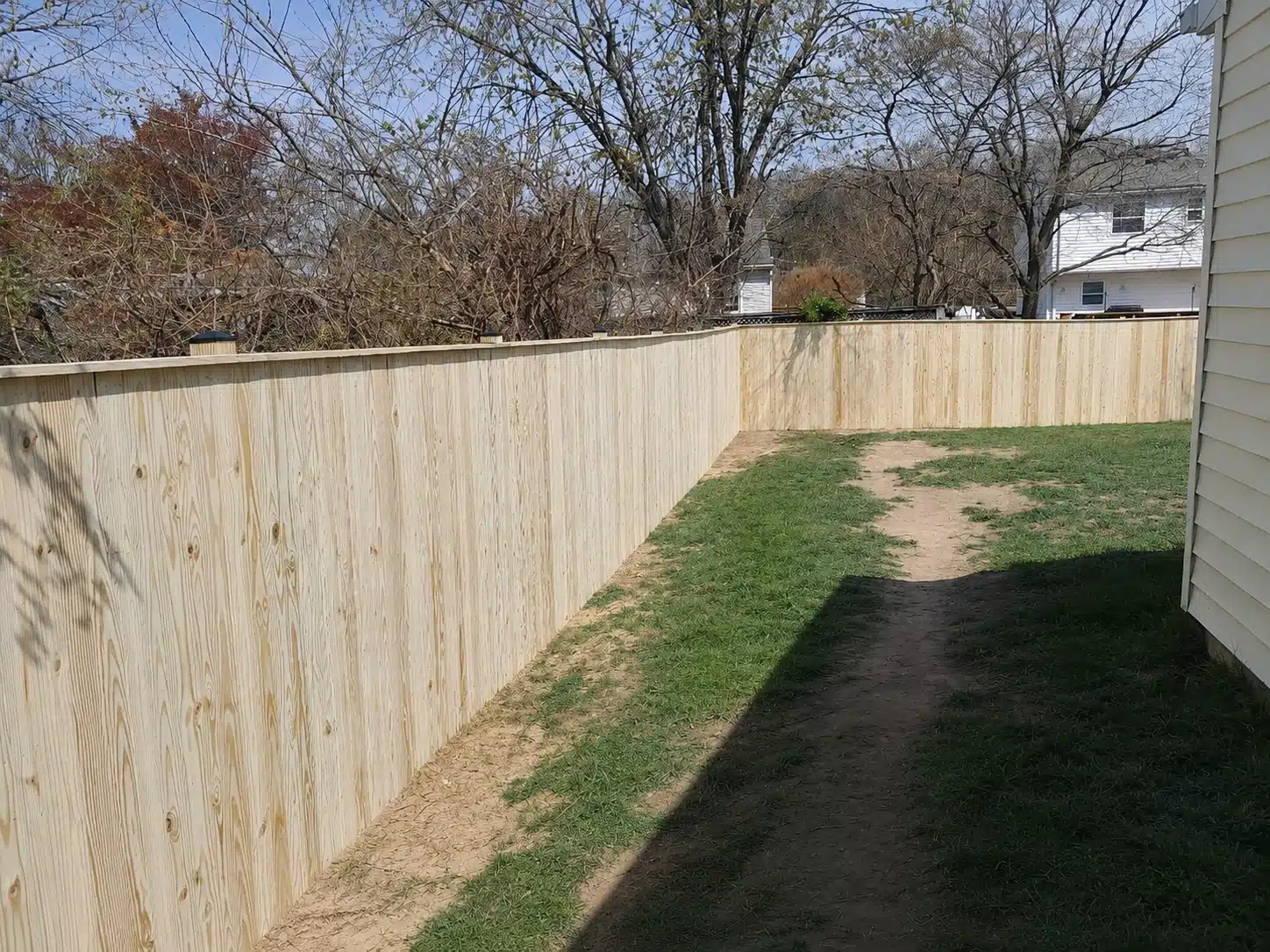
- Inspect annually: walk the fence line each spring and check posts, rails, and gate hardware for movement.
- Address loose pickets early: a single loose board is a quick fix; left alone, it stresses the rails around it.
- Keep the grade clear: pull back mulch, soil, or plantings that pile up against the kickboard, which traps moisture.
- Re-stain on a schedule: refresh stain or sealant every 1–3 years depending on wood type and sun exposure.
- Check posts at the grade line first: this is where posts typically rot or weaken before any other part of the fence.
- Lubricate gate hardware: hinges and latches that stick are often a simple fix before they turn into a bigger repair.
Frequently Asked Questions
What’s the difference between a fence post and a fence picket?
A post is a vertical structural component set in the ground (usually in concrete) that anchors and supports the fence. A picket is one of the vertical face boards attached to the backer rails between posts — pickets provide privacy and style but don’t carry structural load on their own.
What are the horizontal boards on a wood fence called?
They’re called backer rails, or stringers. A standard 6-foot privacy fence typically has three rails running between each pair of posts, with pickets fastened to the front.
Is a gravel board the same as a kickboard?
Yes. Gravel board, kickboard, and mud board all refer to the same horizontal board installed at the base of a fence to keep pickets off the ground.
How do I know which parts of my fence to replace after storm damage?
Start with the posts — if they’re still solidly set and vertical, rails and pickets can usually be repaired individually. See What to Do After Fence Storm Damage for a full walkthrough, or request an evaluation and we’ll assess the structure in person.
Can just one part of a fence be repaired, or does the whole thing need to be replaced?
In most cases, damage limited to a few posts, panels, or rails can be repaired without replacing the entire fence line. Full replacement usually only makes sense when multiple posts have failed or the structure is widely unstable. Our repair and restoration services start with an honest evaluation before recommending either option.
Design the Ideal Wood Fence for Your Property
Now that you know a rail from a stringer and a kickboard from a gravel board, you’re ready to talk through options with confidence. Whether you’re planning a new wood fence installation or getting an existing one repaired, the team at All Around Fence is happy to walk your property and go over every component in person.
Contact us at (443) 838-9374 to schedule a quote at no obligation.