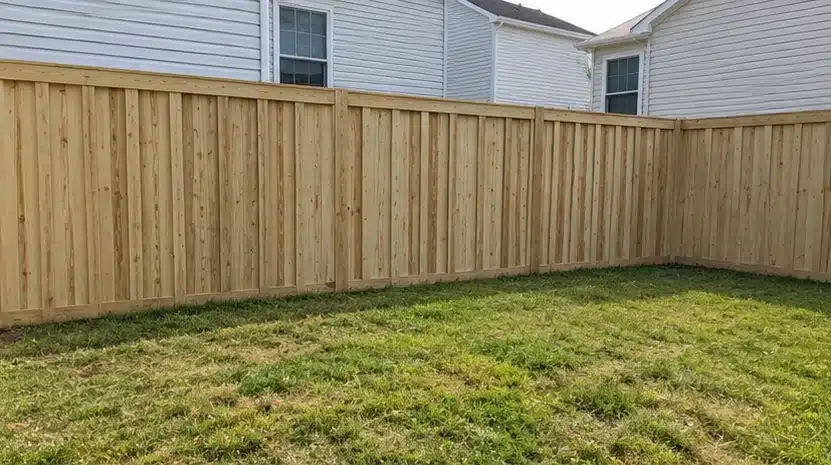
If you have been pricing out a privacy fence in Anne Arundel County, you have probably run into the term board and batten fence and wondered what sets it apart from other wood styles. It is a vertical-board wood fence with narrow strips, called battens, fastened over the seams for a clean, finished face. It gives you full privacy, a bit of farmhouse character, and a profile that handles sloped yards well. Below, we cover the design choices, how it compares to similar styles, and what it takes to build one that lasts through Maryland winters.
What Is a Board and Batten Fence?
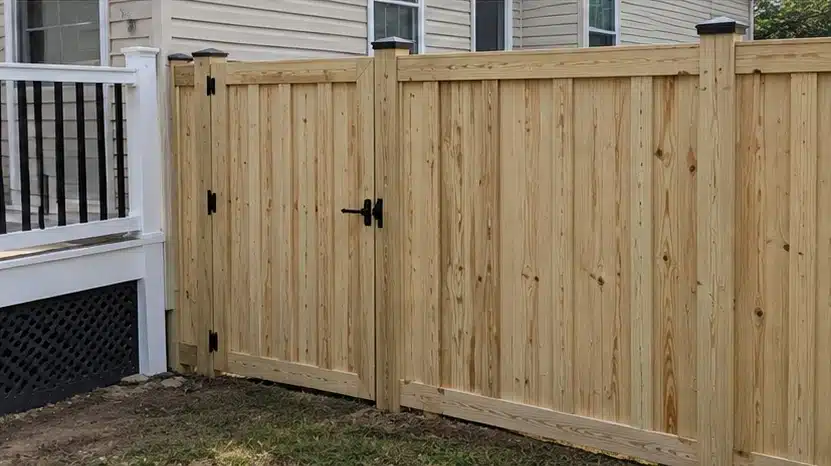
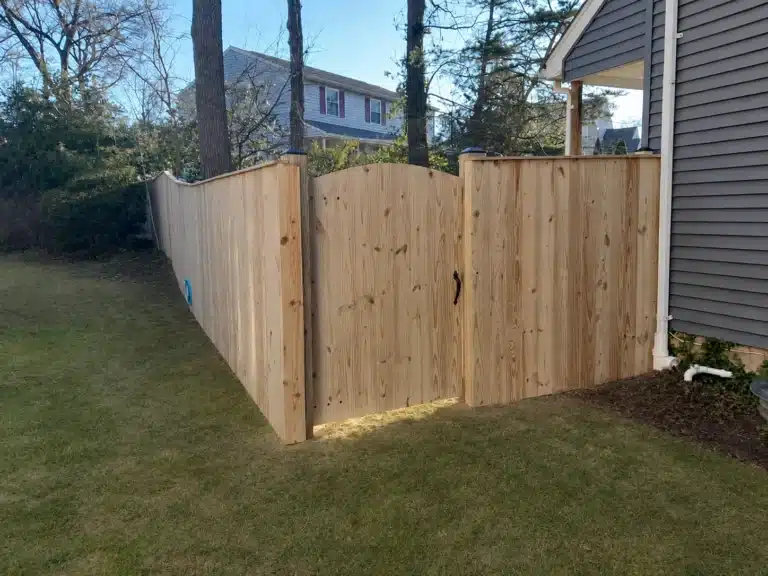
A board and batten fence starts with wide vertical boards set side by side along the rails. Narrower strips, the battens, are then fastened over the seams between those boards. The result is a solid, uniform wall of wood with raised vertical lines running from top to bottom.
Those raised battens create a shadow-line look that reads as more custom than a flat stockade panel. Up close, you notice the texture. From across the yard, you see a tidy, continuous face with no gaps to see through.
The battens are not just decoration. They cover the natural gaps that open up as boards expand and contract with the seasons, which keeps your privacy intact year-round.
Another advantage is that this style can be built to look good from both sides. That matters when the fence sits on a shared property line and your neighbor sees the back of it every day. We can set the rails and finish the face so neither side is left unfinished.
Board and Batten Fence Design Options
Board and batten fence design comes down to a handful of choices, and each one changes how the finished fence looks.
- Material: Most of ours go up in pressure-treated pine as the standard, with cedar available on request. Our wood fence installation services cover both options in more detail.
- Height: A 6-foot fence runs on two rails, while an 8-foot fence needs three for added support.
- Board and batten spacing: Wider boards with narrow battens give a bolder, more rustic shadow line, while closer spacing reads as more refined.
- Slope handling: On uneven ground, the fence can step down the grade in sections or rack to follow it.
- Finish: Stain or paint can be applied once the wood has dried, which lets you match the fence to your home’s trim or siding.
Because board and batten fences are built on site rather than from pre-made panels, these choices can be adjusted to suit your yard.
How Board and Batten Compares to Other Privacy Styles
All three of the most common wood privacy styles give you a solid fence. The difference is in how the boards are arranged.
| Style | How it’s built | Look | Good-neighbor finish |
|---|---|---|---|
| Board and batten | Wide boards set side by side, narrow battens over the seams | Raised vertical lines, farmhouse character | Can be finished both sides |
| Board-on-board | Boards overlap each other, no battens | Flat, layered, no visible gaps | Finished both sides by design |
| Stockade | Pickets butted tight together, often pointed or flat top | Simple, economical, flat face | One finished side |
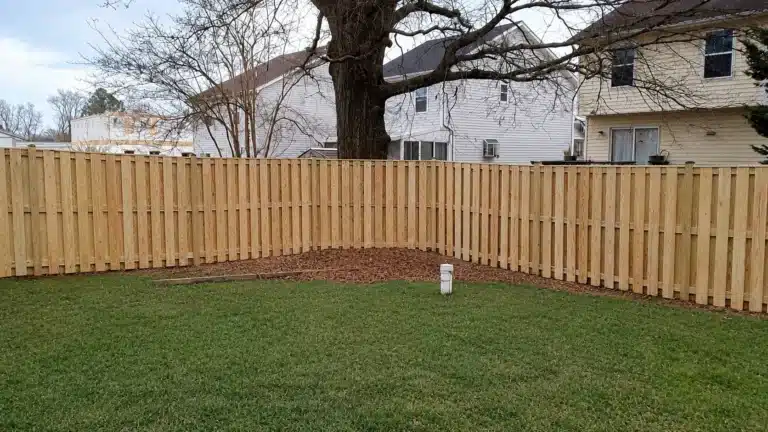
A board-on-board fence relies on overlapping full-width boards to hide the gaps, so it reads as a flatter, layered wall rather than one with raised vertical lines.
Stockade is typically the most economical of the three. Pickets go up tight against each other with no overlap and no battens. It works well as a privacy fence at a lower price point, but it does not carry the same finished look, and it typically has one good side.
No single style is best for every yard. Each one solves the same problem with a different budget and a different look. Board and batten lands in the middle, with more character than stockade and a different texture than board-on-board.
Is a Board and Batten Privacy Fence Right for Your Yard?
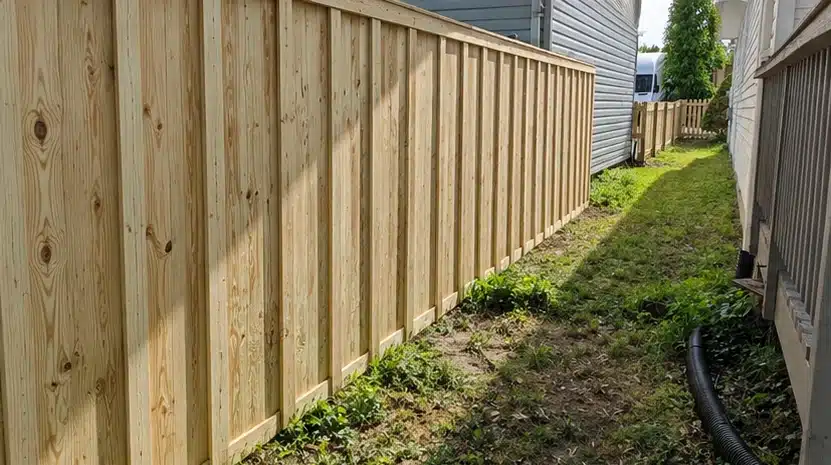
A board and batten privacy fence makes the most sense when you want full screening and care about how the fence looks. The raised battens give it more presence than a plain panel.
It also handles grade changes well. Many lots in the area are not flat. In Pasadena, waterfront-adjacent lots can slope toward the shoreline, and a stick-built fence of this style can step or rack down that grade without leaving triangular gaps at the bottom. On the larger wooded lots in Severna Park, the fence line may run past mature trees and uneven ground, which is where a fence built on site has an advantage over a pre-made panel.
Because it is a privacy fence, decide which direction the finished face points before the crew digs. If it runs along a shared line, that is a conversation worth having with your neighbor up front. We flag it during the measure so there are no surprises.
Full privacy also means the fence takes on more wind load than an open style, which is why how it is anchored matters more than the style itself.
We install fences throughout Pasadena and the surrounding Anne Arundel County communities, and a free estimate starts with a visit to walk your yard and talk through what fits.
Building a Board and Batten Fence to Last in Anne Arundel County
The long-term performance of a solid-face fence depends heavily on how the posts are set. Posts set incorrectly can lean or shift within a few seasons.
The number that drives everything here is the frost line. In Anne Arundel County it sits at 30 inches (per the county’s residential code requirements). Set a post shallower than that, and the ground freezing and thawing will heave it upward over the winter, which pulls the whole fence line out of square. We set posts below the frost line in concrete footings so yours stays put.
The county is also rated Severe for weathering, with an air freezing index above 1,500 (same source), which means local freeze-thaw cycling is hard on wood and on shallow footings. And because a privacy fence is a solid wall, wind load is a real factor: the county’s design wind speed is 115 mph (county code data). Proper post spacing and bracing are what keep a tall solid fence standing in a storm.
Modern pressure-treated lumber uses copper-based preservatives that corrode ordinary steel, so we use hot-dipped galvanized or stainless ring-shank fasteners throughout. Ring-shank nails resist backing out as the wood moves through hot summers and cold winters.
One detail matters on this style in particular: each batten should be fastened through the board behind it and into the rail, not just tacked to the board face. A batten nailed to the face alone can lift and separate within a couple of years. We also caulk the seam between batten and board before finishing, because water wicking into that joint can rot a fence from behind the batten outward.
Two more steps come before anyone digs. In Anne Arundel County, fences over 6 feet tall, fences on corner lots, and fences on waterfront properties require a building permit, which we handle as part of the job when your project needs one. Maryland law also requires a Miss Utility 811 locate before excavation, with the ticket in our company name as your contractor.
Cost Factors and Maintenance for a Cedar Board and Batten Fence
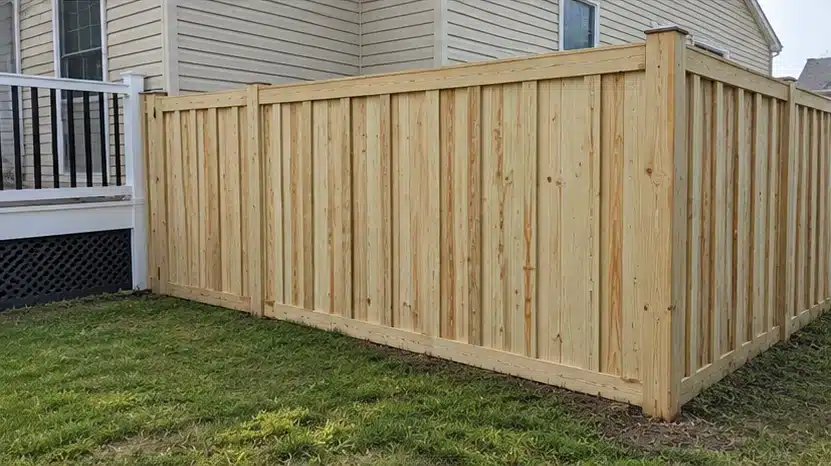
We do not publish price ranges, because an accurate number comes from seeing your yard. But here is what may affect the cost.
- Material: Pressure-treated pine is the standard, and cedar costs more as an upgrade.
- Height: An 8-foot fence needs a third rail and more material than a 6-foot fence.
- Linear footage: The total length of the fence line sets the base amount of material and labor.
- Site complications: Slopes, corners, and gates add labor to the project.
Maintenance needs are modest but ongoing. Plan on re-staining or re-sealing every 2 to 3 years to hold off UV graying and moisture, and wash the fence once a year. The battens face the sun directly, so they tend to show weathering first. Keep lawn sprinklers aimed away from the boards, because constant wetting at the base shortens a wood fence’s life.
Pressure-treated wood also needs to dry out, usually for 6 to 12 months, before it will take stain or paint properly. A coating applied too early will not hold.
Get a Free Board and Batten Fence Estimate
Ready to see what a board and batten fence would look like in your yard? All Around Fence & Decks is a licensed Maryland home improvement contractor (MHIC #97820), and we will walk your property, talk through design options, and give you a real number with no pressure.
Frequently Asked Questions
What board and batten fence designs can I choose from?
The main design choices are material, height, board and batten spacing, how the fence handles slopes, and the finish. Pressure-treated pine is the standard and cedar is available on request, and the fence can be built at 6 or 8 feet tall. Because it is built on site, each of these can be adjusted to fit your yard.
Is a board and batten fence good for privacy?
Yes. It is a solid-face fence with no see-through gaps, and the battens cover the seams that open up as boards expand and contract through the seasons. That keeps your privacy intact year-round rather than opening up in the dry months.
Do I need a permit for a board & batten fence in Anne Arundel County?
It depends on the fence and the lot. Anne Arundel County requires a permit for fences over 6 feet tall, fences on corner lots, and fences on waterfront properties. When your project needs one, we handle the permit application, and we also take care of the Miss Utility 811 locate before any digging.
How long do board and batten fences last, and how much maintenance do they need?
With posts set below the 30-inch frost line and proper fasteners, a well-built wood fence can last many years here. Plan on re-staining every 2 to 3 years and a yearly wash to keep it in shape. The battens face the sun, so they show weathering first and are worth checking each season.