Site ConditionCorner lot with shared property line
HOA RequiredNo
PermitAnne Arundel County residential accessory structure permit
Completed2025
A Corner Lot, a Shared Line, and Limited Privacy
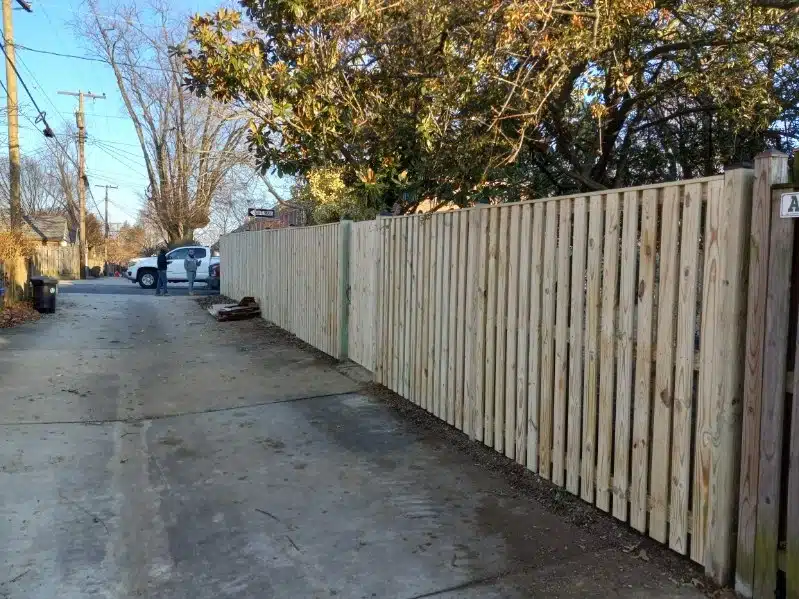
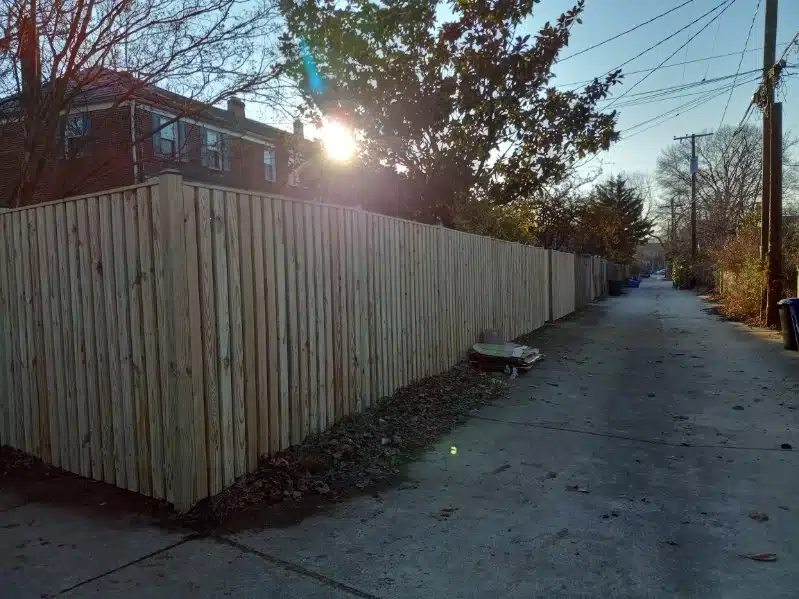
Corner lots in Pasadena come with a specific challenge: two street-facing sides mean increased visibility from multiple angles. When you add a shared property line, it becomes difficult to create a space that feels private.
That was the situation on this project. The existing fence had worn beyond repair, and the homeowner needed a replacement that provided real privacy — not a partial solution like a shorter fence or one with open sections.
At the same time, the fence needed to look finished on both sides, since the neighbor would see the back face daily.
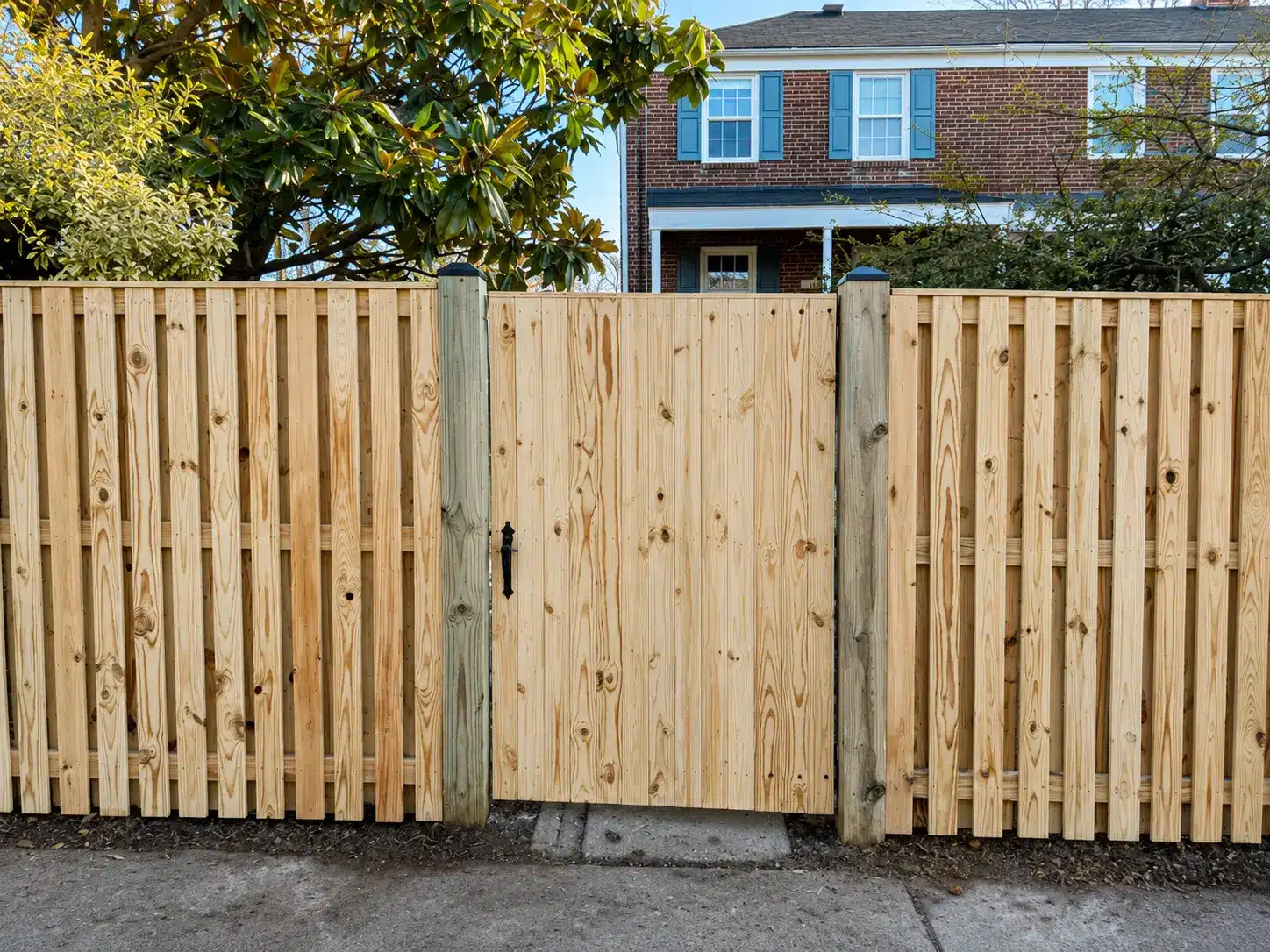
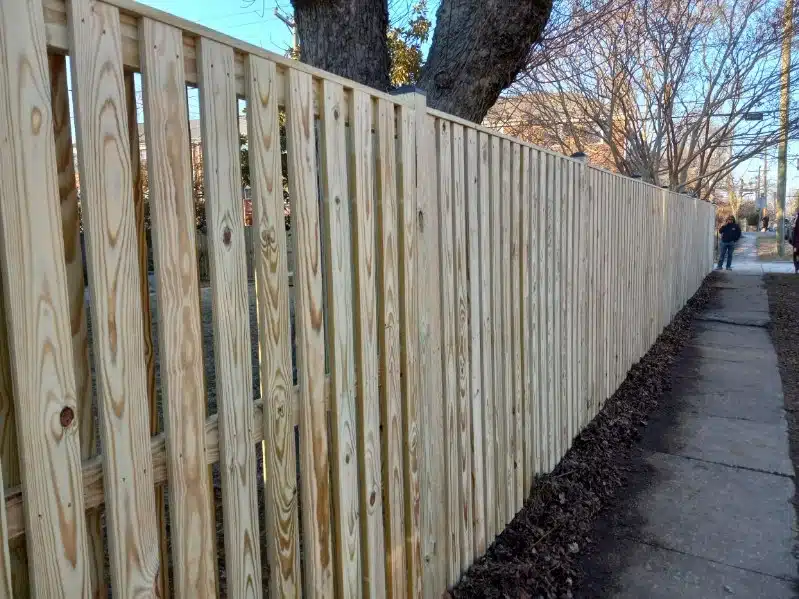
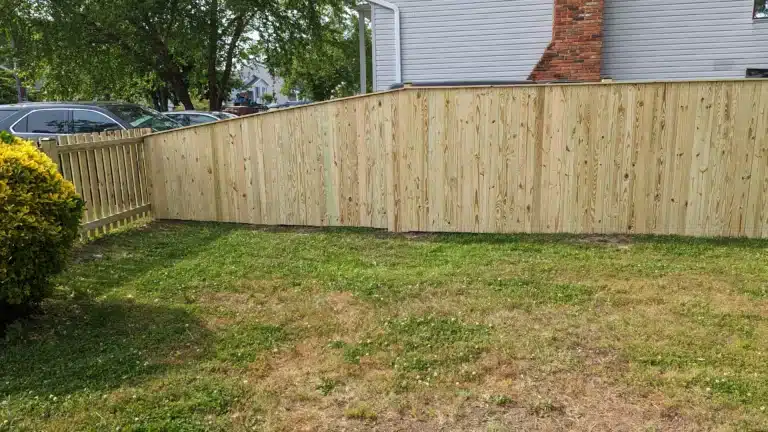
Shadowbox was the right fit. The alternating board design eliminates the look of a “back side,” giving both properties a finished appearance.
How We Built the Fence — Posts, Depth, and the Maryland Measure Method
We started by confirming the property line with a site measure. On a corner lot, accuracy here is critical — even small alignment errors can lead to disputes or require rework later.
Posts were installed below the frost line and set in concrete. While Anne Arundel County’s typical frost depth is around 18–20 inches, we go deeper to reduce movement during freeze-thaw cycles and help maintain a straight fence line over time.
The existing fence was removed and hauled away before installation began, so the homeowner didn’t need to coordinate separate disposal.
Shadowbox panels were then built using alternating pressure-treated boards. This creates the characteristic balance of airflow and visual screening. A cap rail was added along the top, which helps protect exposed end grain — one of the most common points where moisture enters and deterioration begins.
Project Gallery
The Finished Fence
The completed fence clearly defines the property without making the yard feel enclosed. The shadowbox design provides privacy while still allowing light and air to move through, which is especially important on a corner lot.
From both sides, the fence presents a finished, intentional appearance — an important detail for shared boundaries that often gets overlooked during planning.
Maintenance and Long-Term Performance
Pressure-treated wood will naturally weather over time, gradually shifting to a gray tone. That change is cosmetic and does not affect structural performance.
If the homeowner wants to maintain the original color, our advice is always to periodically stain every few years to help preserve the appearance and add an extra layer of moisture protection.
Planning a Wood Privacy Fence in Pasadena, MD?
All Around Fence & Decks has been building wood fences across Pasadena and Anne Arundel County for over 25 years. Every project starts with an owner-led site measure — not a salesperson, not a sub. Jeremy or Jim Ver Hoef measures the property, handles the permit paperwork if needed, and is on-site for the start of installation and the final walkthrough.
MHIC #97820 | BBB A+ | 25+ years | 171 Google reviews
Family-owned and owner-operated. Licensed and insured in Maryland. Serving Pasadena, Glen Burnie, Severna Park, Ferndale, and surrounding communities in Anne Arundel County.
Frequently Asked Questions — Wood Shadowbox Fence in Pasadena
Do I need a permit for a 6-foot wood fence in Pasadena, MD?
For most residential lots in Anne Arundel County, a permit is not required for a fence 6 feet or under in height. Exceptions apply if your property is on a corner lot, is waterfront, or has a pool being installed — in those cases, a county permit is required regardless of height. If you live within Annapolis city limits, a permit is also required. When a permit is needed, the fee starts at $43 plus an additional amount based on the estimated value of the work. Applications are submitted online through the county’s Land Use Navigator (LUN) system. We can advise you on whether your specific lot triggers a permit requirement when we assess the project.a
How long does a pressure-treated shadowbox fence last?
A pressure-treated wood fence typically lasts 15–20 years with basic maintenance. In Maryland’s climate, the main threats are moisture at post bases and UV exposure on horizontal surfaces. We address both at installation — posts set in concrete below the frost line resist ground moisture, and a cap rail protects the top of each panel. Annual inspection and re-staining every 3–5 years adds years to the fence’s life.
What makes shadowbox different from a standard privacy fence?
Shadowbox fences use alternating boards on each side of the rail, so both faces look finished. A standard board-on-board (or dog-ear) fence has all boards on one side, leaving the rail structure exposed on the neighbor-facing side. Board-on-board actually costs slightly more than shadowbox because the overlapping boards require additional lumber. Shadowbox is still the right choice when both sides of the fence need to look finished, particularly on shared lines or where the back of the fence is visible from a neighbor’s yard or a street.
Can you match an existing fence style?
Yes — we measure the existing style, board spacing, and height and replicate it when that’s the goal. On shared lines, keeping continuity with the neighbor’s existing fence is often worth doing. We can advise on-site.