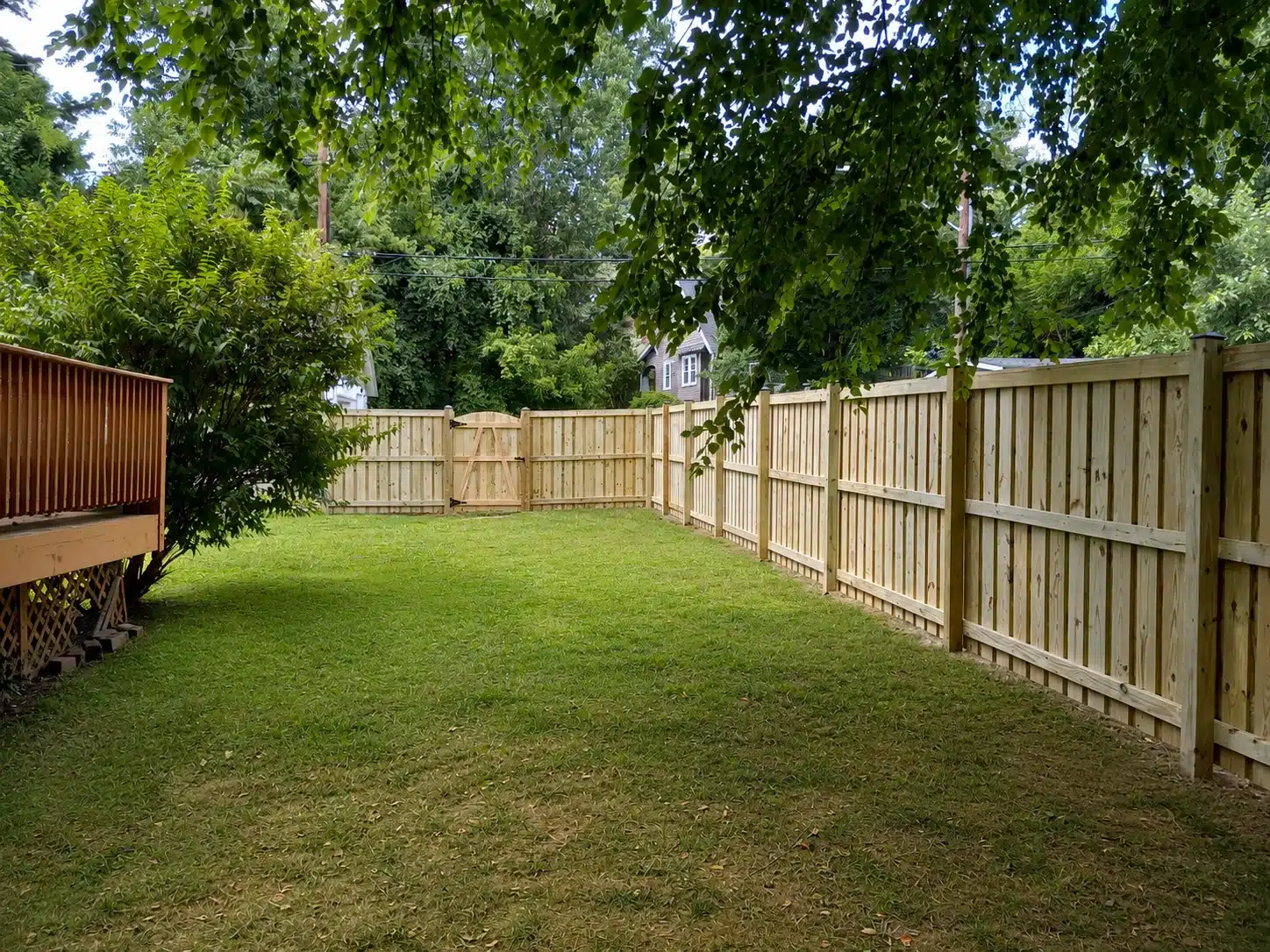
There’s more than one way to build a privacy fence. In fact, you’d probably be surprised by how subtle installation changes make a dramatic difference in the end design. Today we’re going to explore board-on-board fence design, also known as batten wood or board-on-batten fencing. This fence option is beautiful, timeless, and perfect for homeowners who want true privacy.
How Board-on-Board Differs from Standard Privacy Fencing
In a traditional privacy fence layout, the pickets are laid next to each other with a small gap between each one. This gap grows over time because the wood shrinks with age.
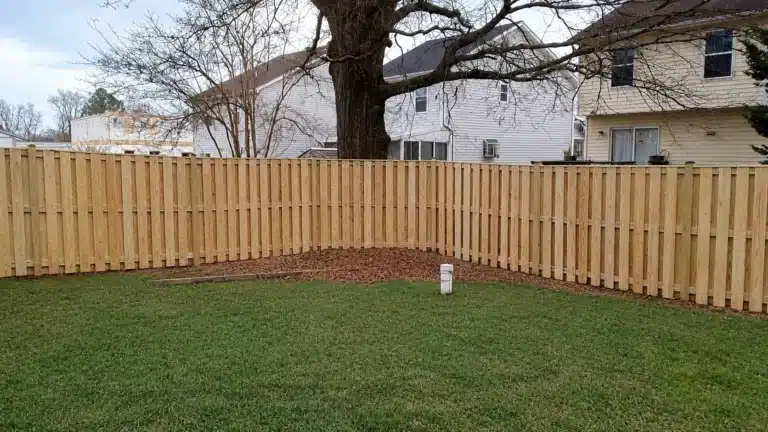
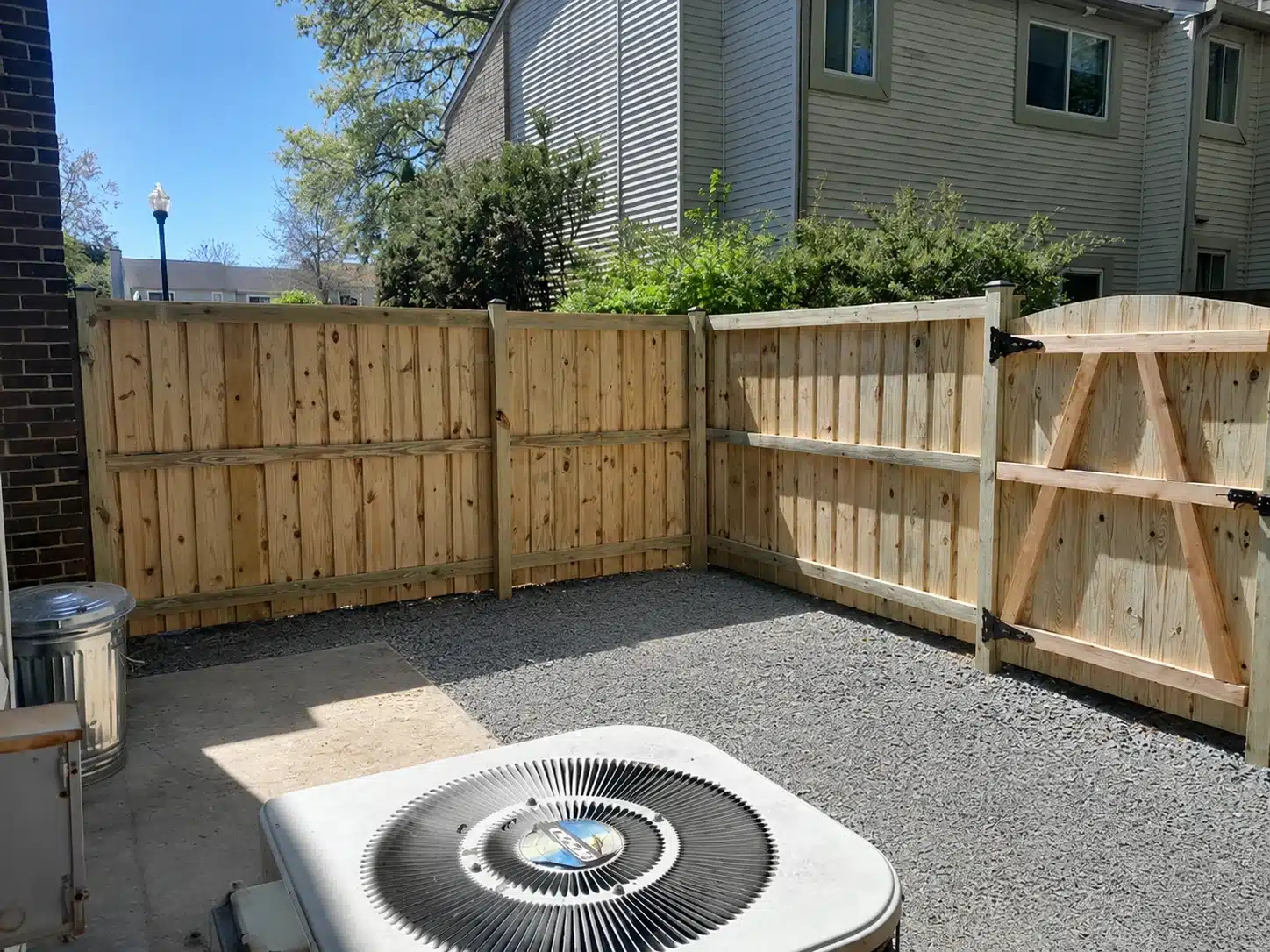
With board-on-board fence design, the pickets are stacked on top of each other to cover that gap and create extra dimension along the fencing. Instead of having a flat wall of fence pickets, you’ll see a staggered wall of alternating depths – front, back, front, back. The gaps from before are covered completely to prevent unwanted parties from looking into the yard.
In humid areas like Pasadena and Anne Arundel County, wood boards swell and shrink more with the seasons — which is exactly why the overlapping board-on-board layout holds its privacy better here than a standard side-by-side fence. If you’re still deciding between materials, our climate comparison of wood, vinyl, and chain link walks through how each one handles our local humidity.
Benefits of Board-on-Board Fencing
Board-on-board fence is somewhat unique, which could help your house stand out in the neighborhood. This design is ideal for homeowners looking for privacy because there aren’t visible gaps between the pickets. The stacked design cuts down on noise pollution and wind as well, which could be a priority in a busy neighborhood. With the right cap on the fence, this design looks pristine and professional.
Drawbacks to Board-on-Board Fencing
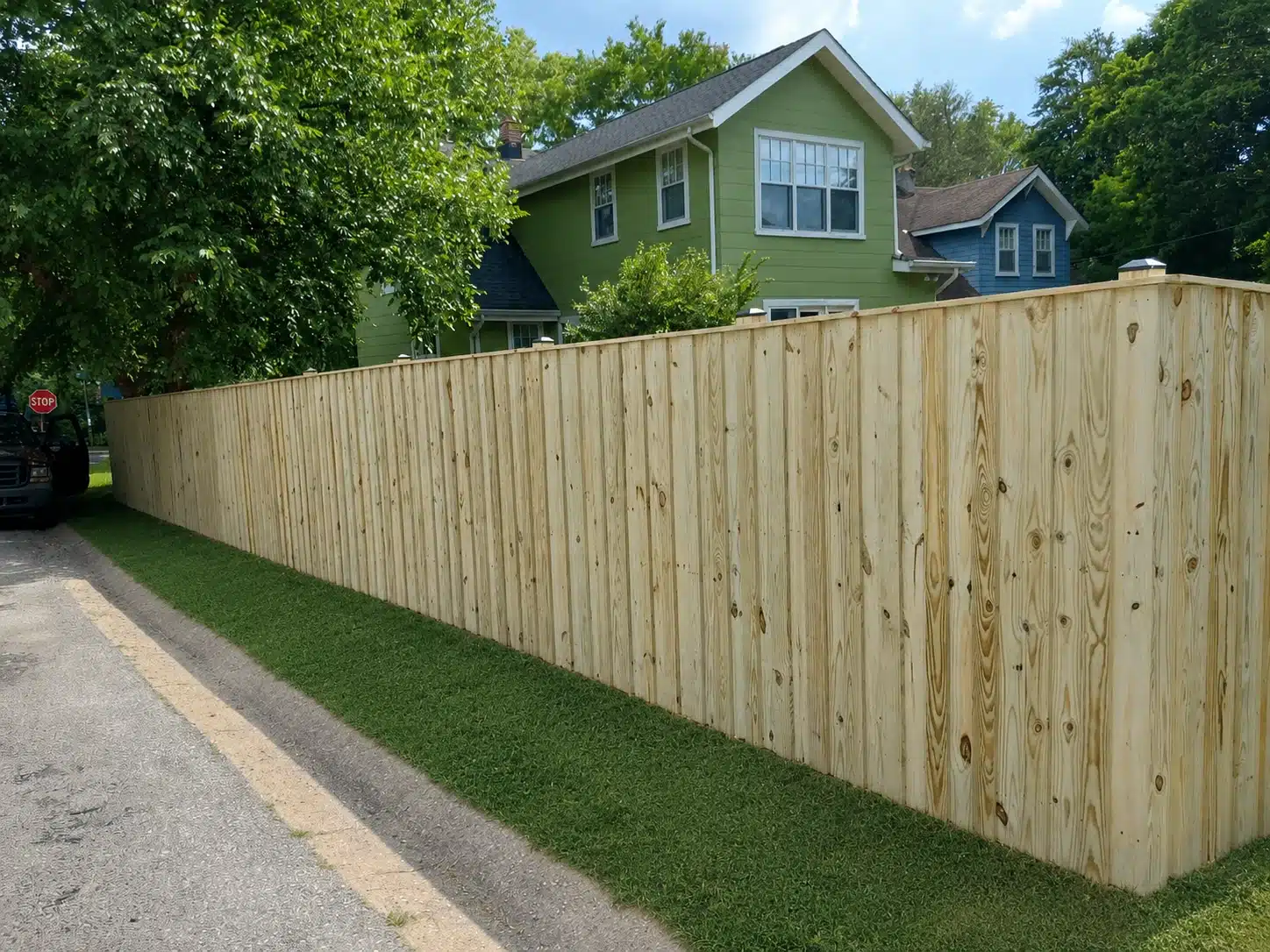
Board-on-batten fencing requires more materials than a basic privacy fence. This will add to your installation costs and to the overall weight of the fencing.
Staining a batten wood fence is a bit trickier than staining a standard wood fence because of the grooves between the pickets. The fence can still be stained and maintained — our Pasadena fence maintenance calendar covers when to schedule it — but the extra grooves may add to your maintenance costs over time.
Finally, board-on-board fence designs aren’t for everyone. They are relatively neutral, but some homeowners prefer a more traditional look. This may be something to keep in mind if you plan to sell your home in the future.
What Does a Board-on-Board Fence Cost?
Board-on-board fencing generally costs more than a standard side-by-side privacy fence, mainly because the overlapping design uses roughly 30% more lumber. Nationally, installed pricing for board-on-board fencing typically runs somewhere in the $15 to $50+ per linear foot range, depending on wood species, fence height, gate count, and site conditions like slope or tree removal. A full backyard project can land anywhere from a few thousand dollars to well over $10,000.
Those numbers are general industry ranges, not a quote for your project. The most accurate way to get real pricing is a free on-site estimate, where we can measure your linear footage and walk through material options with you. If you’re weighing that upfront cost against resale value, our guide to fence ROI in Pasadena breaks down which styles tend to pay off the most.
Pressure-Treated Pine vs. Cedar for Board-on-Board Fencing
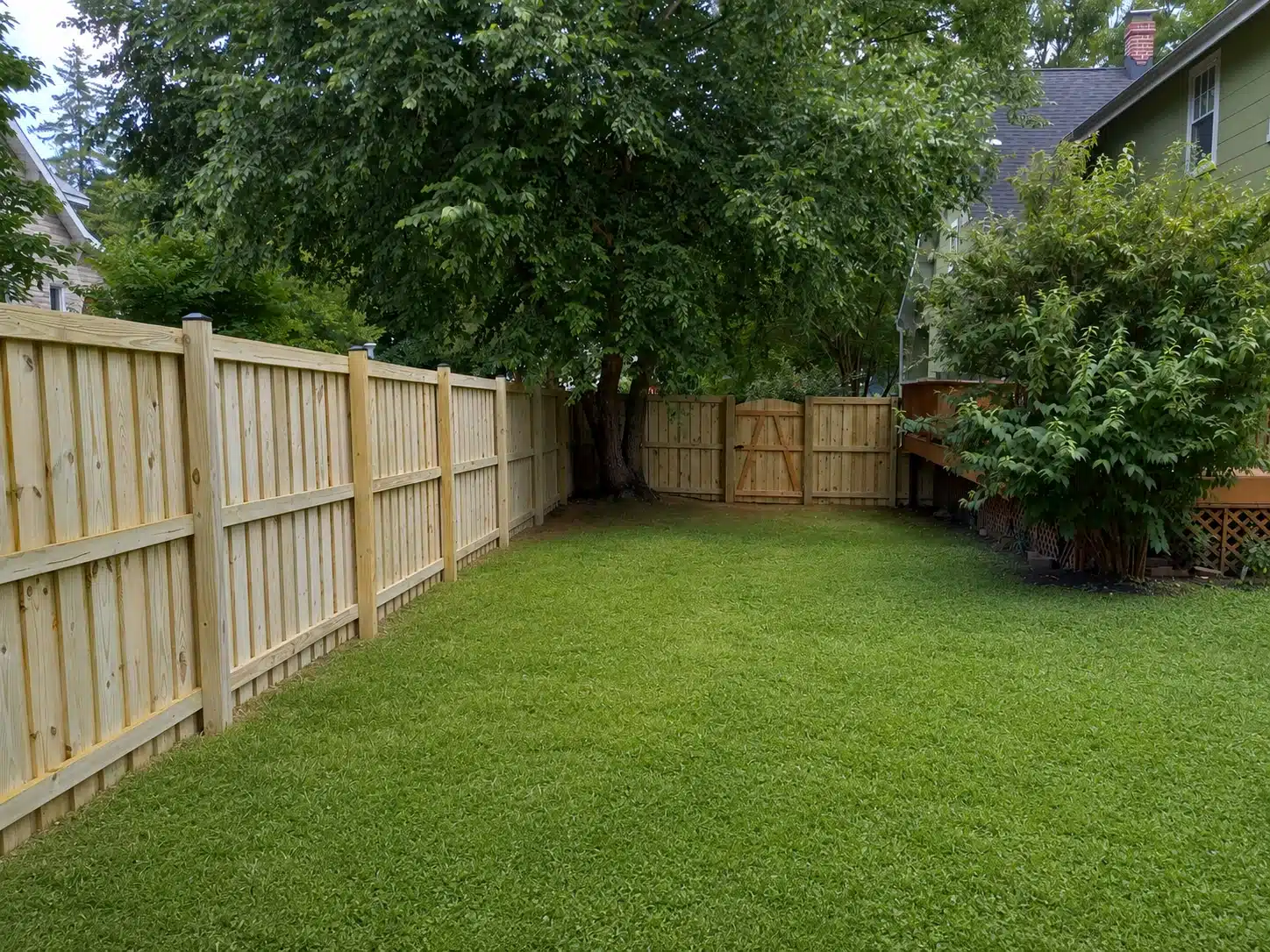
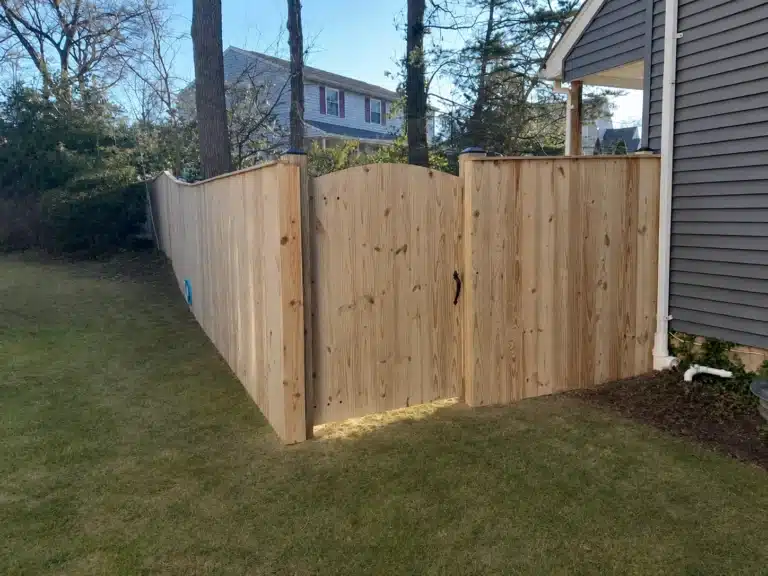
Most board-on-board fences we build use pressure-treated Southern Yellow Pine. It’s the more budget-friendly option, and ground-contact-rated lumber holds up well against rot and insect activity once it’s properly installed — our wood fence page has more on the treatment grades and post depth we use for Anne Arundel’s frost line.
Cedar is available as an upgrade for homeowners who want a different look and feel. It naturally resists decay and insects without chemical treatment, tends to need less staining and sealing over time, and ages to a silver-gray patina if left unfinished. The tradeoff is cost — cedar runs higher upfront than pressure-treated pine, so the decision usually comes down to budget versus long-term maintenance.
Get Help with Your Privacy Fence Design
All Around Fence can help you find the perfect privacy fence design for your aesthetic, budget and future plans. Whether you want a vinyl fence, a pine fence, a cedar fence, a board-on-board fence or anything in between, our team can make it happen. Contact us at (443) 838-9374 to schedule your fence installation consultation.