Fence Materials & Installation Details

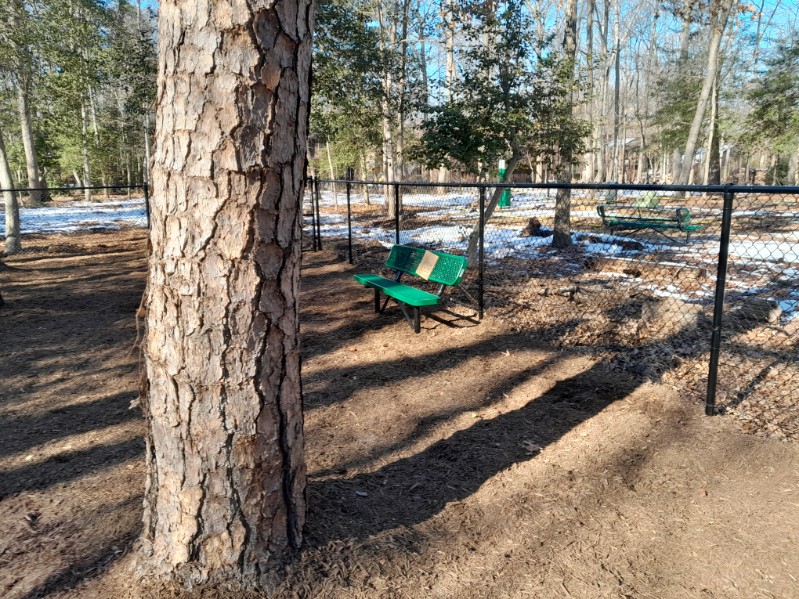
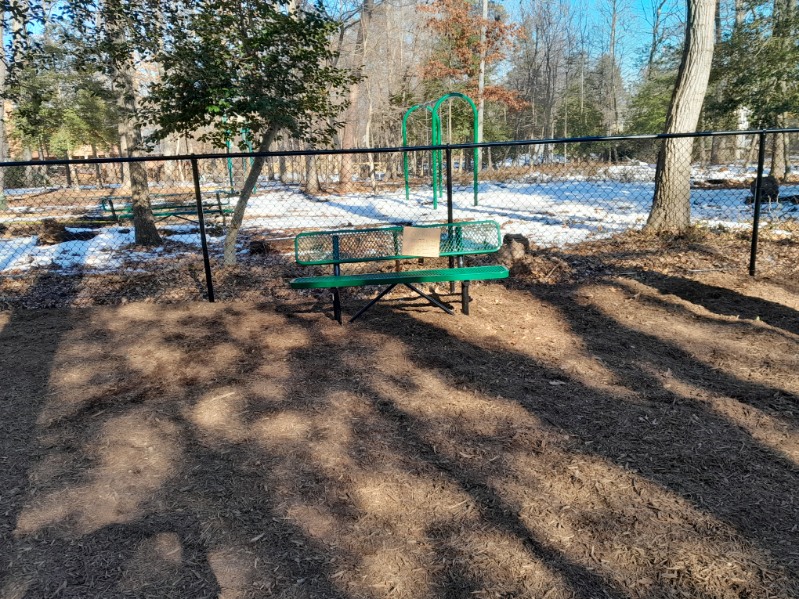
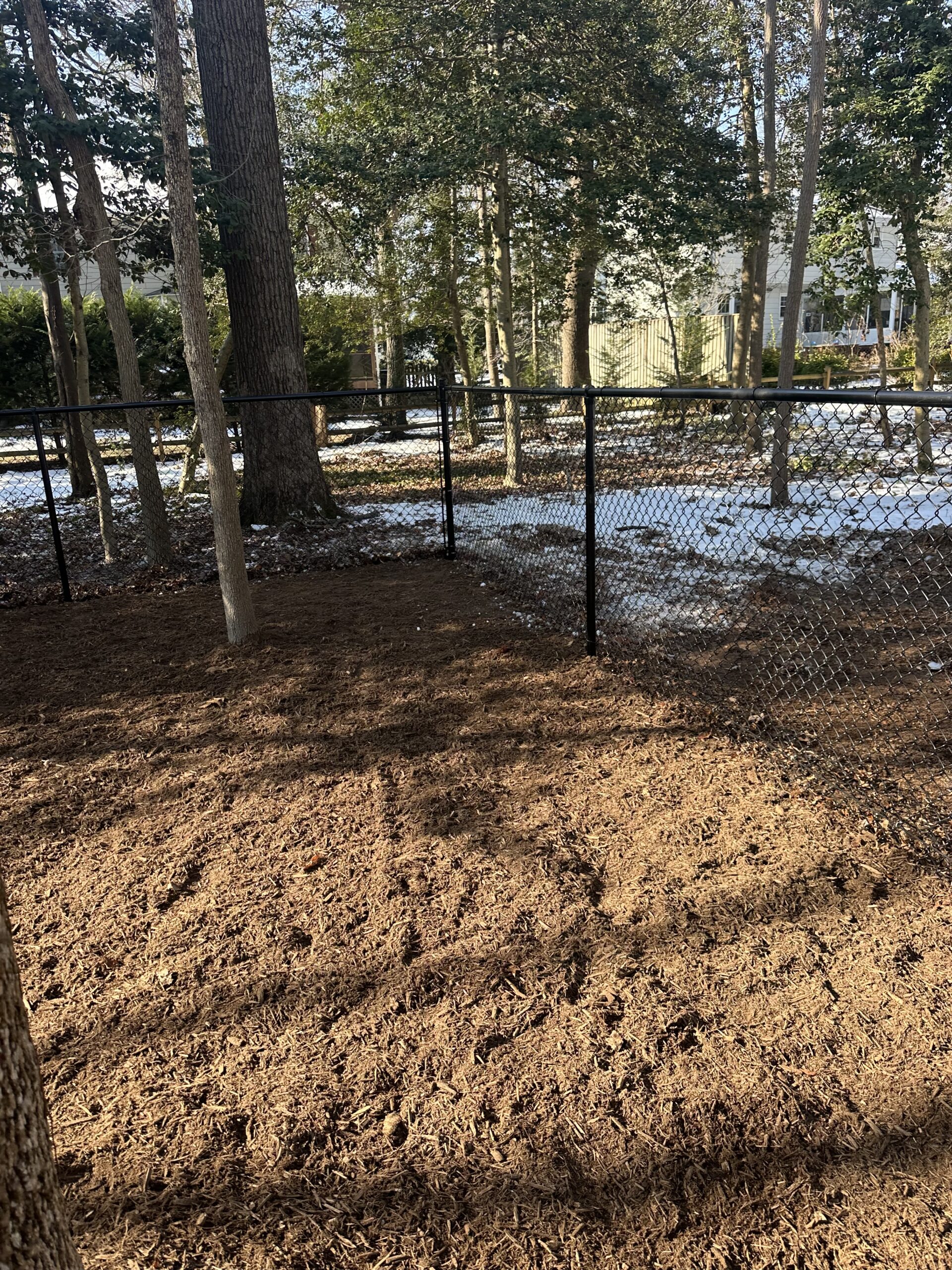
This project uses a black vinyl-coated chain-link fencing system. It was chosen for its durability, visibility, and reliable performance in an active outdoor setting.

Fence Materials & Structure

The fencing system is constructed from vinyl-coated steel chain link with a galvanized steel core. This helps protect the metal from weathering while maintaining its strength.

Key components include:

  • Round steel line posts and terminal posts for stable, consistent support
  • Continuous steel top rail to keep fence sections straight and evenly tensioned
  • Dome-style post caps to protect exposed posts and provide a clean finish

Gates & Access Points

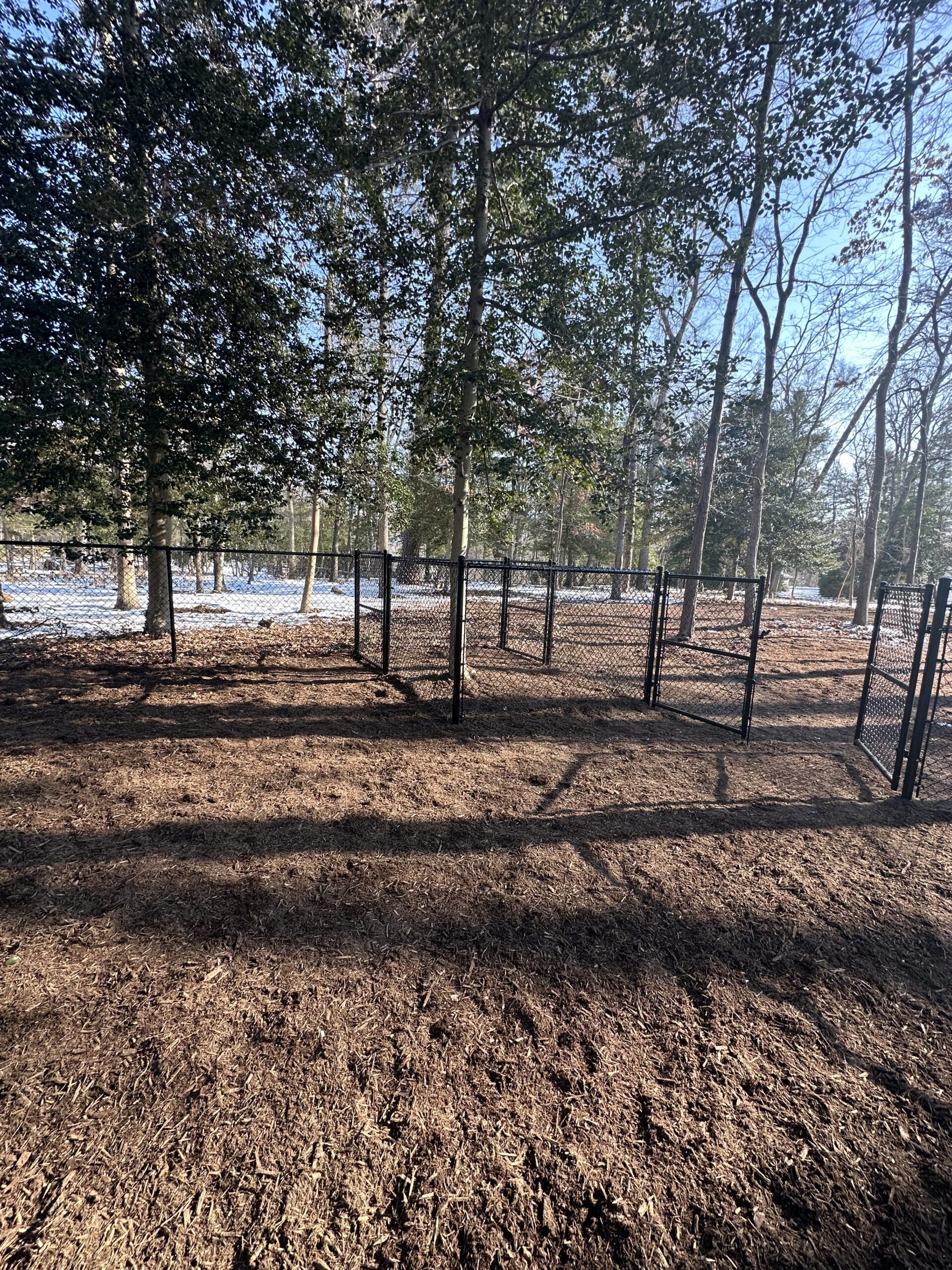
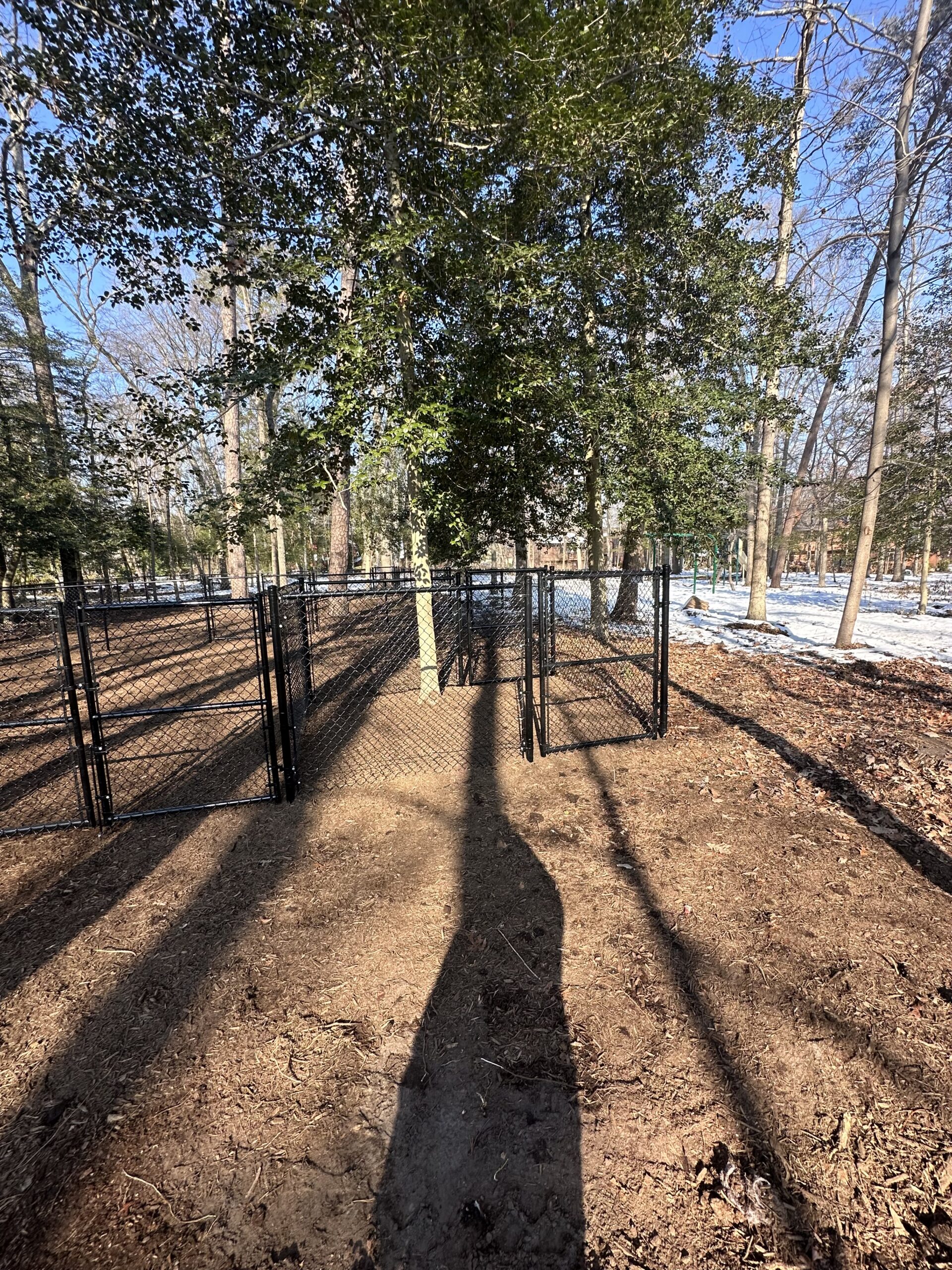
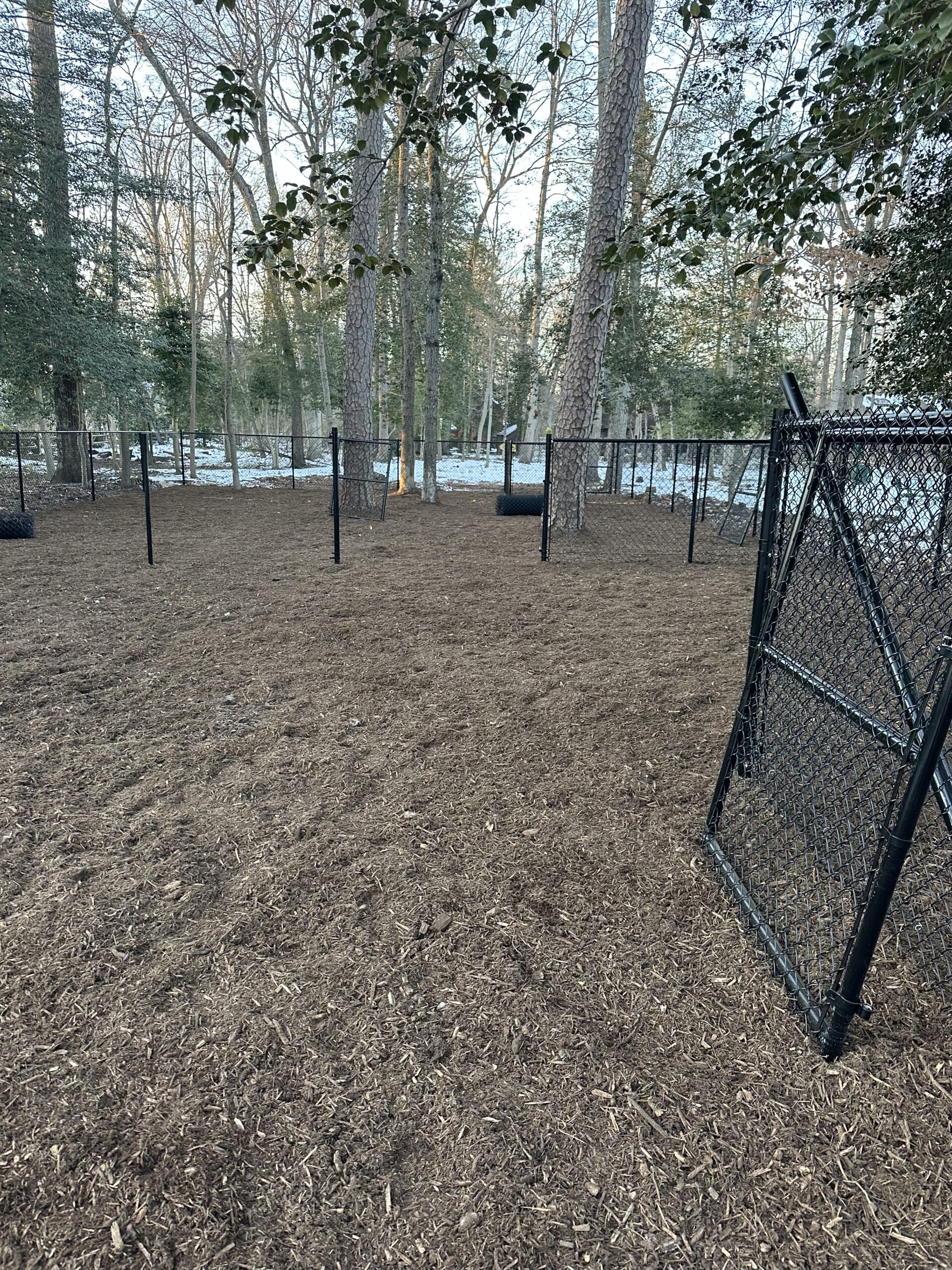
The layout includes multiple steel-framed chain-link swing gates that provide controlled access between enclosures.

Gate features include:

  • Heavy-duty hinges designed for frequent use
  • Mechanical latch hardware for secure, reliable operation

These gates provide smooth entry while holding up to regular daily use.

How the Fence Was Installed

Installation followed standard chain link fencing practices, with adjustments for the site’s terrain.

  • Layout and alignment: Fence lines were planned to follow the site’s shape, routing around mature trees and grade changes.
  • Post hole augering: Holes were augered at consistent intervals to prepare for secure post placement.
  • Concrete-set posts: Steel posts were set in concrete to anchor the fence and support long-term stability.
  • String-line alignment: String lines were used to keep fence runs straight and uniform.
  • Fence and gate installation: Chain link fabric, top rail, and swing gates were installed and adjusted for smooth operation.
  • Final adjustments: Fence tension and gate movement were checked to confirm proper function.

Built for Pasadena Conditions

This fencing project was completed in Pasadena, part of Anne Arundel County, where outdoor spaces often include wooded terrain, shared-use areas, and year-round exposure to the elements.

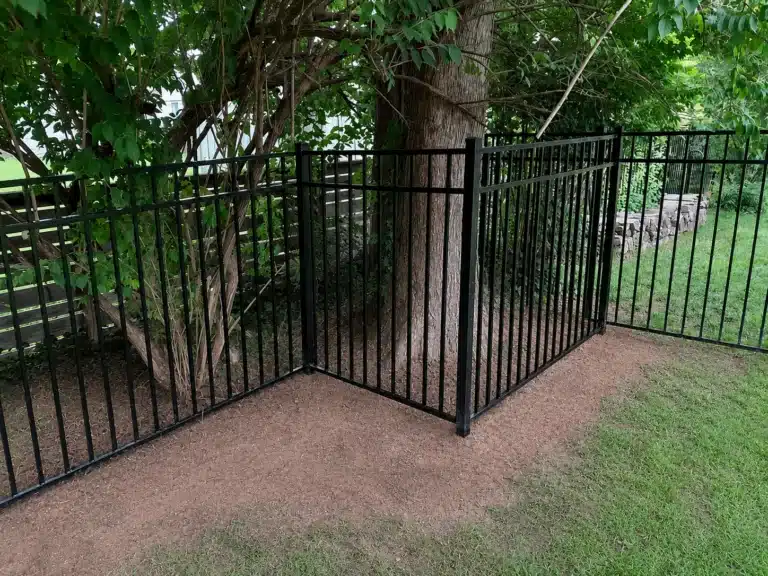
Local sites commonly have tree cover, uneven ground, and compacted soil. All of these factors affect fence layout and anchoring. For this dog park, fence lines were adjusted to work around existing trees and follow natural grade changes without leaving gaps or weak points.

Materials were selected to perform well in central Maryland’s climate, including:

  • Humid summers
  • Regular rainfall
  • Seasonal freeze–thaw cycles

Vinyl-coated chain link is a practical choice for community fencing in this area because it holds up well with minimal upkeep.

Designed for Community Use

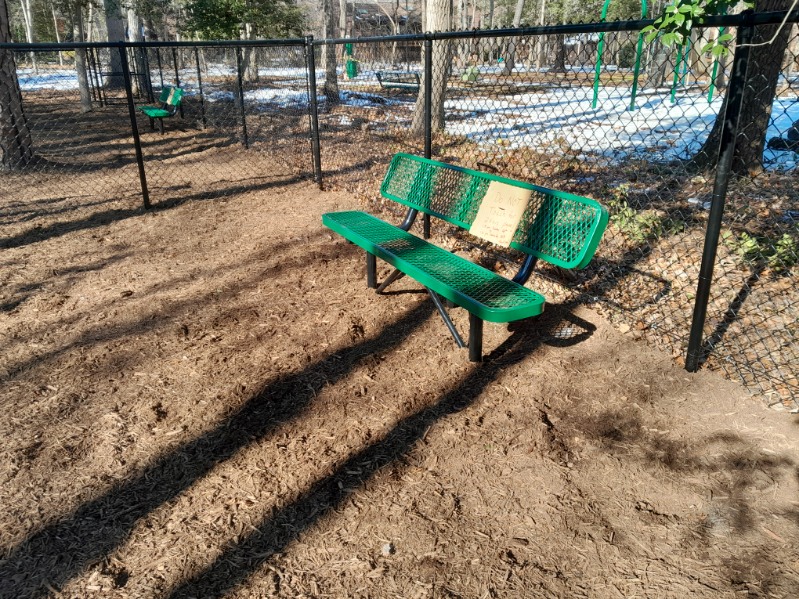
Because this is a shared public space, fence layout and gate placement were planned with visibility, access, and durability in mind. Multiple gated sections allow the park to function smoothly during busy periods while keeping dogs safely contained.

The finished installation fits naturally into the surrounding environment and meets the practical needs of community amenities throughout Anne Arundel County.

The Build Process

The dog park fence was installed using a simple, three-step process focused on durability and clean layout.

1. Site Layout & Preparation

Fence lines were planned to follow the park’s natural shape. Trees and grade changes were worked around. Gate locations were set to allow easy movement between sections.

2. Posts, Rails & Framework

Steel posts were set in concrete and spaced evenly to support the fence. A continuous top rail was installed to keep long runs straight and properly tensioned, even where the ground changes.

3. Fence & Gate Installation

Vinyl-coated chain-link fabric was secured to the framework and adjusted to a consistent height. Steel-framed swing gates were installed at each access point and checked for smooth operation.

Once complete, the enclosure was reviewed to confirm alignment, fence tension, and gate function across the site.

Other Projects

× Zoomed Image