Licensed & Insured Maryland Fence Contractor
Code-Aware Steel Fence Installations
Serving Pasadena, Severn & Glen Burnie Homes
All Around Fence & Decks installs residential steel fencing in Pasadena, Severn, and Glen Burnie. Homeowners choose steel when they want a firmer boundary and a fence that feels permanent. It’s not about decoration—it’s about control, durability, and long-term use.
In Anne Arundel County, steel fencing is frequently used along front runs, driveways, and outer property lines where strength and definition matter most. The right steel fence comes down to layout, purpose, and how the property is actually used.
Residential steel fencing should be chosen based on how it functions on your property, not just decorative details. Steel styles are about how clearly a boundary is drawn and how that boundary is perceived from the street.

Flat-top steel fencing creates a clear boundary without escalation.
Pickets terminate evenly at the top rail, keeping the fence controlled and intentional. This style is often chosen for visible areas where homeowners want definition without confrontation. When steel is used this way, the message is simple: the space is defined.
Flat-top steel works best when it stays disciplined. Pushing it too far—too tall, too dense, too bold—changes how it’s perceived.

Vinyl-coated chain-link uses a galvanized core with a PVC outer layer. Homeowners select it when they want the fence to visually recede against trees, grass, or darker backgrounds.
Black is often chosen along wooded property lines, while green is used where the fence runs through vegetation-heavy areas. The goal is visual calm without changing how the fence functions.

Privacy slats are added to standard chain-link fabric. They reduce sightlines while keeping the fence open and breathable.
They’re most often used selectively—along shared boundaries or near utilities—rather than across entire yards. This method keeps airflow and visibility where needed. It also provides screening in certain areas.
Steel fencing offers room for customization—within clear residential limits. Customization here is about refinement, not reinvention. Common options include:
Most style issues don’t come from materials—they come from mismatch.
Front-facing steel that’s too assertive. Perimeter fencing that feels improvised instead of planned. Design choices that signal more intensity than the property needs.
Steel doesn’t soften with time. Style decisions should feel right on day one.
Steel fencing makes a boundary feel permanent and intentional.
Subtle choices become lasting statements. Residential steel works best when guided by context, placement, and restraint. When those align, it does exactly what it’s meant to do—quietly and firmly.
Steel fencing performs as a system. Styles shape appearance, but specifications determine whether a fence holds its line over time or drifts out of alignment.
Residential steel fencing typically uses mild carbon steel. Performance depends on fabrication quality.
Welded panels operate as a unified system. Inconsistent or poorly made connections can create stress in specific areas. Over time, this stress becomes visible.
Steel rarely fails from weakness—it fails where protection breaks down.
Galvanization provides the base layer of defense. Powder coating protects the surface. Vulnerable areas include cut ends, weld points, and fasteners. Long-term performance depends on how these areas are treated, not on finish appearance.
Posts and gates do the real work.
Panels define the fence line, but posts transfer force into the ground, and gates concentrate movement. When these elements aren’t treated as load-bearing, alignment issues appear—even if panels remain intact.
Inspectors tend to focus here first.
Steel fencing relies on balance, not brute force.
Picket spacing, rail placement, and panel rhythm affect how loads are distributed. Small inconsistencies can cause stress to collect in specific areas, eventually showing up as lean or uneven lines.
A well-performing steel fence looks calm because the system behind it is balanced.
During inspections, the Anne Arundel County Department of Inspections and Permits checks three things: consistency, spacing, and how well the gate operates. A fence that behaves predictably as a barrier avoids issues, even when design details vary.
Steel can look substantial and still underperform.
Fences that last aren’t the most ornate—they’re the ones where materials, coatings, and structural elements were chosen to work together. This is where experience shows, even years later.
We assess layout, sightlines, driveway access, and boundary intent to ensure the steel fence fits the property’s role—not just the space.
Fence height, spacing, and gate behavior are aligned with common residential standards reviewed by the Anne Arundel County Department of Inspections and Permits.
Your steel fence is installed by an MHIC-licensed contractor and reviewed on-site for alignment, operation, and overall finish before sign-off.
Steel fencing is chosen for clear boundaries, durability, and long-term structure—not flexibility or landscaping softness.
| Steel Is a Strong Fit When… | Steel May Be the Wrong Choice When… |
|---|---|
| You want a boundary that clearly defines property limits | You want the fence to visually fade into the landscaping |
| Fence lines face streets, driveways, or public sightlines | Privacy or noise reduction is the primary goal |
| Long-term ownership and durability matter | You expect to change layouts or fencing soon |
| A firmer, more deliberate presence is appropriate | A lighter or more informal boundary suits the setting |
| You want a fence that holds its shape and intent over time | HOA tone favors minimal or decorative-only fencing |
In Anne Arundel County, homeowners often choose steel fencing. It offers clarity and permanence, yet it doesn’t close off the property.
"Our new fence looks great! The communication from start to finish was amazing! Jim kept in touch all day as the fence was installed. Sheila in the office was helpful and great to deal with. Looking forward to our next project! I would highly recommend!"
"All Around Fence did a fantastic job from start to finish. Jeremy met with me several times to discuss fence design and answer all my questions (which were many). Sheila, from the office, was also very responsive to my questions and kept me informed on the schedule. A great company to work with that I highly recommend. You will not be disappointed with their work."
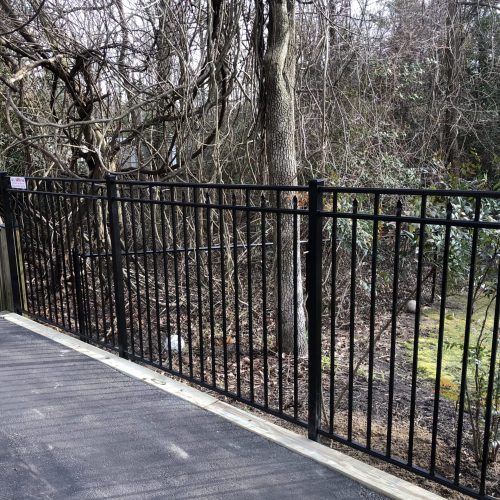
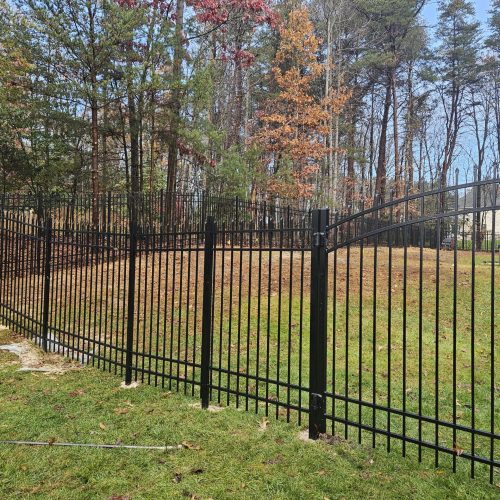
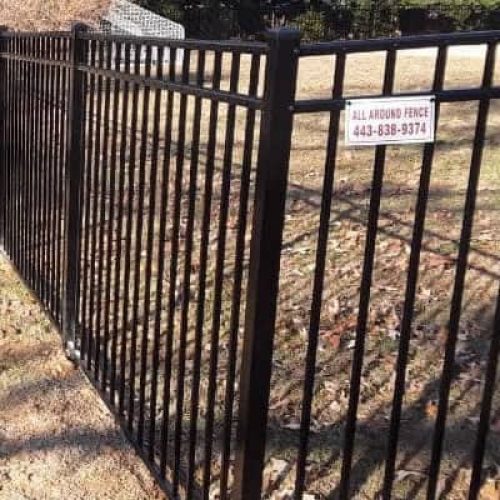
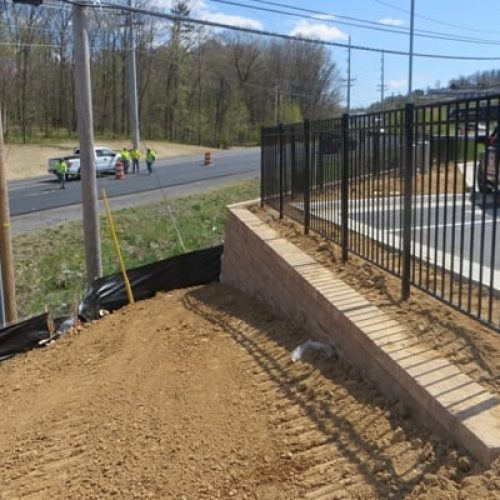
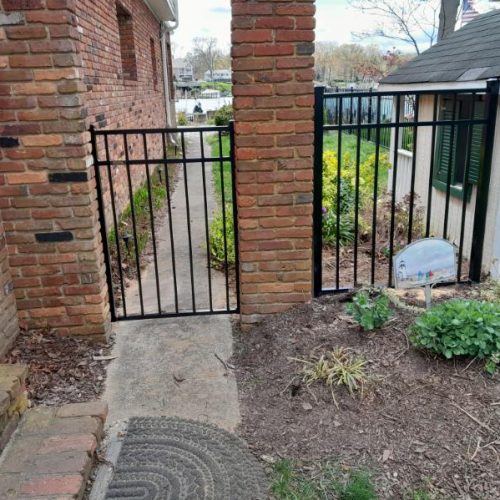
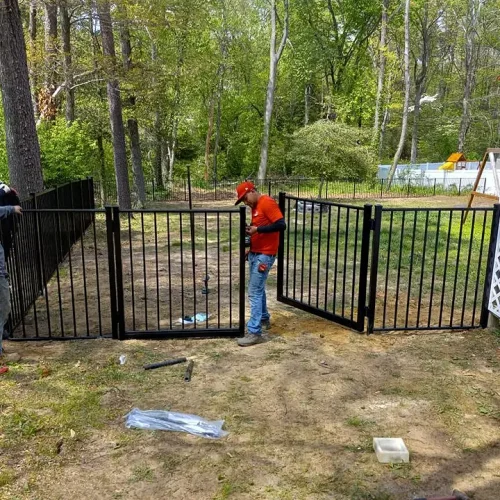
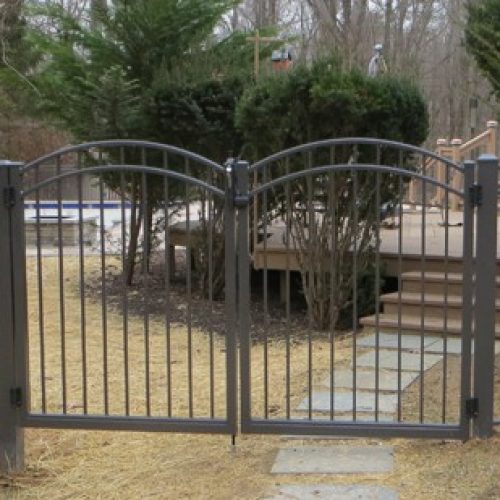
Our steel fence projects illustrate its application in homes on the Broadneck Peninsula and neighboring areas. Steel fencing enhances driveways, street boundaries, and perimeter lines near Route 100, emphasizing clarity and durability.
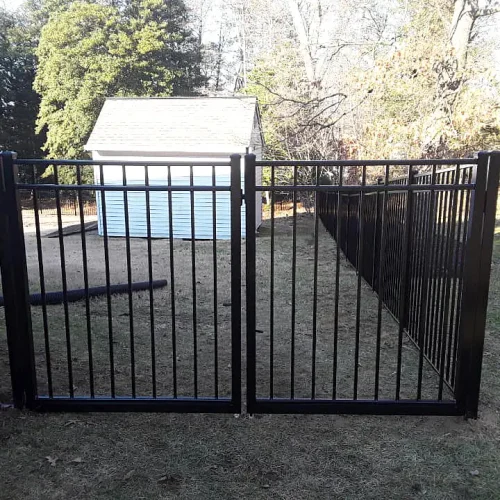
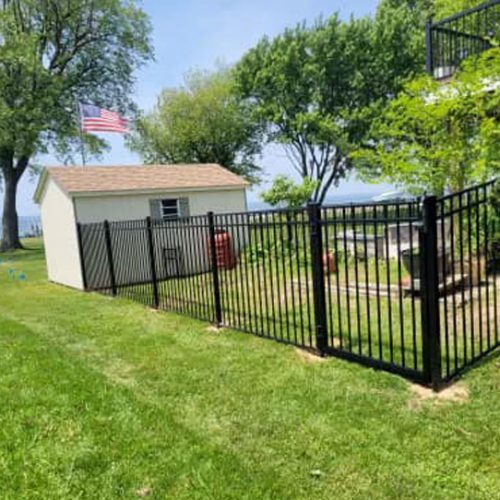
Your project stays with one accountable contractor—from first visit through final walkthrough.
Experience built on real yards, real boundaries, and long-term ownership across Anne Arundel County.
MHIC Licensed Contractor #97820 through the Maryland Home Improvement Commission.
Steel fencing decisions are guided by layout, use, and context—not one-size-fits-all systems.
A strong reputation from referrals and repeat clients comes from residential projects, not just volume installs.
All Around Fence & Decks offers residential steel fencing in Pasadena and nearby areas like Severn, Glen Burnie, Severna Park, and Arnold.
Our focus is on residential properties across central Anne Arundel County, where lot layout, visibility, and long-term boundary planning matter.
That’s where you need a local contractor and a steel specialist in one. Small decisions about layout, gates, and exposure points determine whether a steel fence stays straight—or slowly becomes a problem. This is the difference between a fence that looks solid today and one that still works years from now.
Connect with an owner-led, MHIC-licensed contractor who knows residential steel fencing in Anne Arundel County.
Call (443) 201-1686 to discuss your steel fence project or request a no-pressure estimate using the form.
No. When homeowners search for wrought iron fencing, they’re usually referring to the look, not the material. True wrought iron is rarely used in modern residential projects due to weight and corrosion. In Anne Arundel County, ornamental steel fencing is the practical standard—it delivers the same visual authority with far better durability and consistency.
Not always, but context matters. Fence height, placement near driveways, pool proximity, and corner lots can trigger review by the Anne Arundel County Department of Inspections and Permits. Steel fencing draws more scrutiny because it’s considered permanent. Experienced planning avoids inspection issues later.
Panels rarely fail first. Gates concentrate weight and movement, which stresses posts, hinges, and latches. In coastal-influenced areas near the Chesapeake Bay, subtle ground movement and moisture make gate planning critical. Most long-term steel fence issues trace back to gate design—not steel quality.
With proper fabrication and coating strategy, residential steel fencing commonly lasts 25–40 years in central Maryland. Degradation usually begins at weld seams or cut ends, not across panels. Longevity depends more on how exposure points are handled than on picket thickness or decorative features.
HOAs usually evaluate appearance and placement, not material alone. Flat-top or restrained decorative steel profiles are more widely accepted, especially for front-facing runs. Problems arise when steel feels overly aggressive or out of scale. Aligning style, height, and placement with neighborhood tone matters more than the fence itself.
"I cannot say enough great things about my experience with the team at All Around Fence. From working with Sheila to gather info and set the whole project up, to the owner, Jim, who handled the initial visit and provided confirmation on our decision, and Patrick and his team who were on site for installation. The entire process from beginning to end took approximately 3 weeks, including a weather delay, and the price was well under what I was anticipating. Cannot recommend more!"