Black Chain-Link Enclosure Built for an Indoor Turf Facility in Crofton, MD

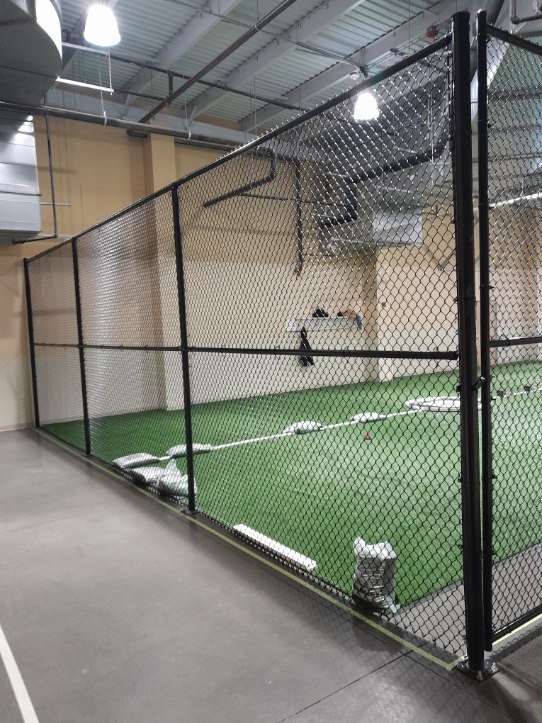
Indoor chain-link gates and fencing providing secure access inside Crofton athletic facility
Use
Commercial Athletic Facility Enclosure
Location
Project Title
Black Chain-Link Enclosure for an Indoor Turf Facility ft
Indoor chain-link gates and fencing providing secure access inside Crofton athletic facility
Tall black chain-link fencing separating indoor activity zones in a Crofton training building
Secure indoor chain-link barrier installed along turf and concrete flooring in Crofton, Maryland
High chain-link fence panels surrounding an indoor turf area for athletic use in Crofton, MD
Black chain-link safety fencing dividing an indoor training field in Crofton, Maryland
Indoor chain-link fence enclosure installed inside a turf sports facility in Crofton, MD

The Challenge: This Job Had No Standard Starting Point

Most chain-link jobs start with open ground and a property line. This one started with a finished commercial building interior, a polished concrete floor, existing structural columns, and HVAC ductwork running across the ceiling.

The facility needed a full perimeter enclosure to divide training lanes, contain overhead ball movement, and keep the walkway clear of field activity. The fence had to fit the building. Not the other way around.

That meant every post location, gate opening, and ceiling panel run had to be planned around what was already there. Nothing in the existing structure could move.


The System: Commercial Black Vinyl-Coated Chain-Link, Start to Finish

This project used a matched commercial chain-link system. Every component carries the same matte black vinyl coating. Mesh, posts, rails, and gate frames all come from the same coated system. That matters in a high-humidity indoor environment where mismatched coatings corrode unevenly and look worn fast.

Materials and components installed:

  •   Black vinyl-coated (PVC-coated) galvanized steel chain-link mesh
  •   Square black powder-coated steel tube posts standing approximately 10 to 12 feet tall (not standard round residential posts)
  •   Continuous top rail running the full perimeter
  •   Floor-anchored bottom rail, drilled into the concrete slab
  •   Overhead ceiling mesh panels extending the full enclosure height to form a fully enclosed cage structure
  •   Black-coated swing gates with matching frame, hinges, and latch hardware
Tall black chain-link fencing separating indoor activity zones in a Crofton training building
High chain-link fence panels surrounding an indoor turf area for athletic use in Crofton, MD

The Installation Had to Work Around an Active Commercial Building

Outdoor fence installations deal with soil depth, frost lines, and lot grading. This installation involved a concrete floor, structural columns mid-run, ceiling clearance limits, and overhead HVAC equipment.

Every decision on this job was driven by what the building allowed.

How the installation was executed:

  •   Posts fitted and anchored around existing structural columns at floor level
  •   Bottom rail drilled and set into the polished concrete slab at consistent spacing
  •   Ceiling mesh panels planned around pendant lighting and exposed ductwork
  •   Gate openings positioned for lane access without breaking the enclosure perimeter
  •   Panel runs squared and aligned across a column-interrupted floor plan
  •   Wall panels and ceiling mesh were completed as one continuous enclosed system

The result reads as purpose-built, not patched together around obstacles.

Concrete, Columns, and Ceiling Clearance Changed the Standard Approach

This facility sits in Crofton, inside a commercial building with the kind of infrastructure you find in converted warehouse and flex-use spaces across central Maryland. High ceilings. Exposed mechanicals. Finished concrete floors. These conditions change how a fence system is installed at every stage.

Site-specific adaptations made:

  •   Floor anchoring is used in place of post-setting in soil
  •   Post height determined by ceiling clearance, landing in the 10-to-12-foot range across the enclosure
  •   Gate swing direction set by lane traffic flow inside the facility
  •   Panel cuts made at multiple points to fit around column footprints

Anne Arundel County Holds Commercial Enclosures to a Higher Standard

Commercial fencing in Anne Arundel County follows different requirements from residential work. Structural anchoring, gate hardware ratings, and enclosure integrity all fall under commercial building standards. This project was planned and installed to meet those standards from the start.

Posts are anchored into the concrete slab. Gates are fitted with commercial-rated hardware. The enclosure is structurally sound for daily athletic use and the constant movement that comes with a working sports facility.

One Enclosure. Three Jobs Done at Once.

This was not a decorative install. The client needed the fence system to divide training lanes, contain balls hit at speed, and keep the walkway perimeter clear of field activity. A matched black vinyl-coated chain-link system handled all three without adding visual clutter to the space.

What this installation delivers:

  •   Full lane separation for simultaneous, independent training sessions
  •   Ceiling coverage reaching approximately 10 to 12 feet overhead to contain high-velocity ball movement
  •   Clear sightlines through the mesh for coaches and staff on both sides
  •   A clean, professional appearance that fits a commercial athletic environment
Secure indoor chain-link barrier installed along turf and concrete flooring in Crofton, Maryland

Built for Commercial Work Across Central Maryland

All Around Fence handles commercial chain-link projects from Crofton to Glen Burnie and across Anne Arundel County. If you need a fencing system that has to fit around an existing structure, we can plan and build it.

(410) 544-9500 • allaroundfenceanddecks.com
Request a Free Estimate.

Get A Free Quote
× Zoomed Image