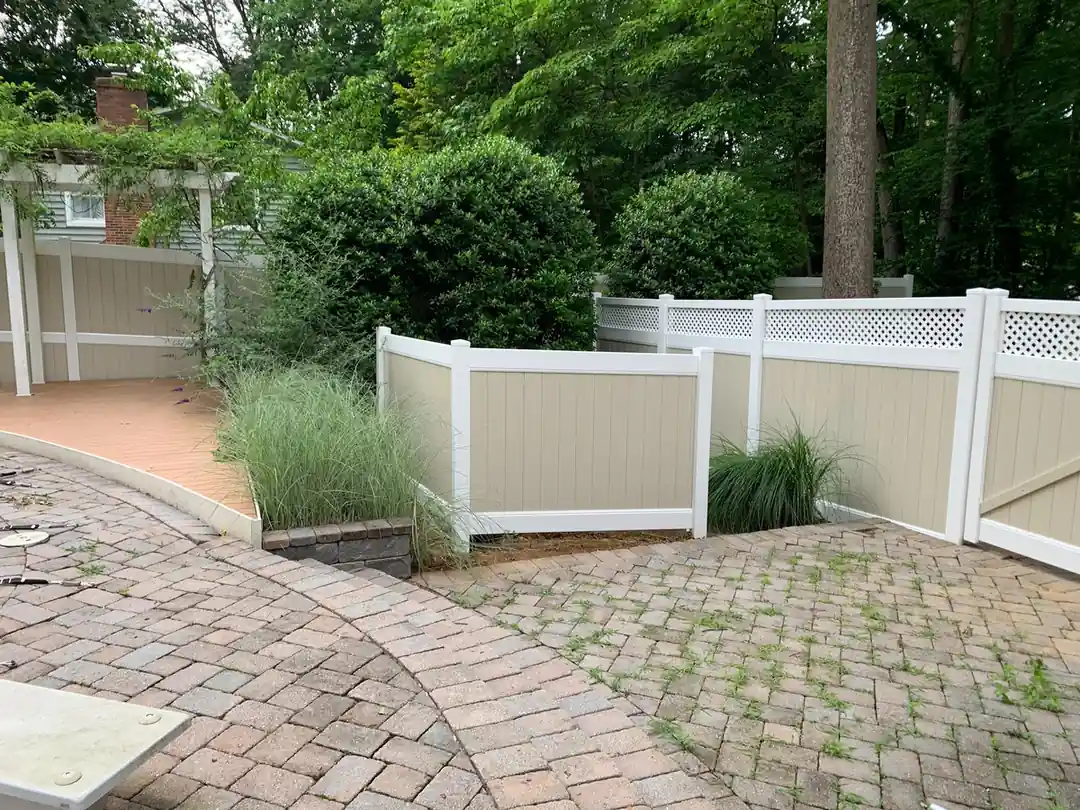



The Pros of Vinyl Fencing in Maryland
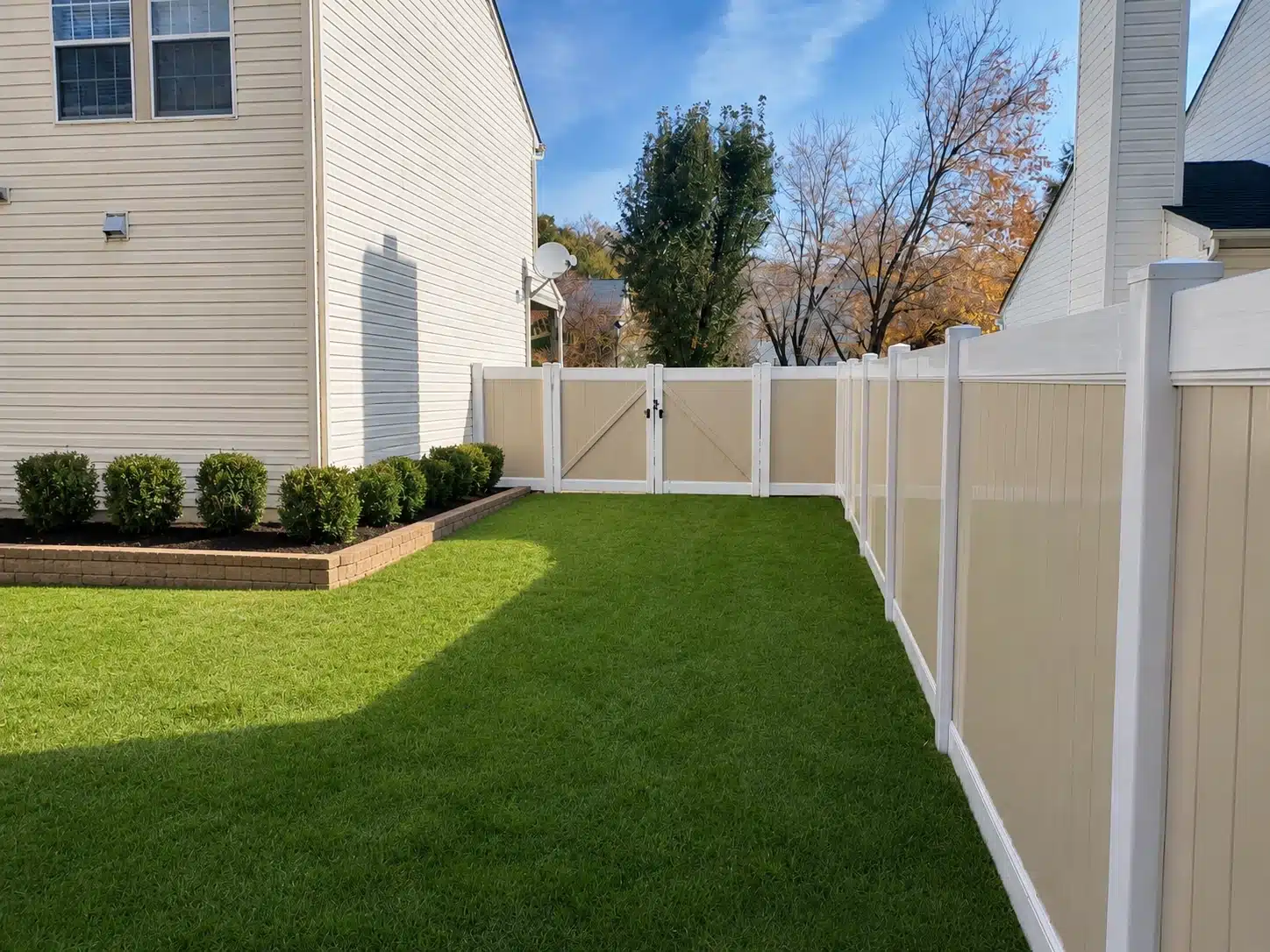
Vinyl doesn’t absorb moisture, which means it won’t develop the post-base rot that commonly damages wood fences in Anne Arundel County’s clay-heavy soil. It also doesn’t attract termites or carpenter ants, and the material itself won’t rust or corrode in Maryland’s long humid season.
For homes near the bay or properties with consistently wet ground, this is one of vinyl’s biggest advantages over wood fencing.
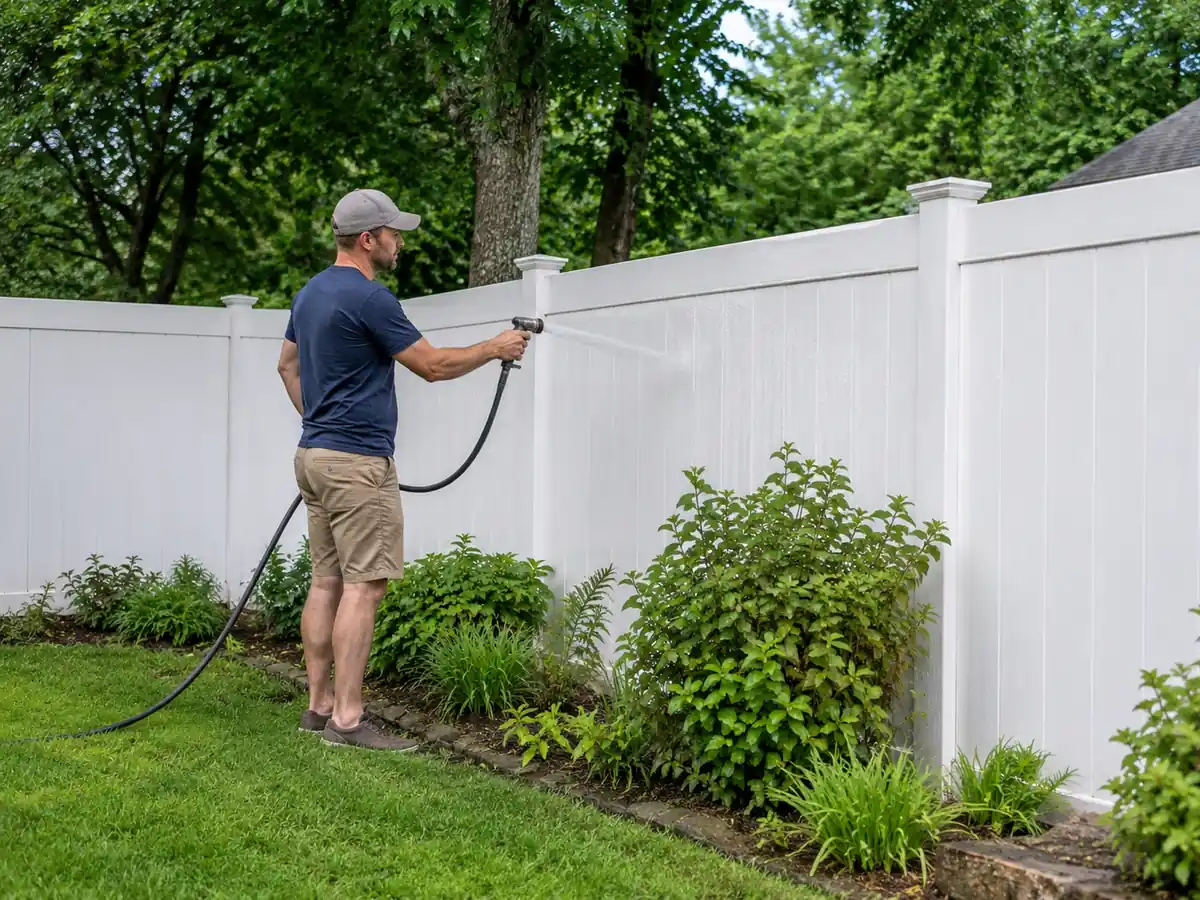
Vinyl fencing doesn’t require staining, sealing, or painting. In Maryland’s climate, maintaining a wood fence properly usually means resealing it every one to two years to stay ahead of humidity and moisture exposure. Skipping maintenance cycles often accelerates deterioration around posts, rails, and fasteners.
Vinyl removes that maintenance burden almost entirely. Most upkeep involves rinsing off algae, pollen, or surface grime as needed.
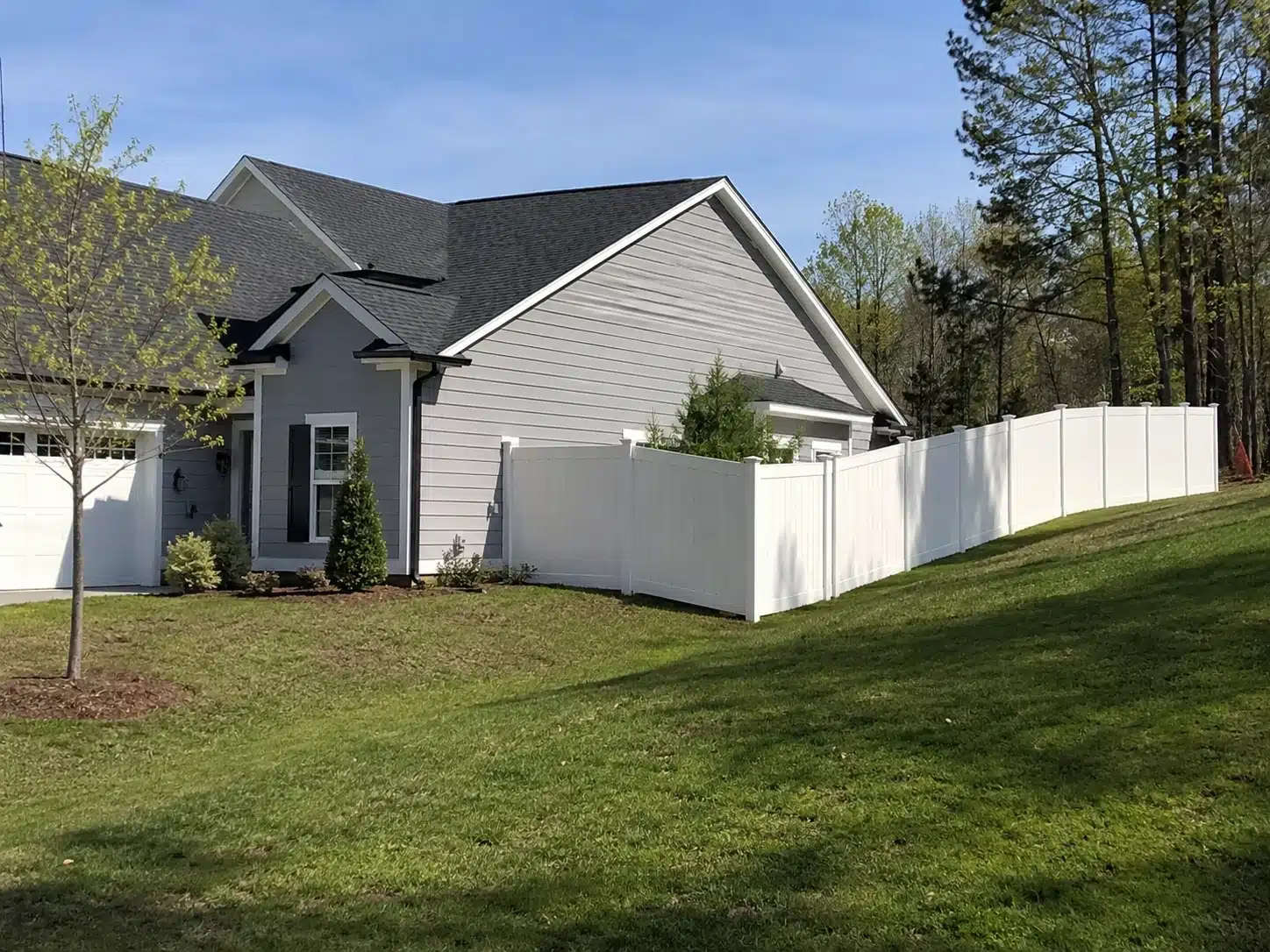
Modern UV-stabilized vinyl fencing is manufactured with additives that help resist fading and discoloration from sun exposure. A white vinyl fence installed today should look very similar in 15 years to how it looked in year one.
The chalking and yellowing associated with older vinyl products has largely been corrected in modern UV-resistant formulations. That matters in Maryland, where summer sun exposure can be intense, especially on long south-facing fence lines.
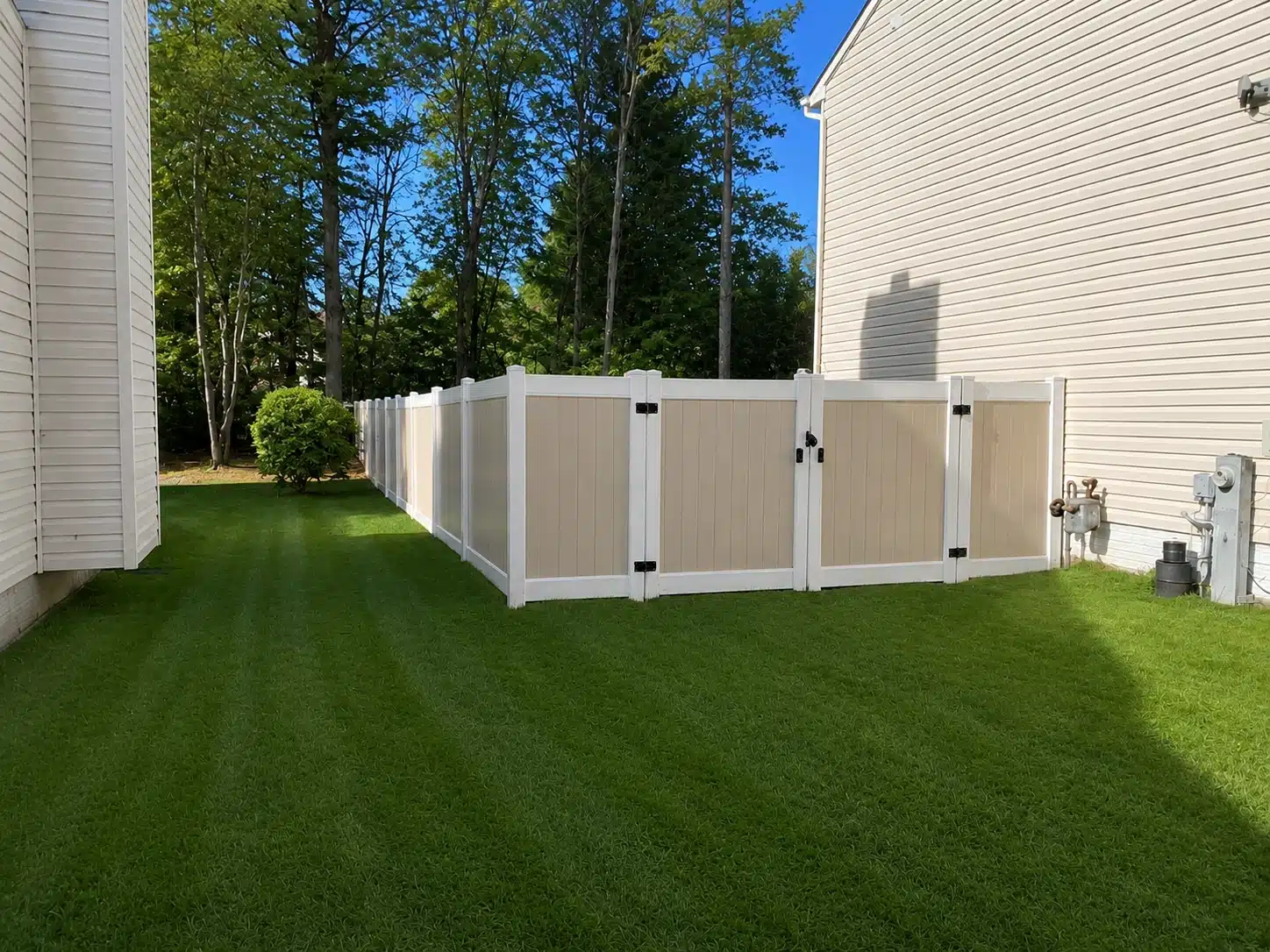
A properly installed vinyl fence in Maryland can last 20 to 30 years or more. That generally outlasts a poorly maintained wood fence and compares favorably with cedar fencing that receives regular upkeep.
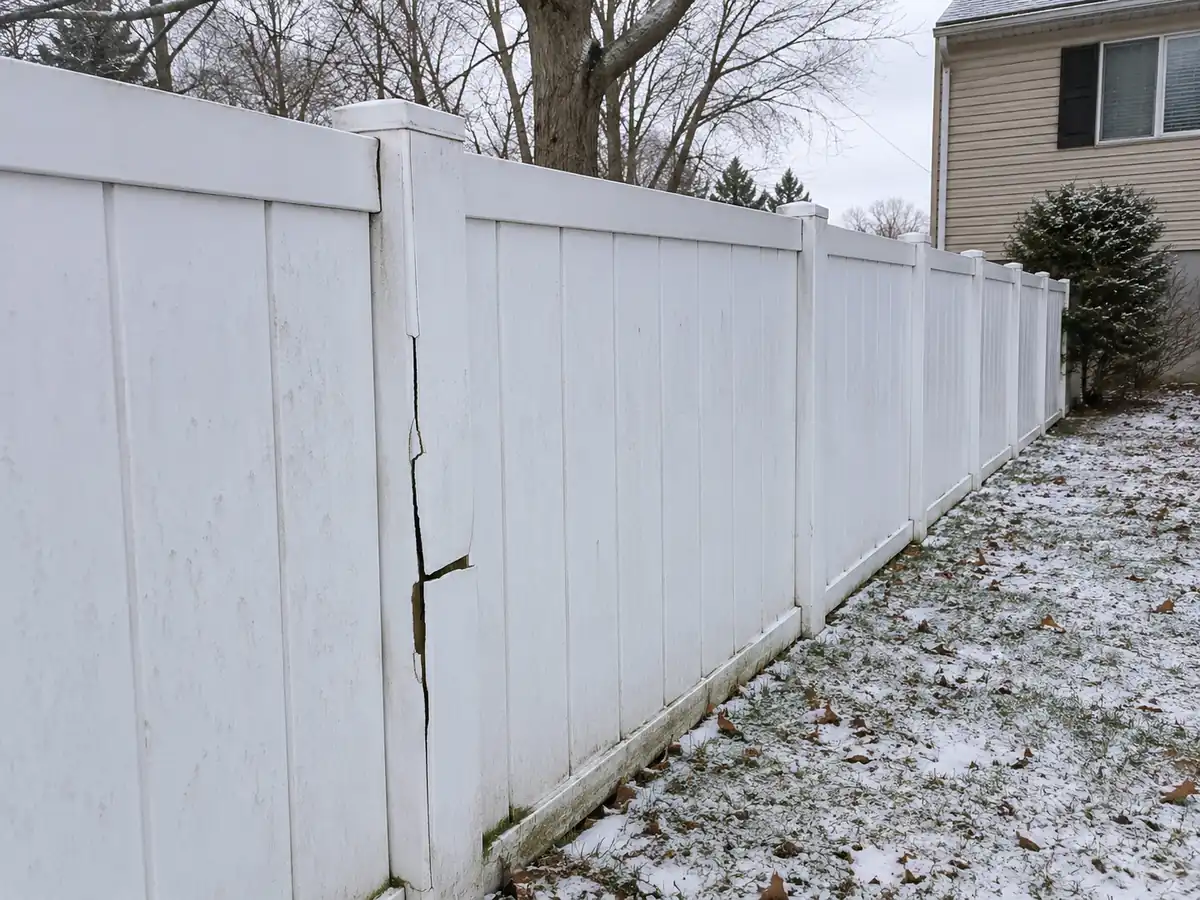
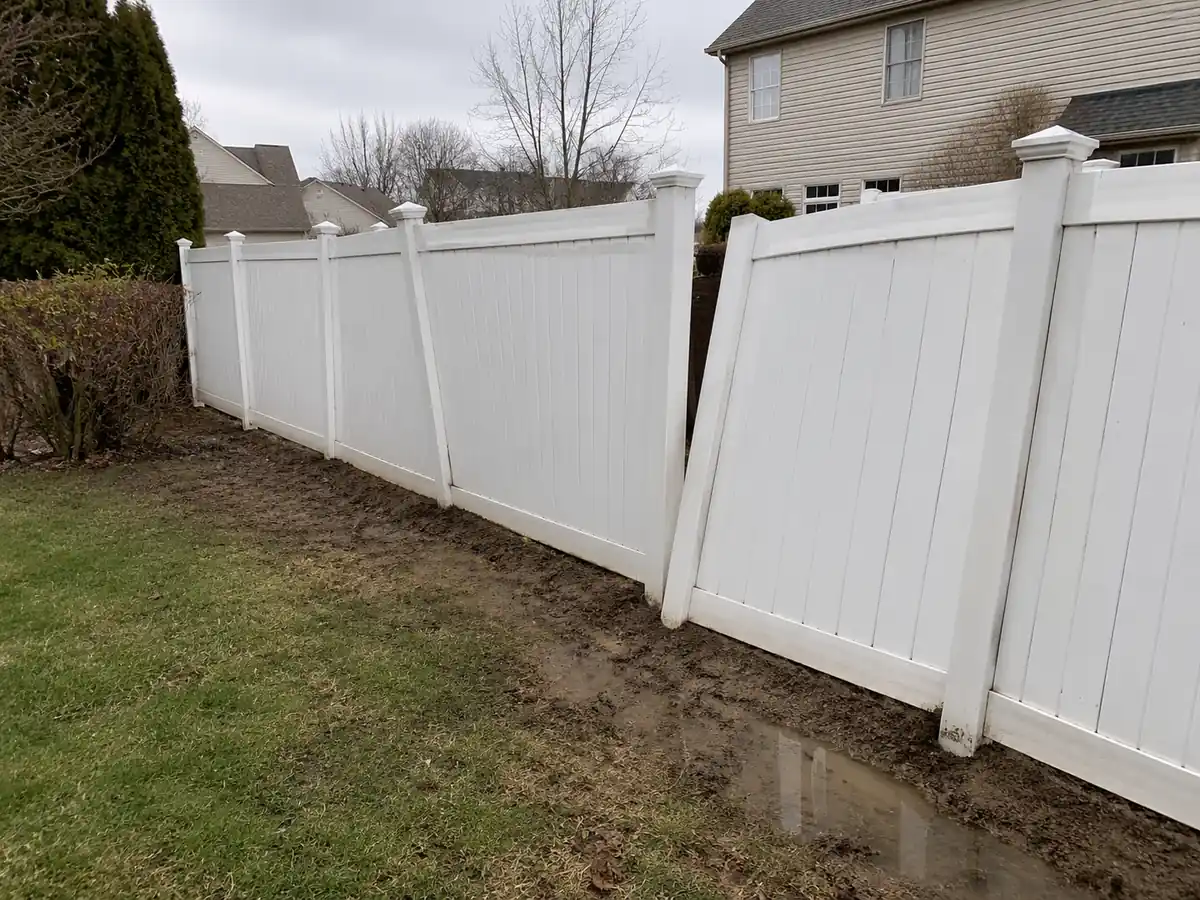
The key phrase, however, is properly installed, which leads directly to the most important item in the cons section.